
Tudor Homes With a Black Roof: 21 Rendered Examples 2026
Tudor architecture was built around dark contrasts - half-timbered upper stories, steeply pitched roofs, and stone details that read as shadow and mass. A black roof is the most historically coherent choice for the style, amplifying the deep lines and complex rooflines rather than softening them.
Stone chimneys and exposed timber framing gain definition against a near-black field. The elevation feels heavier in exactly the way Tudor architecture intends.
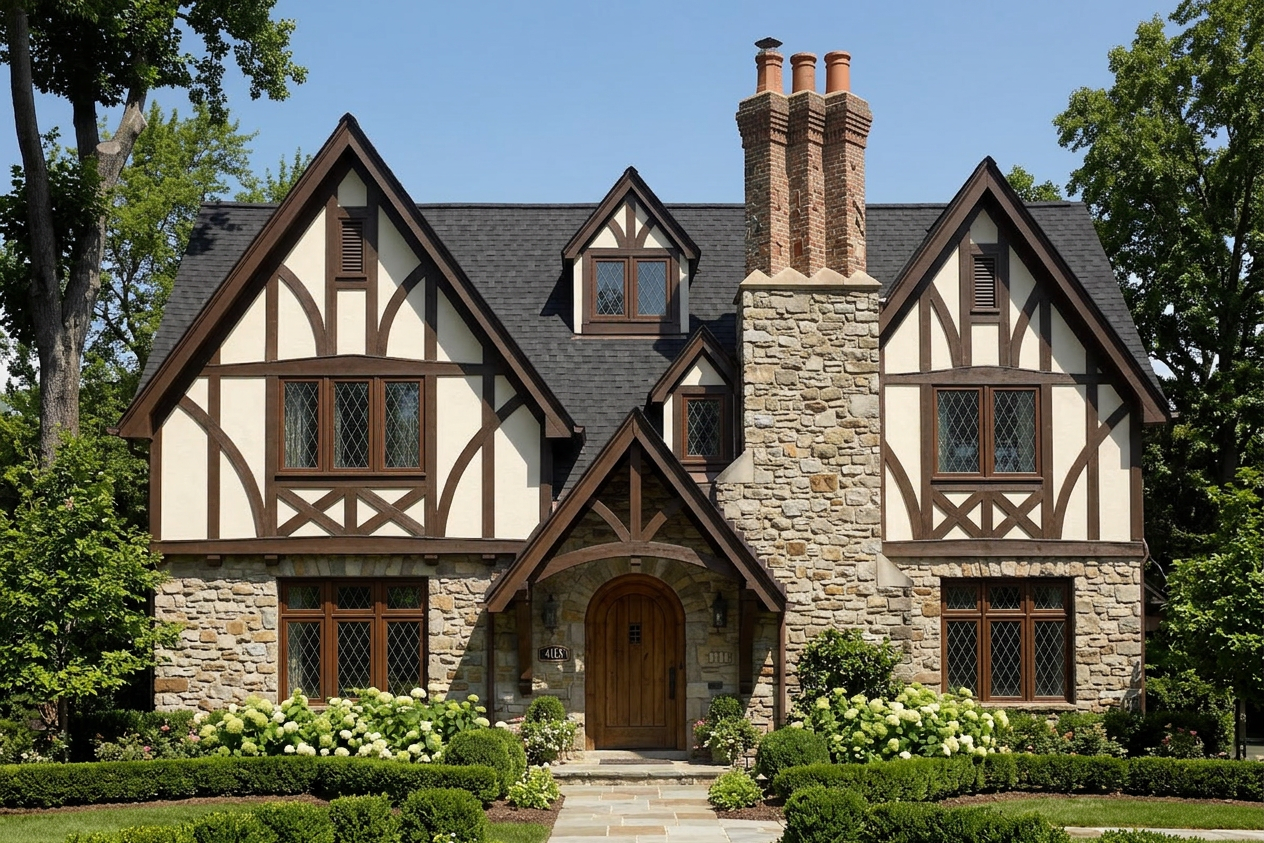
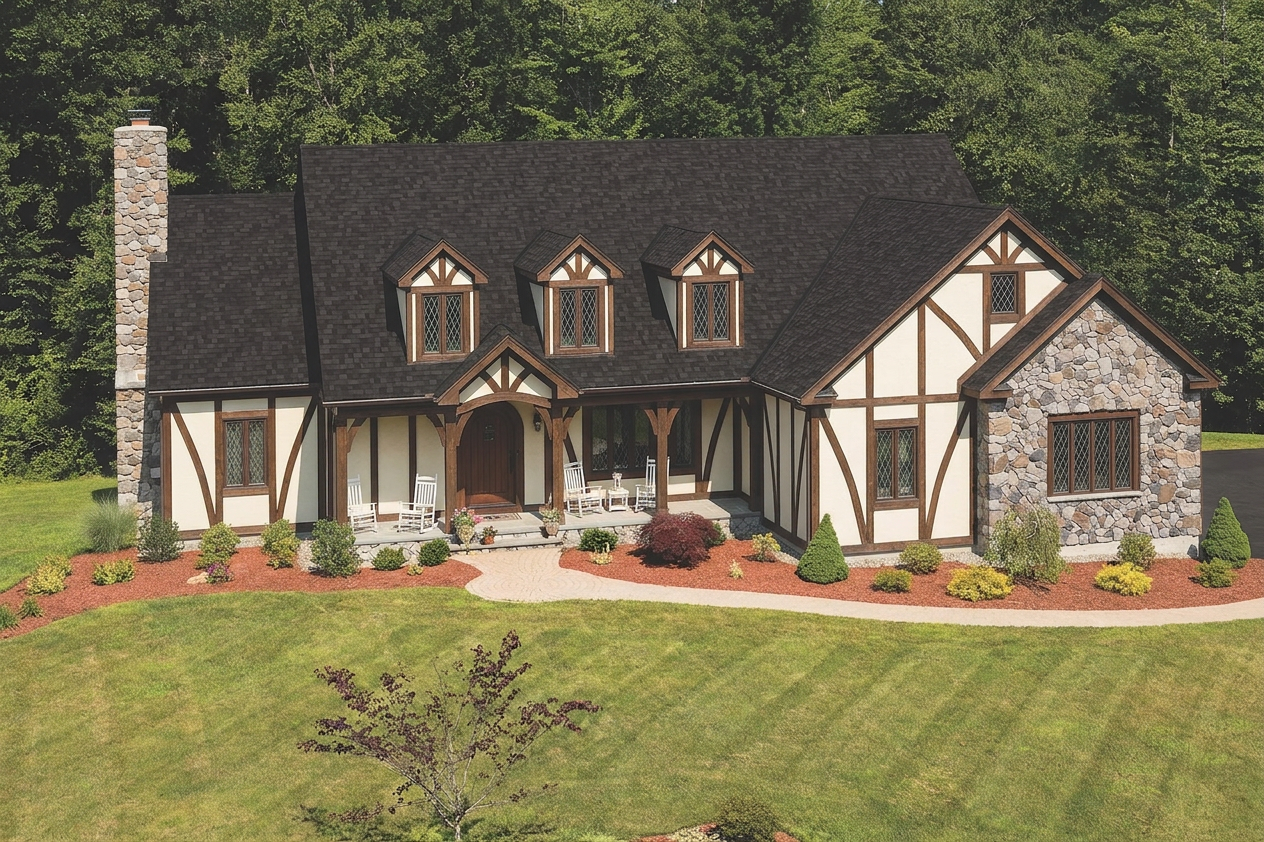
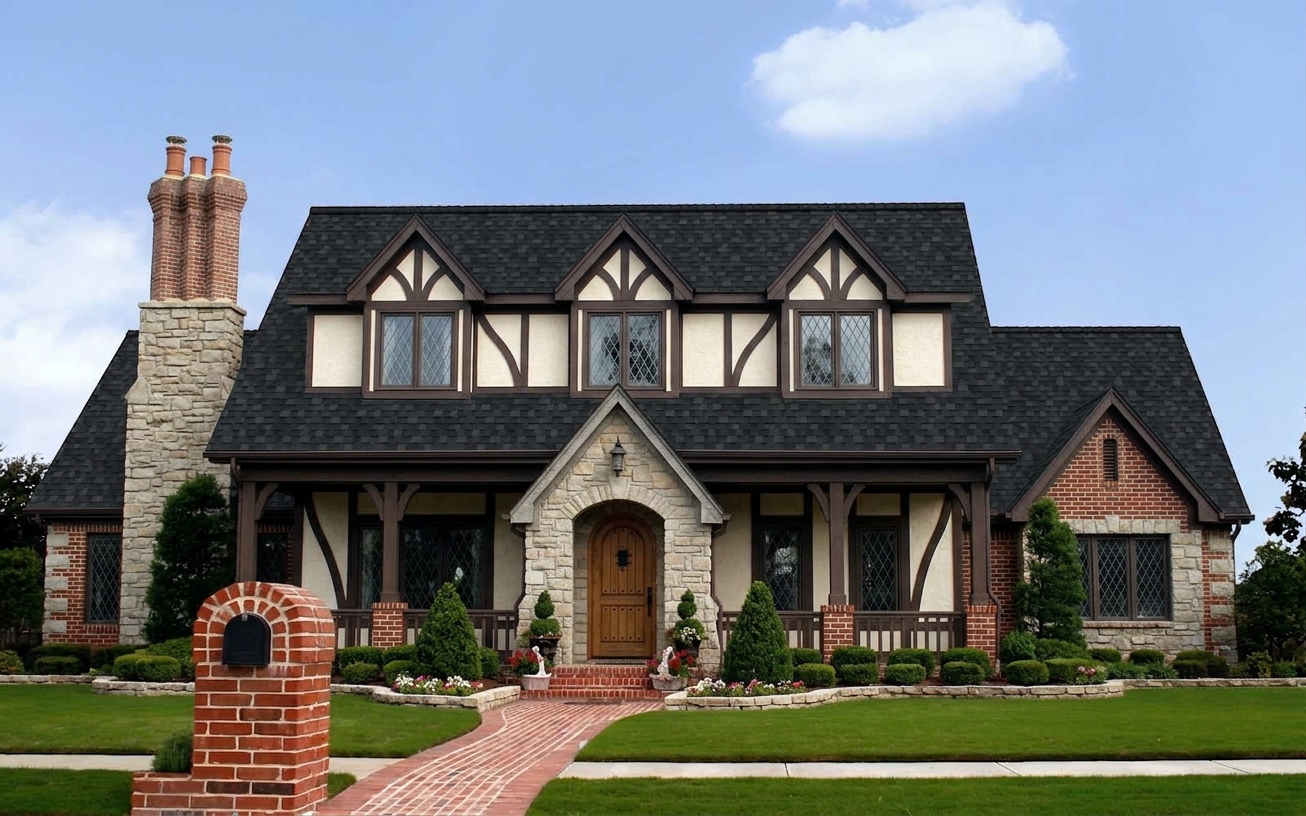
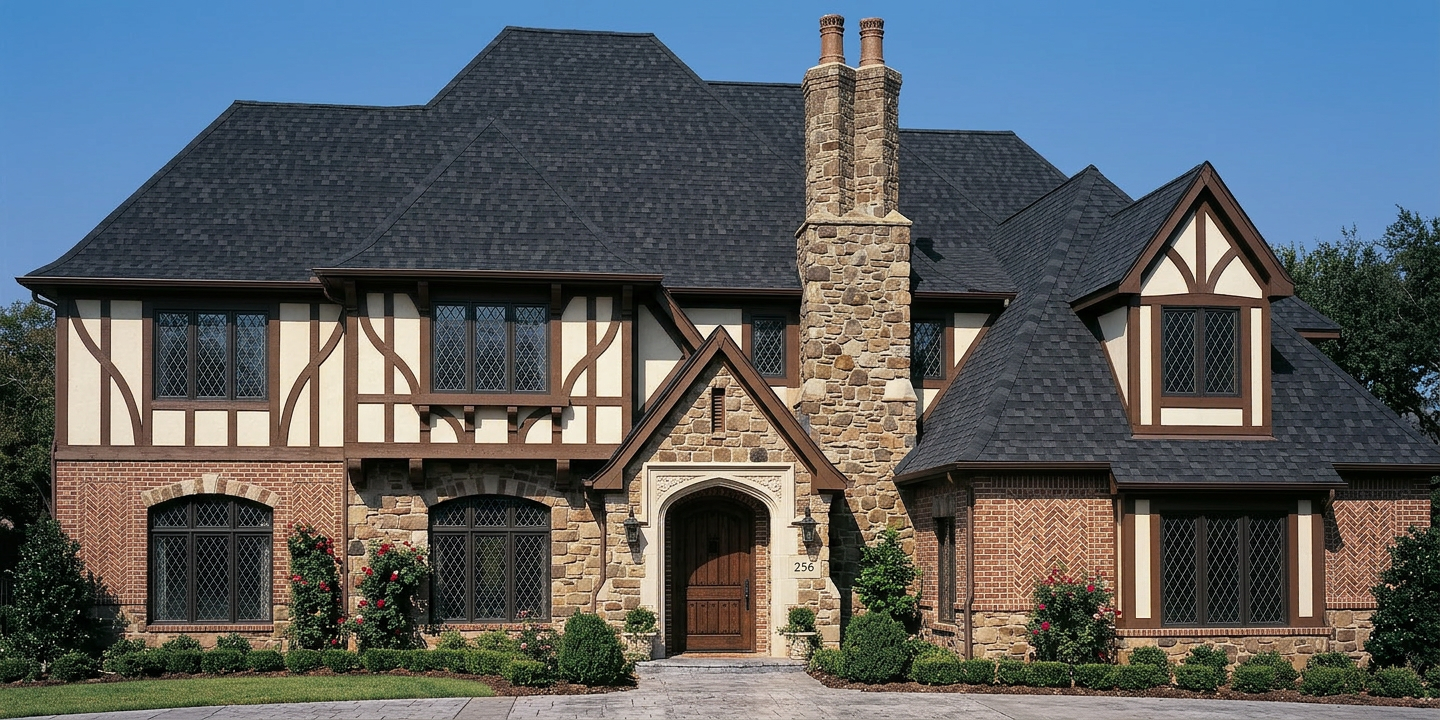
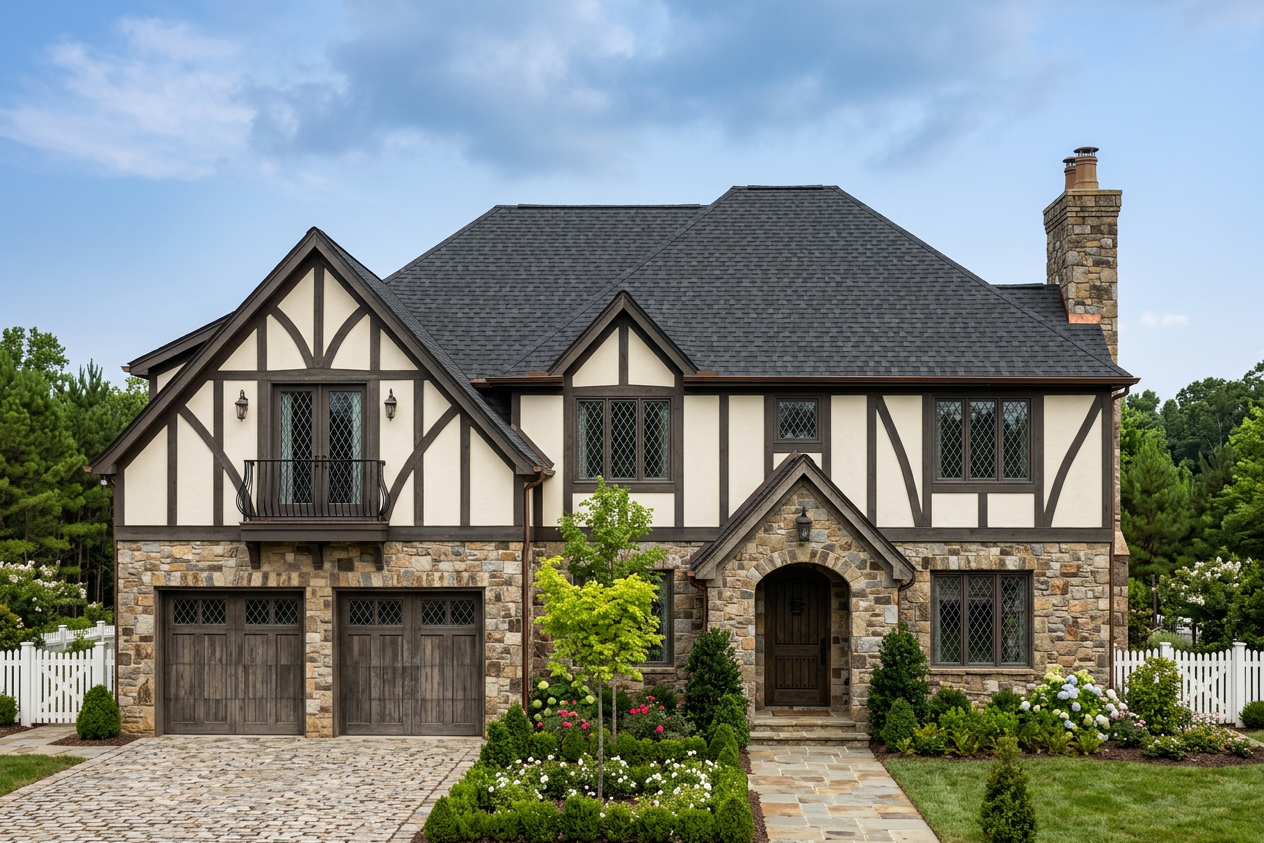
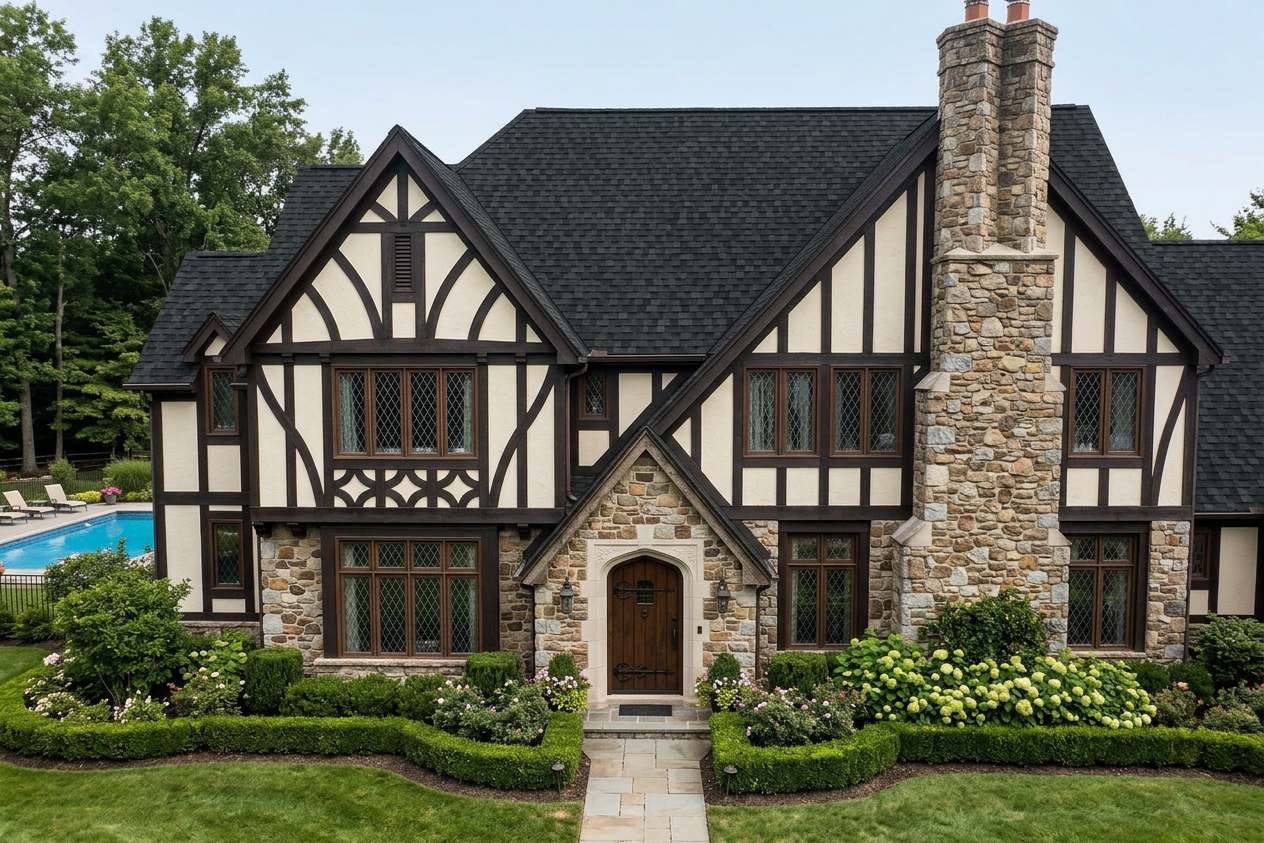
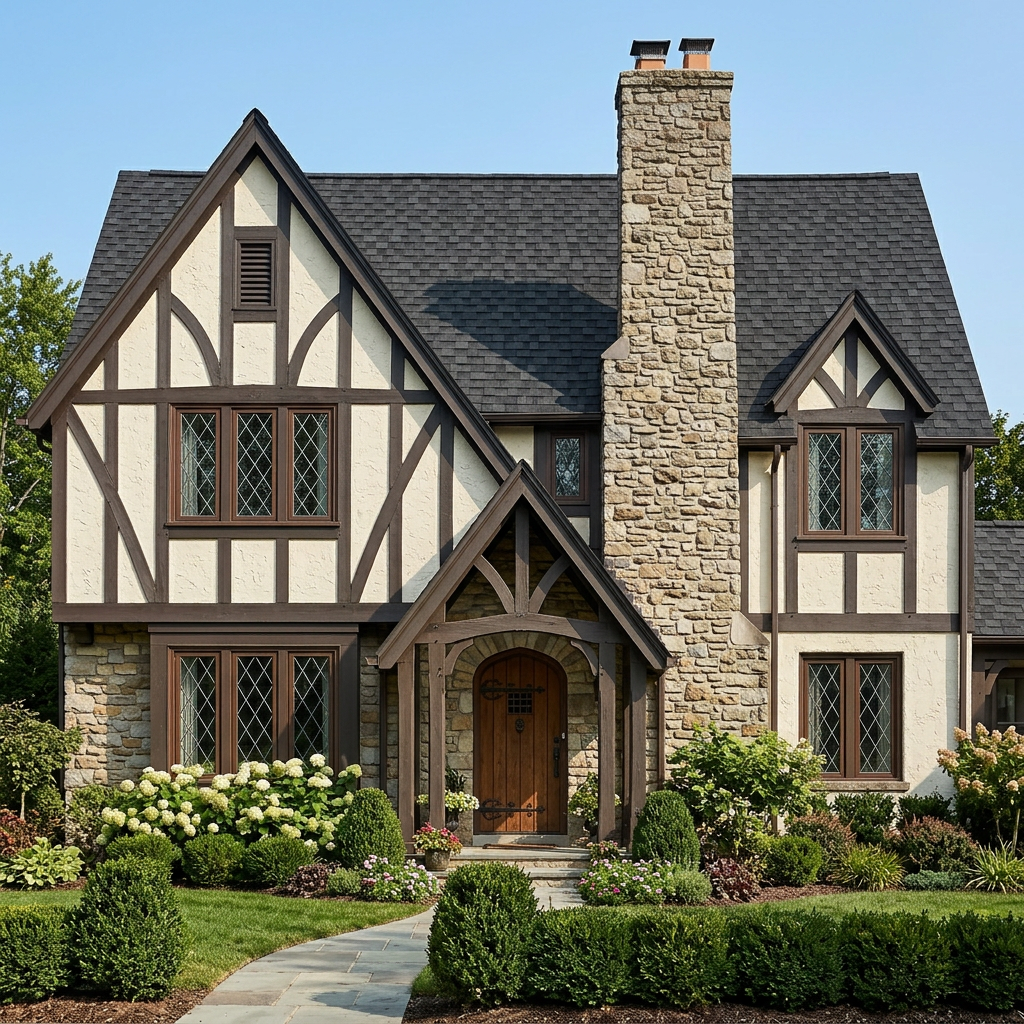
Tudor Revival -- 1890s-1940s American interpretation of medieval English manor houses.
Tudor Revival, sometimes called 'Stockbroker Tudor,' adapted medieval English manor-house architecture into American suburban form between 1890 and 1940. The style was especially popular among upper-middle-class buyers in the 1920s and 1930s before the Great Depression. Key features include half-timbered upper stories with dark wood beams against cream stucco infill, steep multi-gabled roofs, leaded glass casement windows with diamond panes, prominent stone chimneys, and arched front doors set under a small gable.
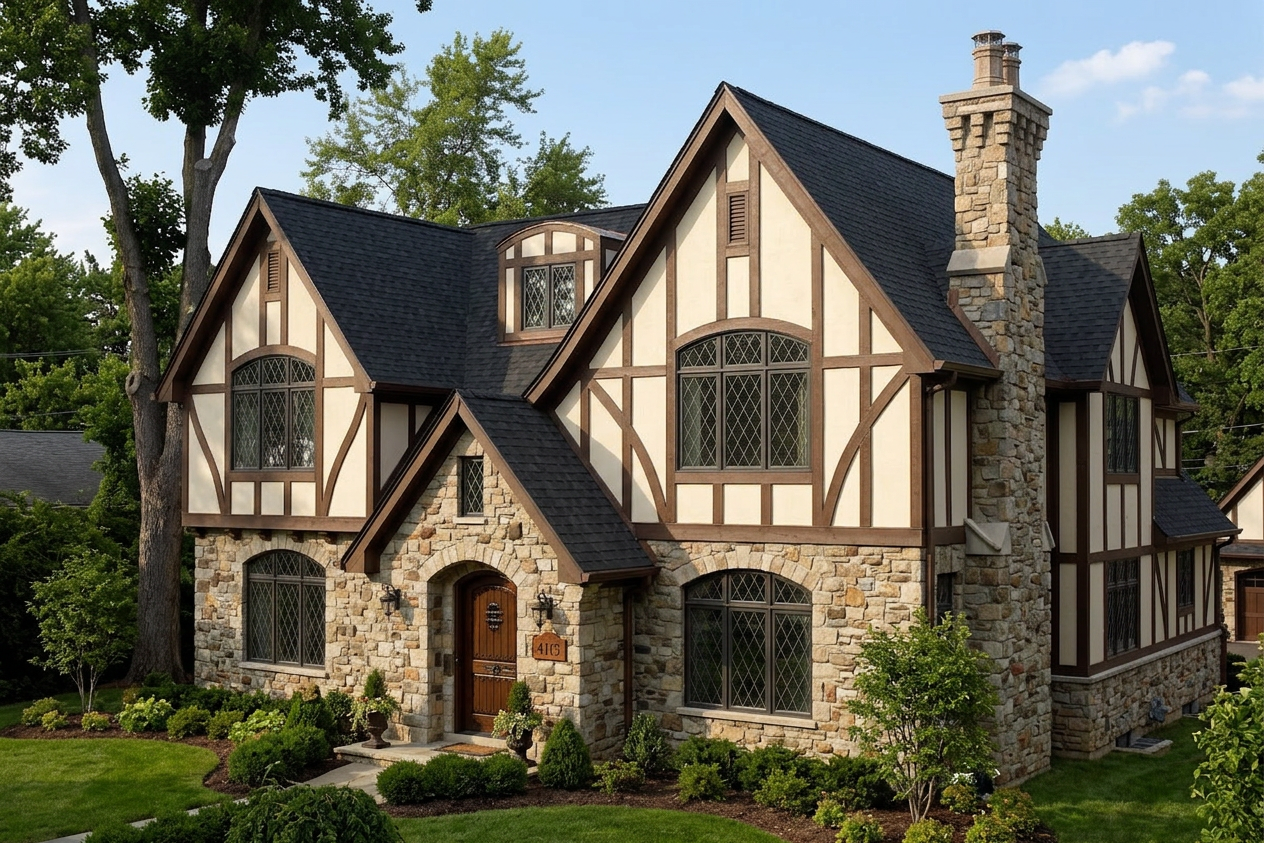
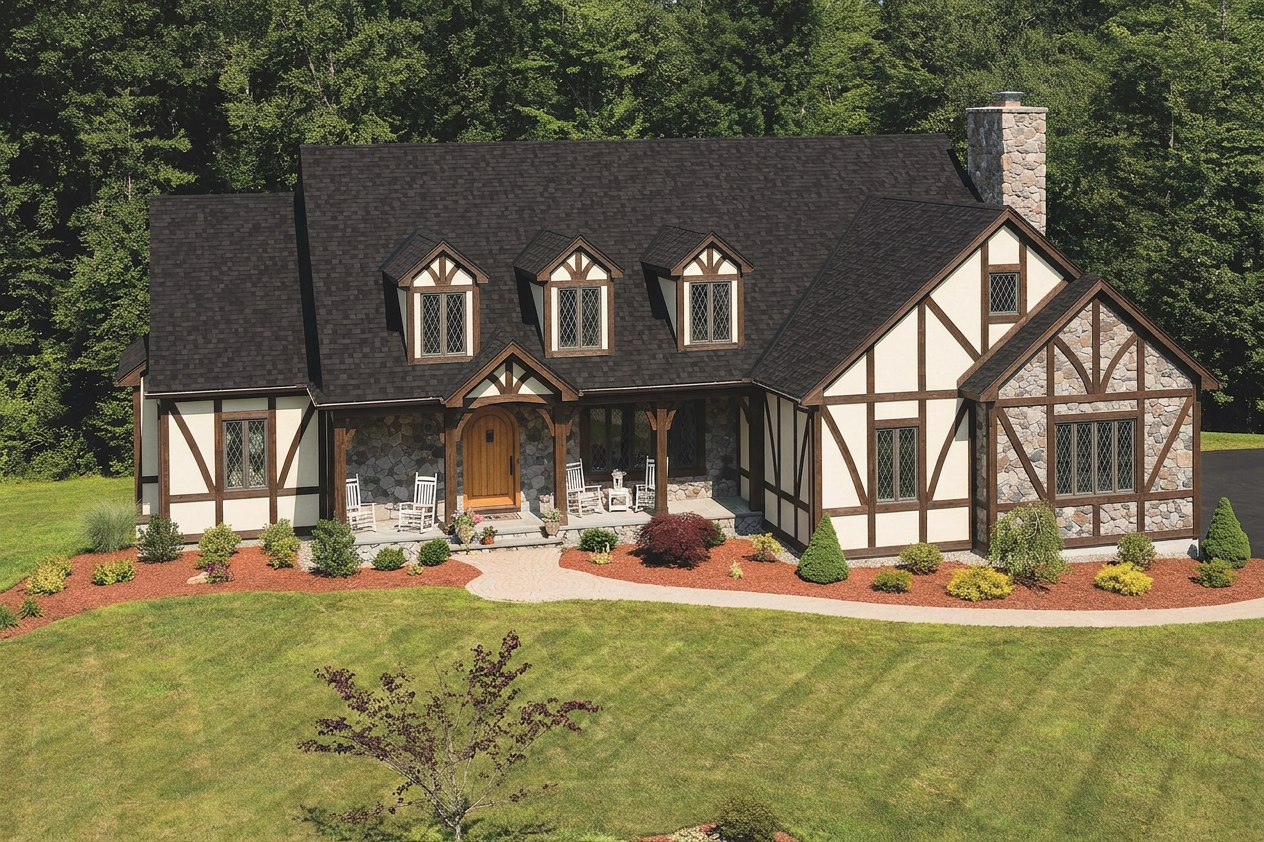
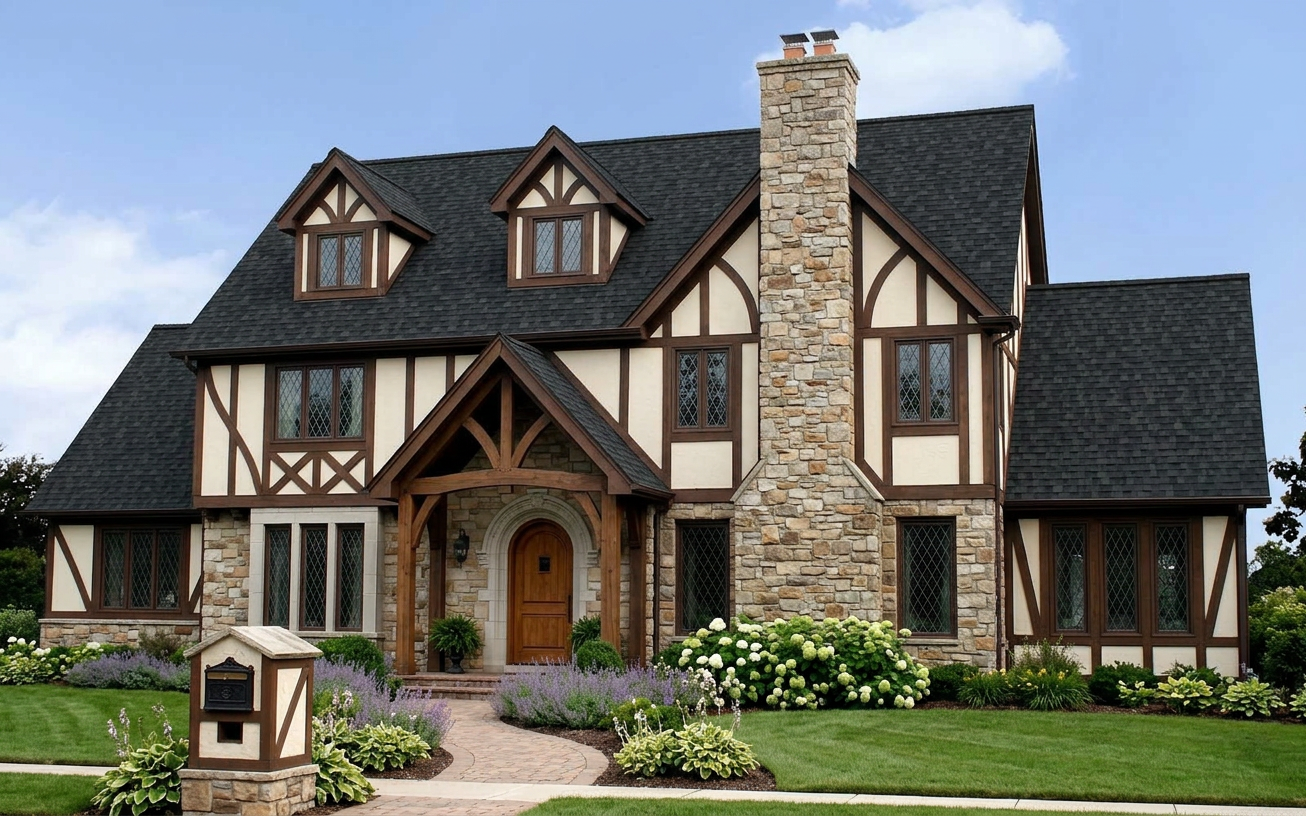
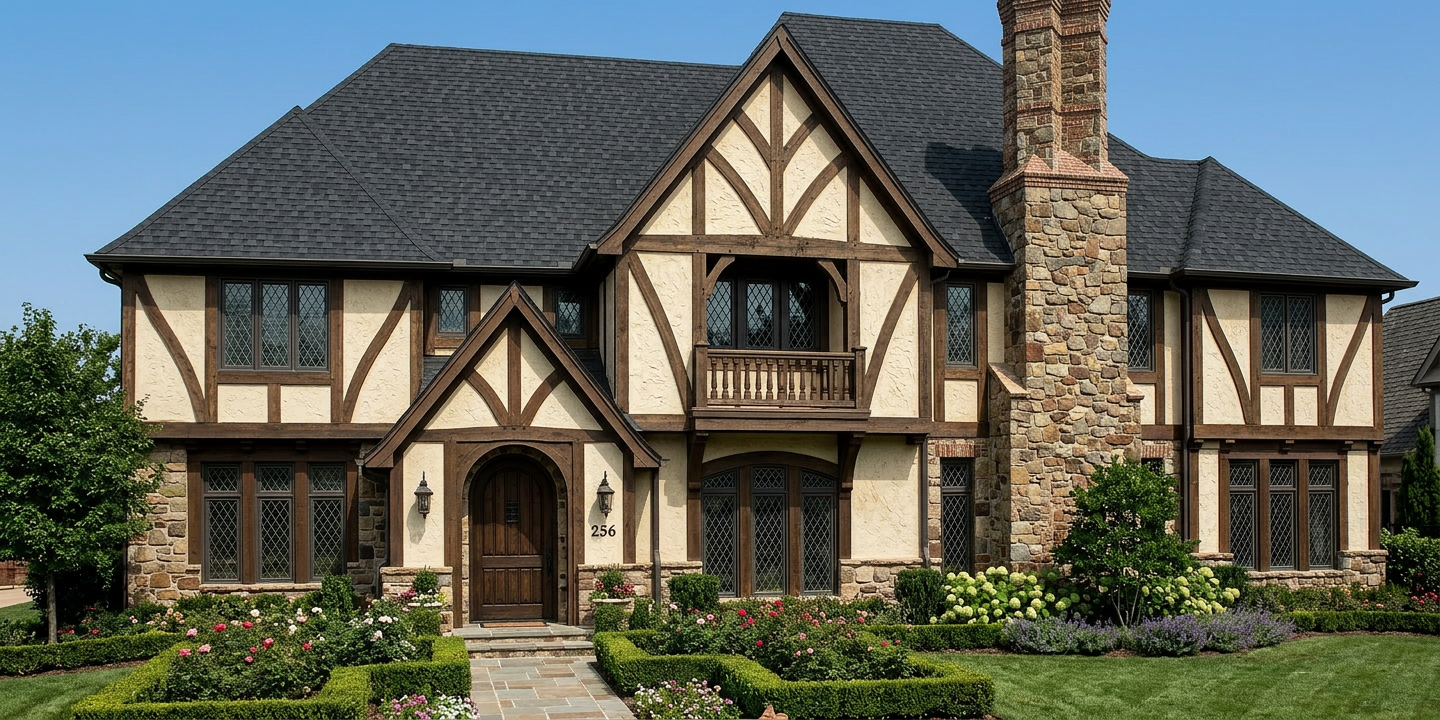
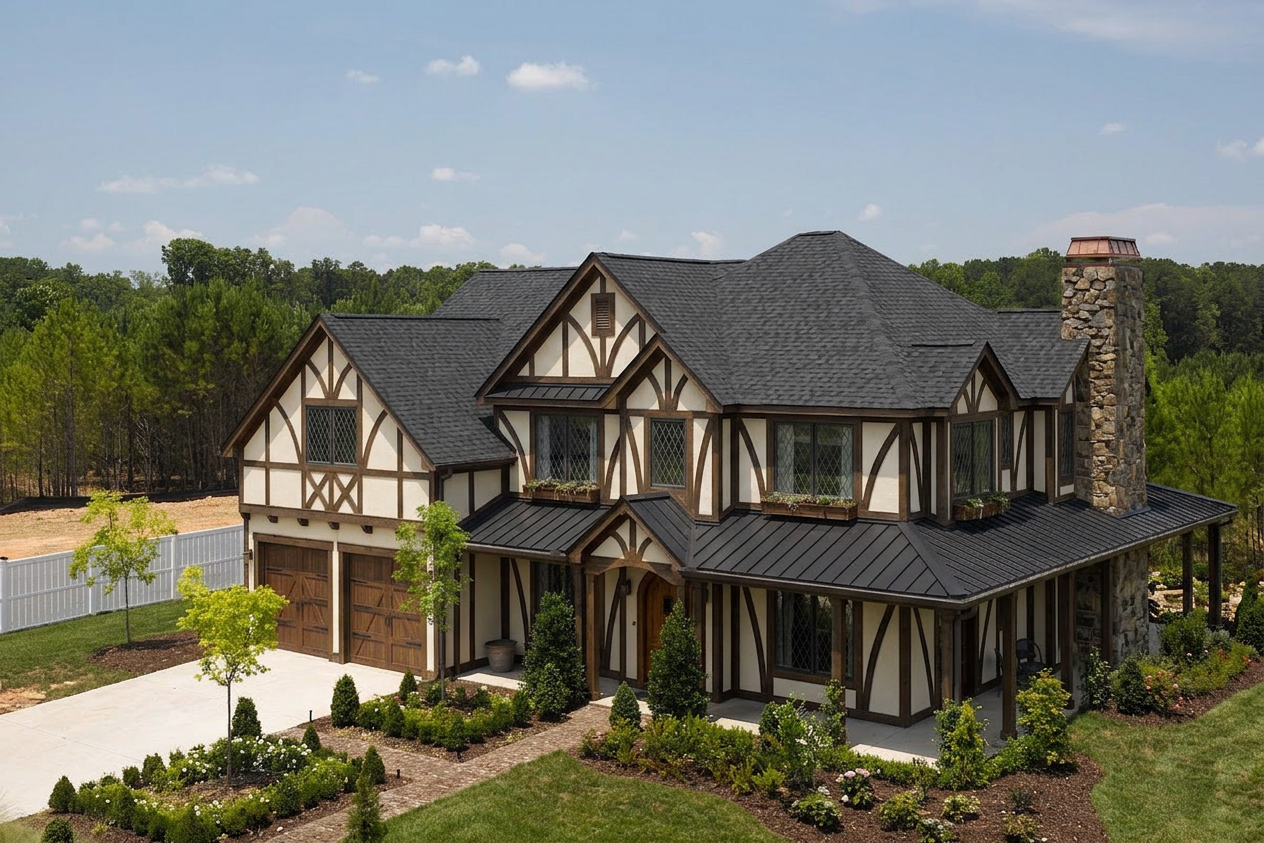
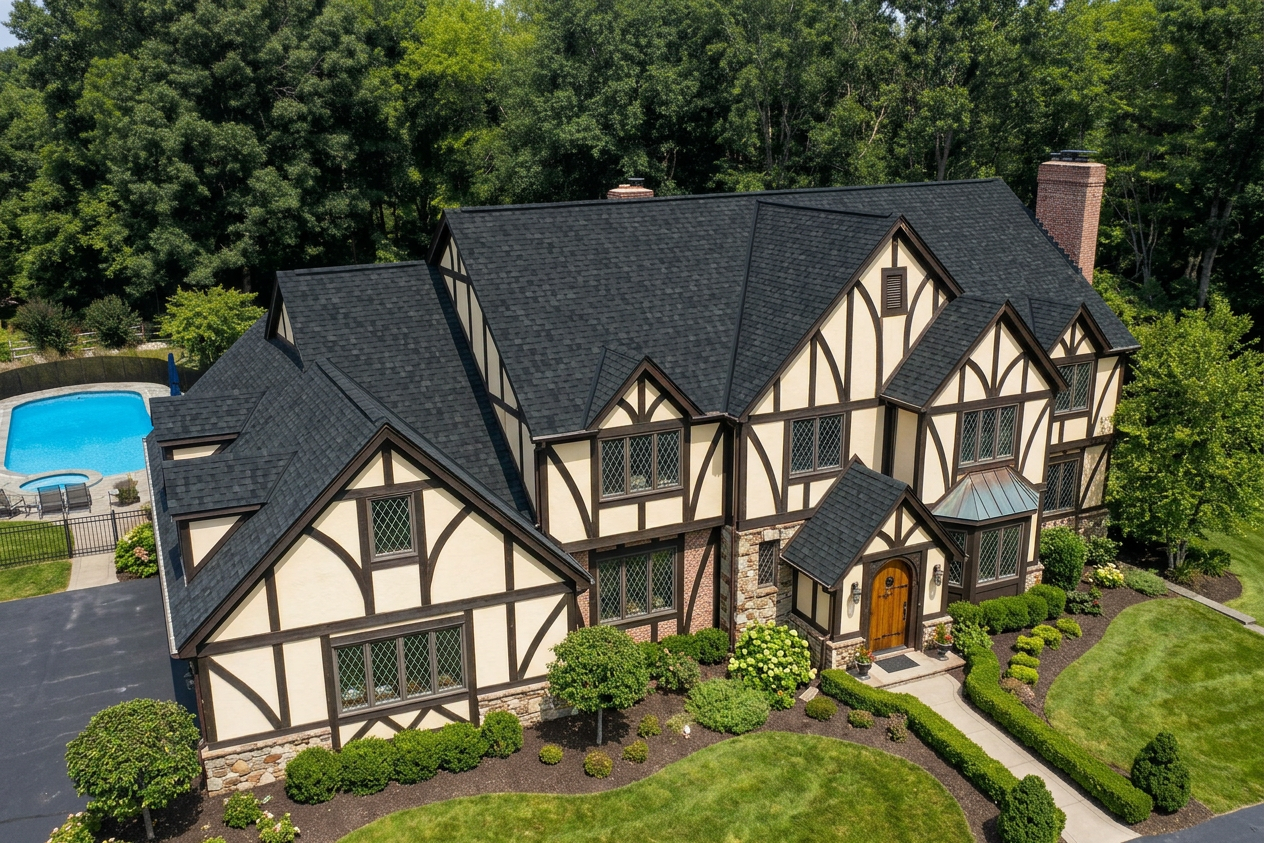
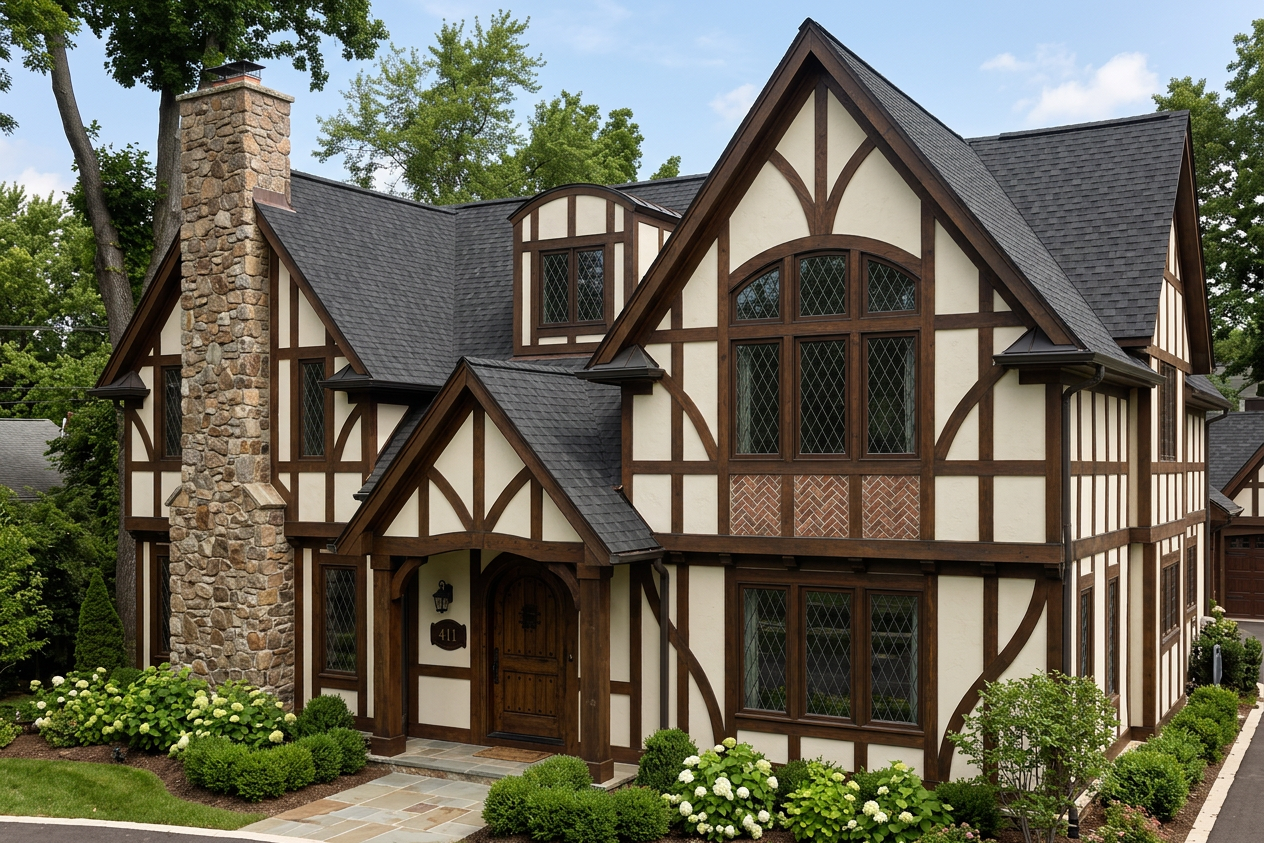
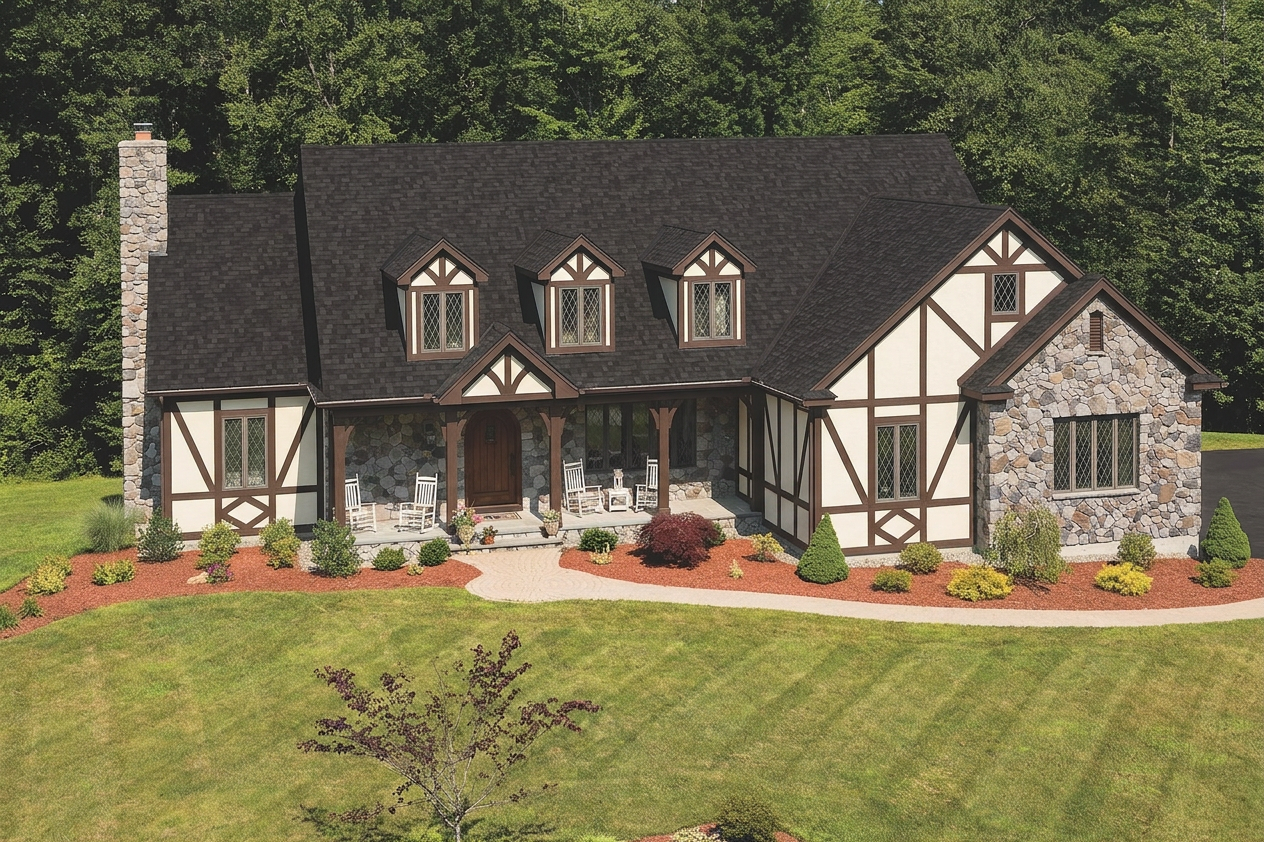
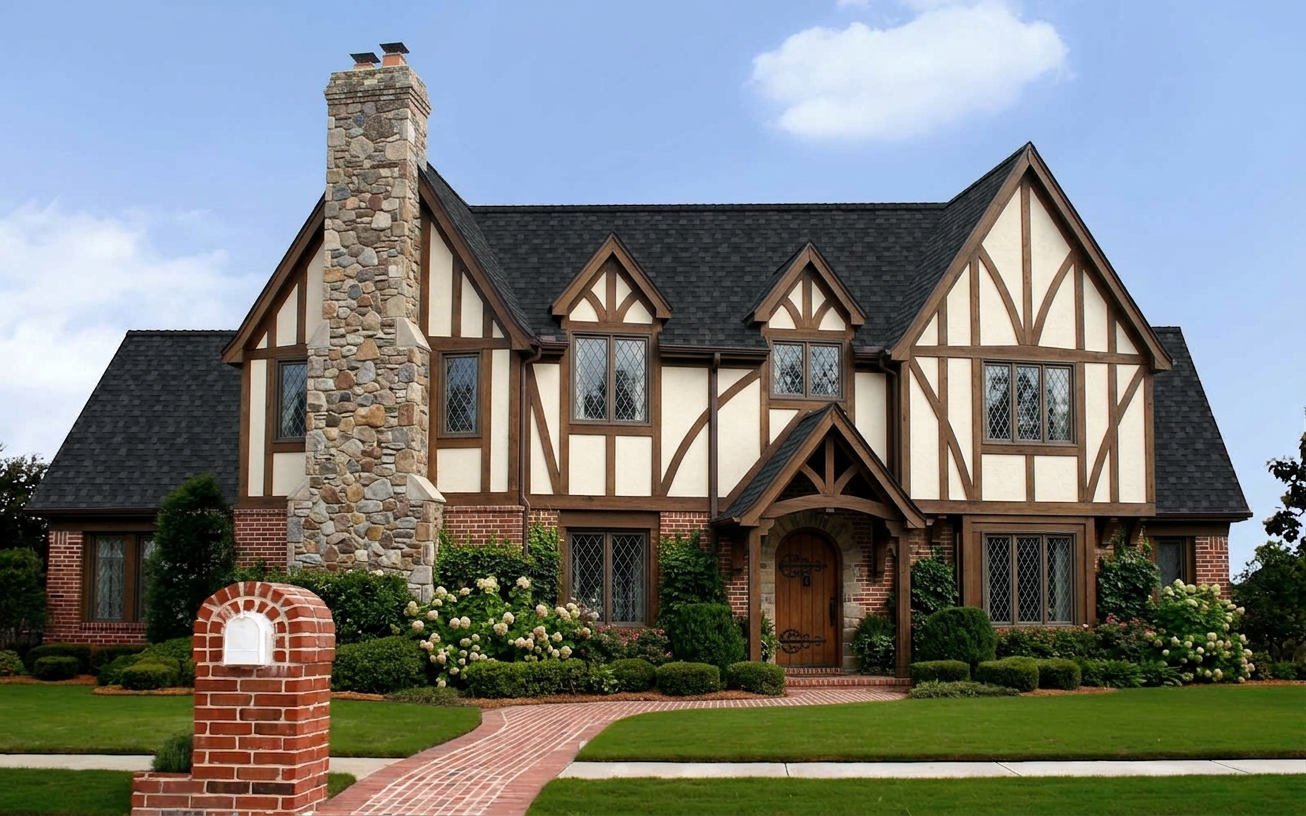
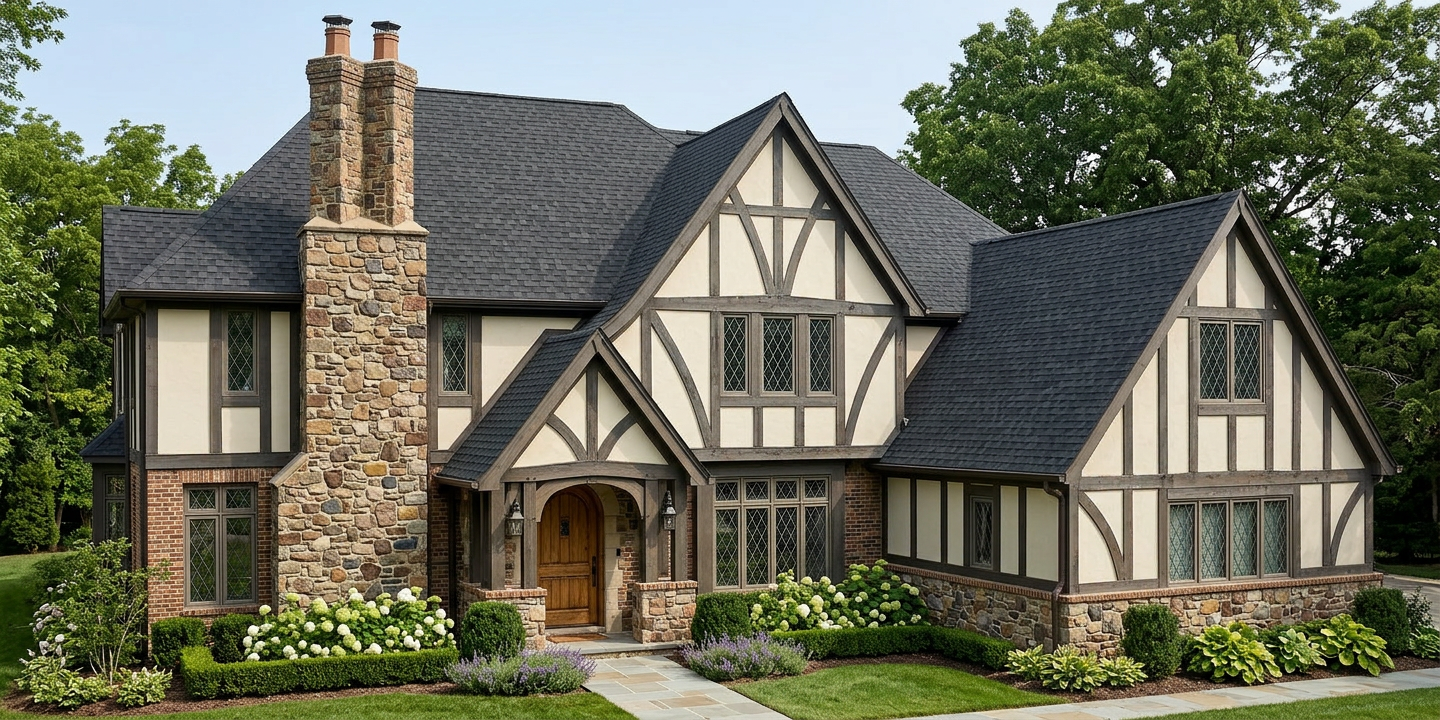

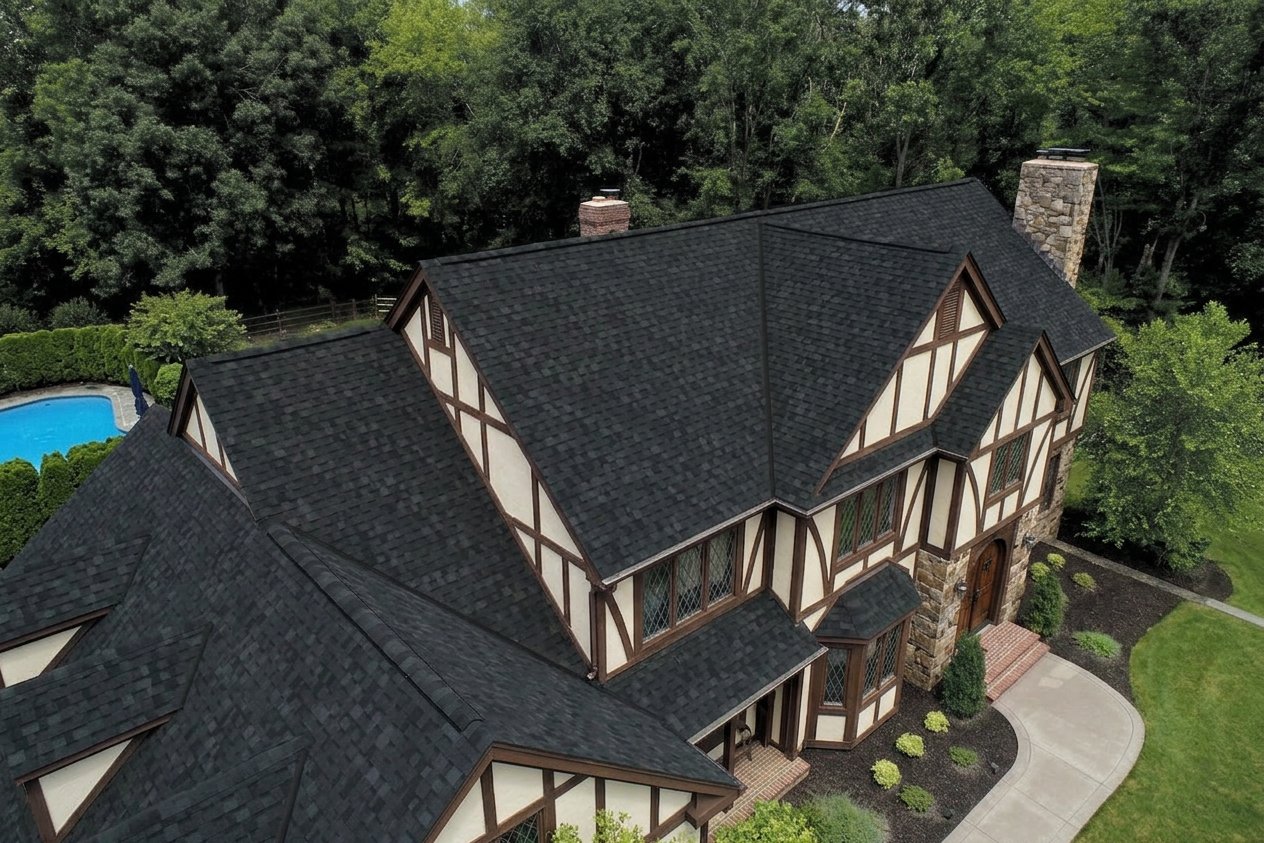
Upload a phone photo of your house and pre-load this exact tudor-and-black pairing in the visualizer. Swap to any of the recommended shingles below in one tap. No signup, no email.
Tudor demands the half-timbering and the steep multi-gabled roof line.
Tudor demands the half-timbering and the steep multi-gabled roof line. Without both, the facade reads as a generic stucco home. Florida sun fades dark-stained timbering faster than northern UV; plan for restaining every 8-10 years rather than the 15-20 years typical in cooler climates.
Black roof + Florida sun = attic temperature delta.
A black asphalt roof can raise attic temperatures by 5 to 10 degrees Fahrenheit at peak Florida summer compared to a light-gray or weathered-wood roof. Proper soffit-to-ridge attic ventilation and a radiant barrier under the decking close most of the gap and keep monthly cooling-cost impact under 20 dollars in typical Florida homes.
Install quality matters more than SKU.
All seven recommended SKUs hit Class A fire and 110-150 mph wind ratings. The bigger variable on a tudor elevation is install quality: ridge-line straightness, valley flashing, starter strip alignment. Insist on a Master Elite or equivalent certified contractor and a written workmanship warranty separate from the manufacturer's material warranty.
The questions homeowners ask before they commit. Answered without sales spin.
A small number, mostly in older affluent neighborhoods (parts of Coral Gables, certain Tampa and Orlando historic districts). Florida's hot climate and lack of native stone made Tudor expensive to build authentically, so the style is rare compared to the Northeast or Midwest.
A prominent stone or brick chimney rising at least one full story above the eave line, ideally with multiple decorative pots. The chimney is one of the diagnostic features -- a flush wall-mounted chimney reads as Mediterranean or Spanish.
Modern asphalt shingles use ceramic-coated granules engineered to hold color for 25 plus years. Expect a subtle shift toward a slightly warmer dark gray over the first 5 years, then stability. Premium SKUs carry 25 to 50-year fade warranties. Source: NRCA Asphalt Shingle Manual.
Not because of color. Insurance underwriting cares about wind rating, hail rating, and the roof's age. All recommended SKUs on this page are 130 mph wind and Class A fire. Some Florida insurers offer a small discount for impact-rated (Class 3 or 4) variants.
All renders on this page were generated by fal.ai's nano-banana-2 image-edit model on top of REAL install photos from each manufacturer. The roof color, granule texture, and shingle pattern come directly from the source photo and are preserved during the edit. The facade is restyled to Tudor. The result is photorealistic but not identical to any specific real home -- use it for visual comparison, then open the free visualizer to see the same SKU on a photo of your own house.