
Cape Cod Homes With a Charcoal Roof: 21 Rendered Examples 2026
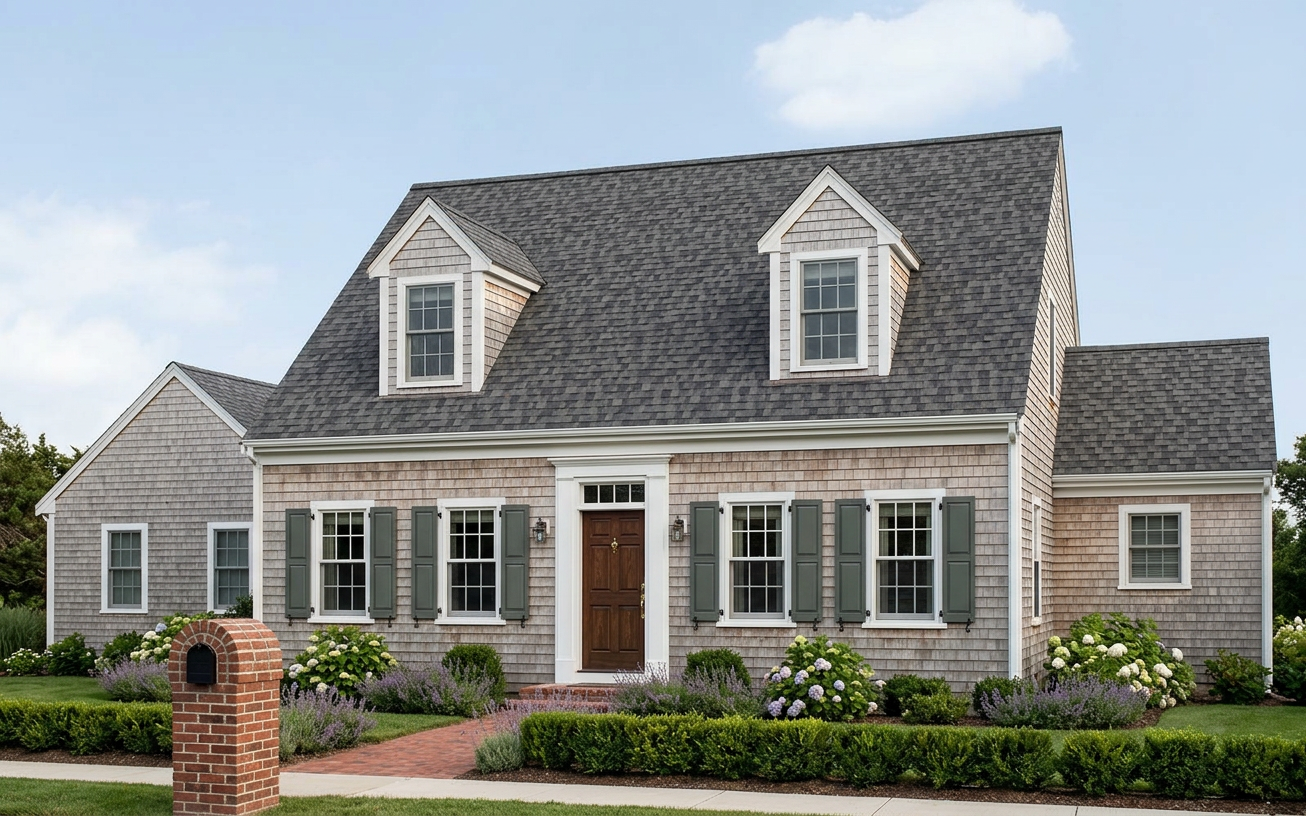
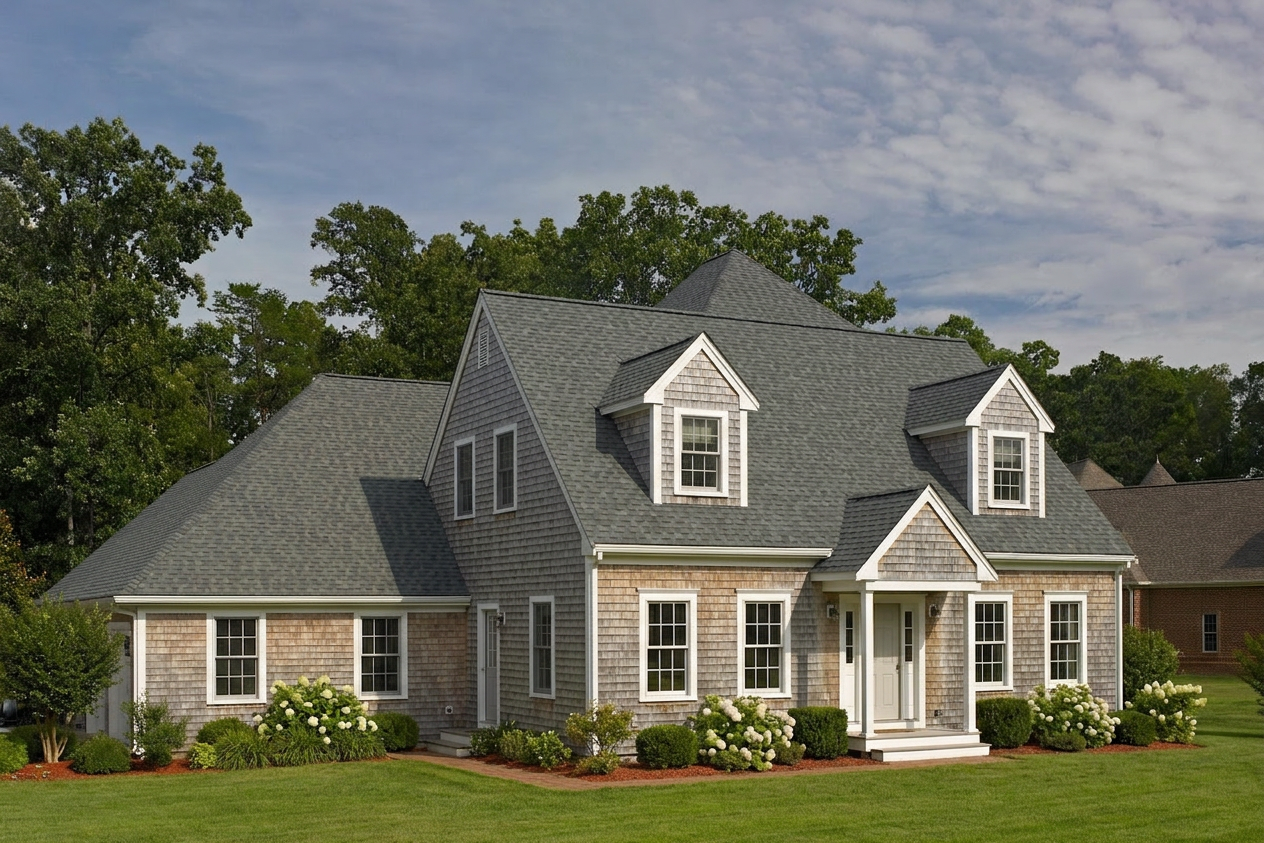
Charcoal sits between black and gray, and that tonal range is exactly why it reads so well on a Cape Cod. The gray-blue granule variation produces a textured architectural plane rather than a flat cap, which suits the layered depth of steep gables, shuttered dormers, and classic painted trim well.
It complements white, cream, and soft gray siding without forcing a high-contrast statement - a restrained, considered choice that lets the architecture's inherent symmetry and steep proportions carry the facade.
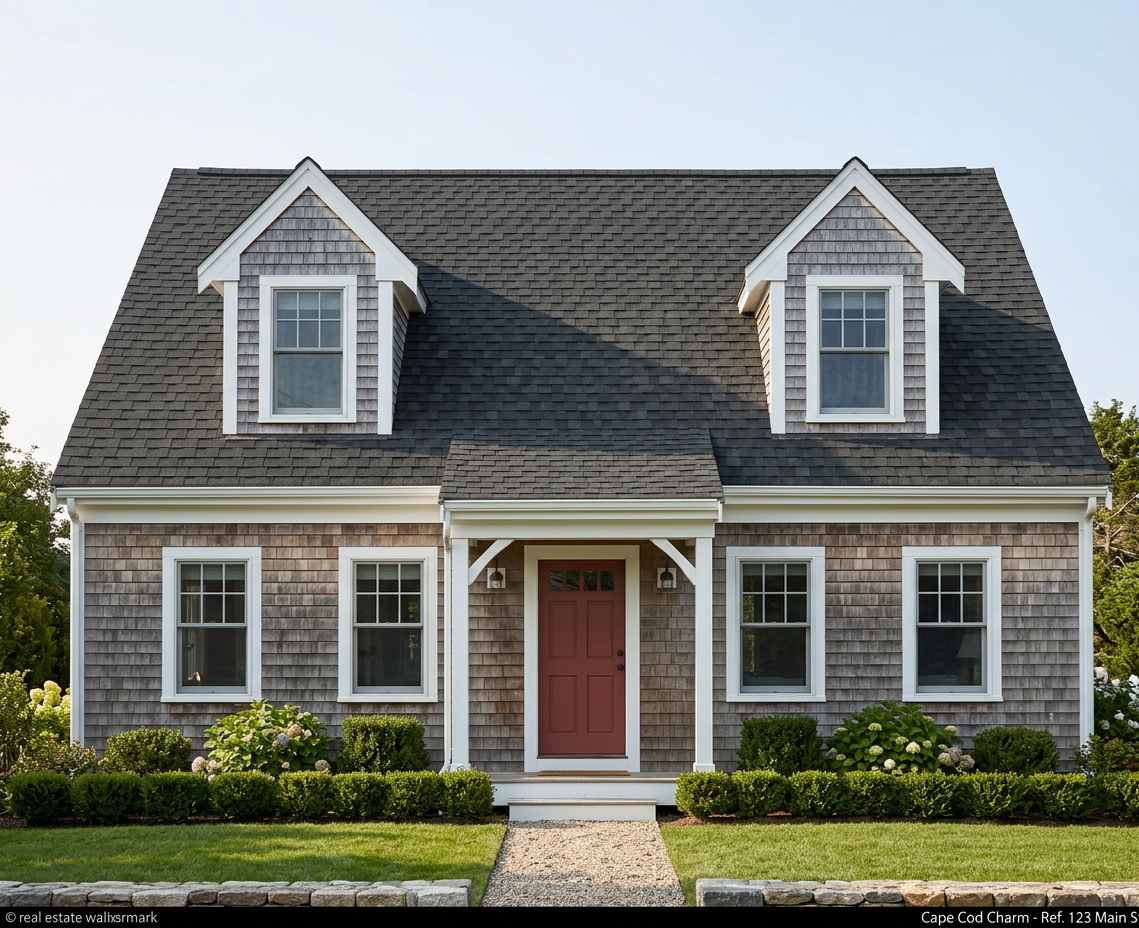
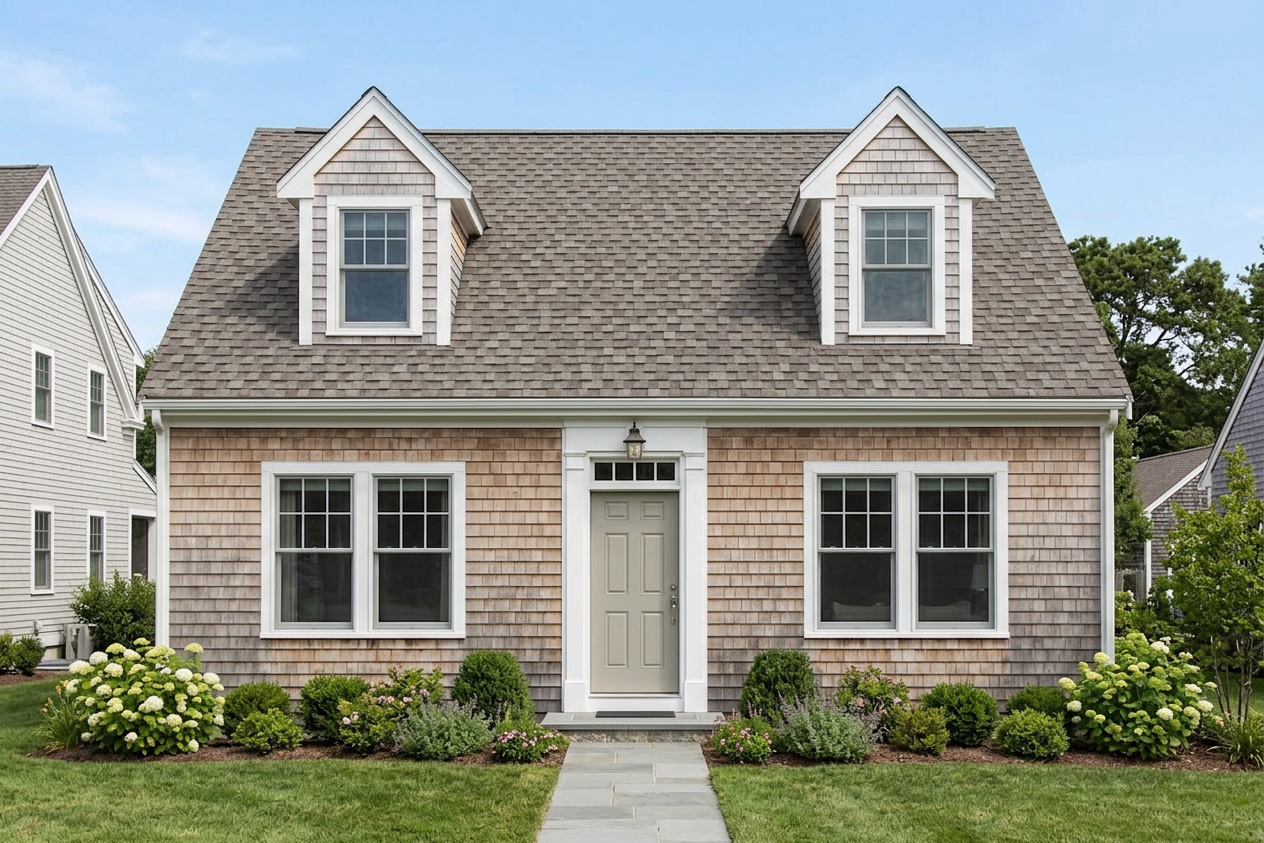

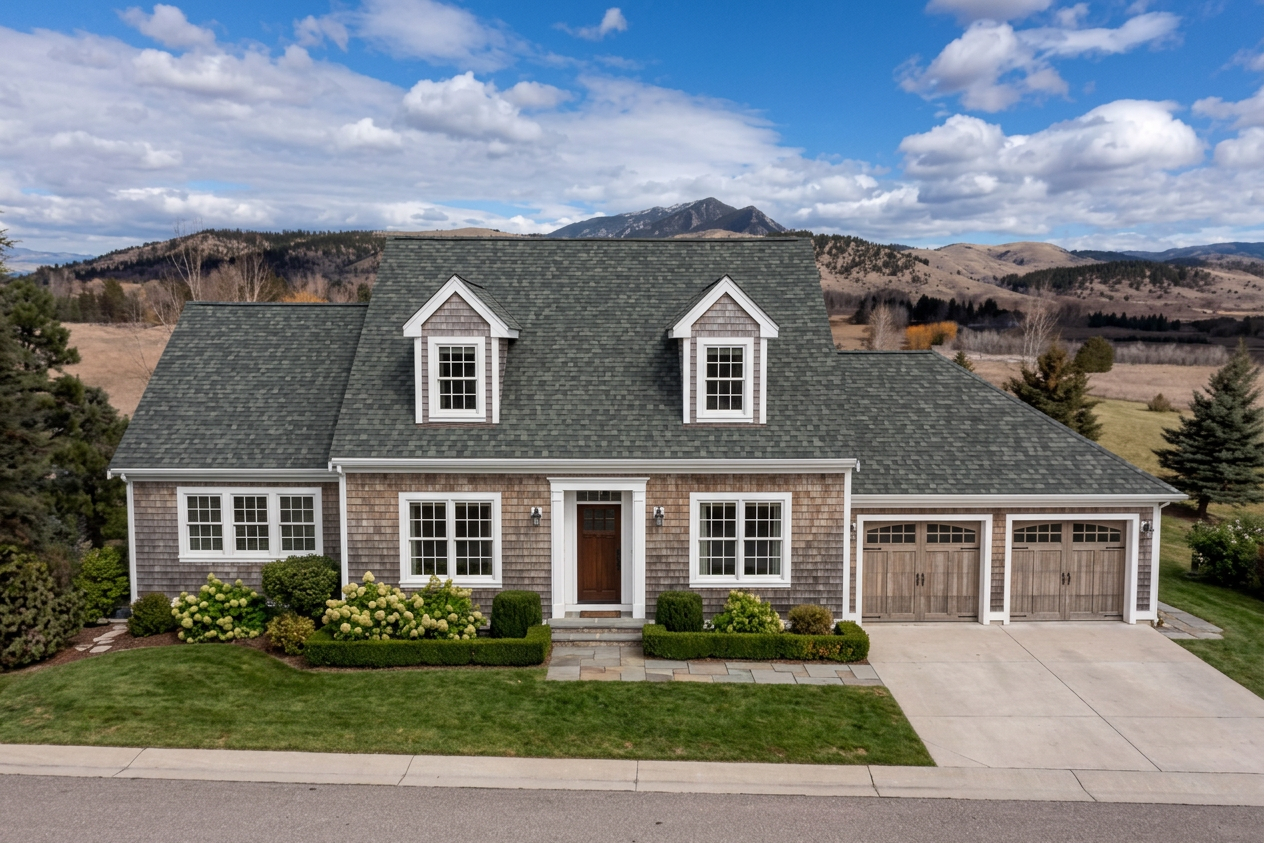
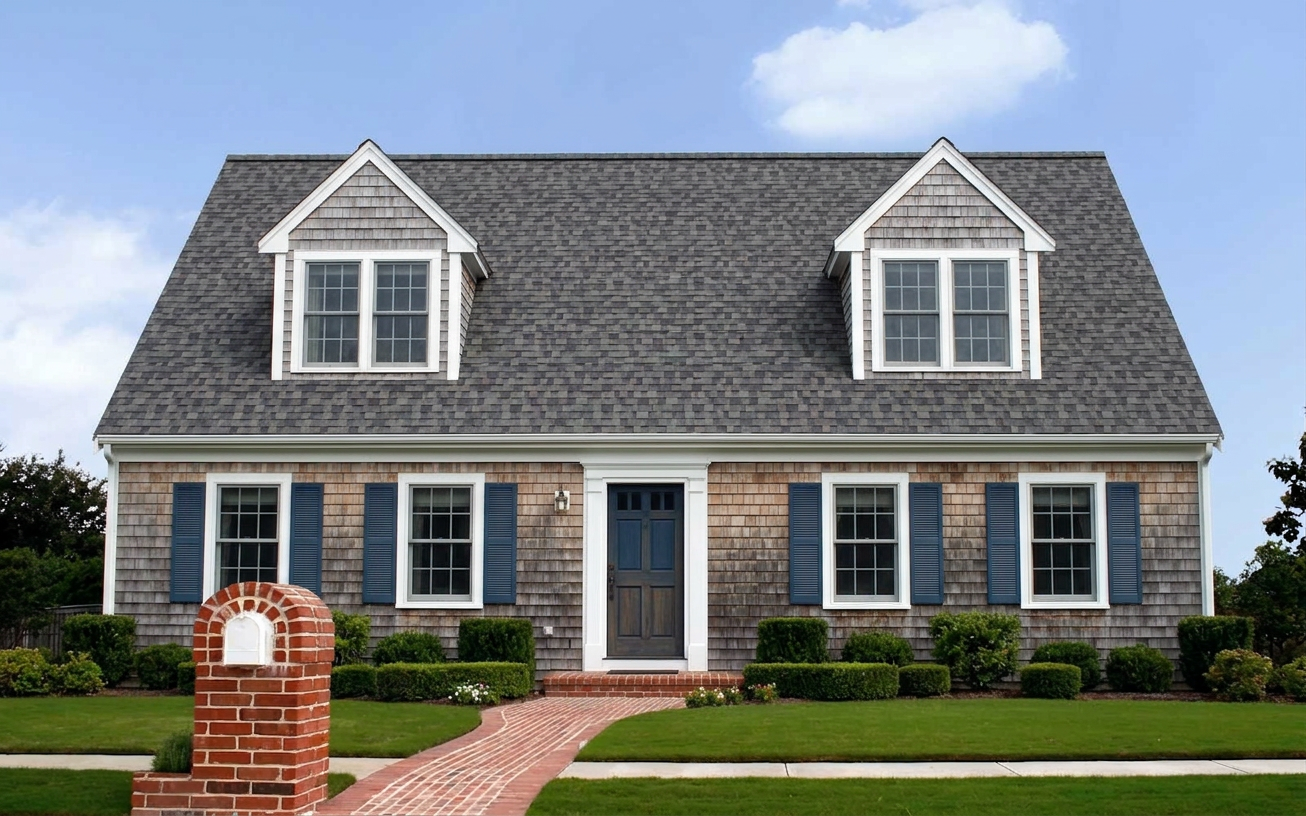
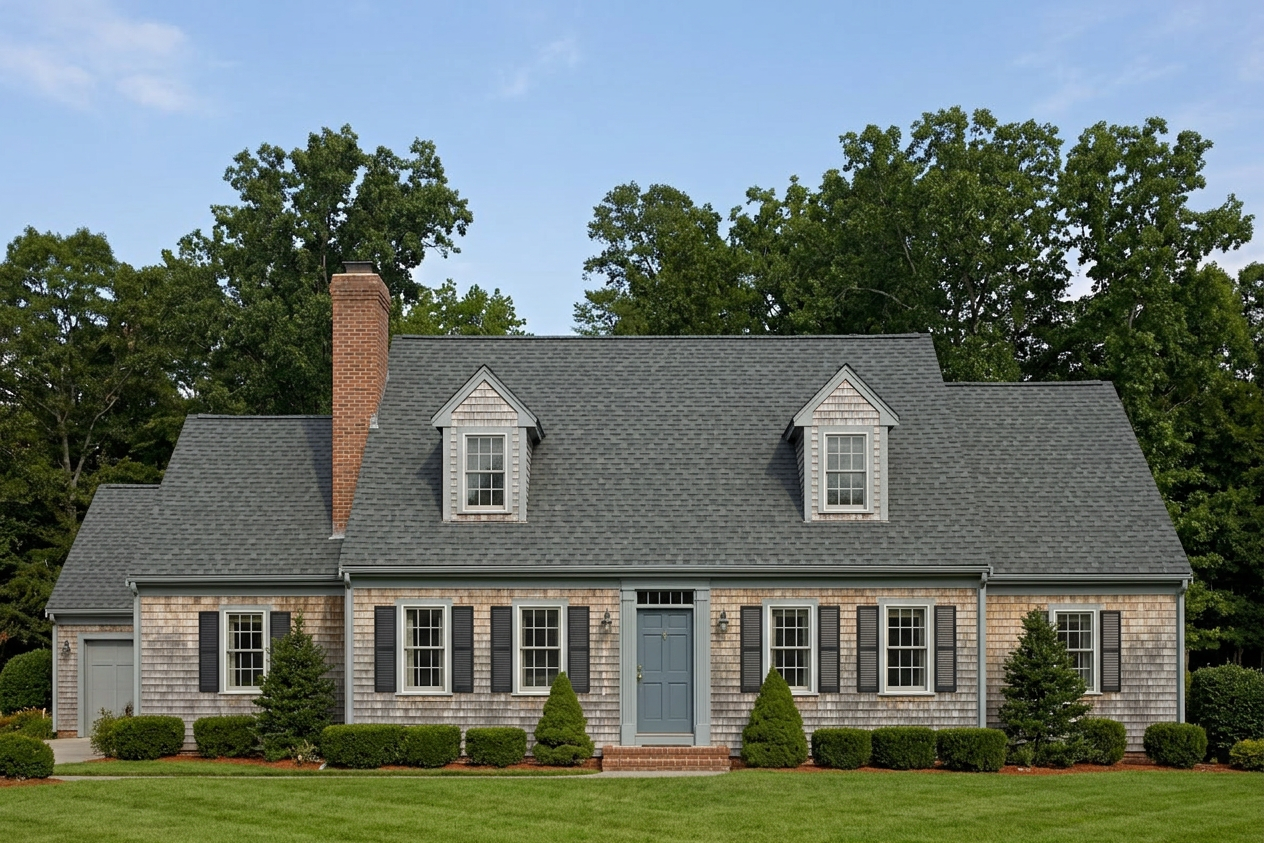
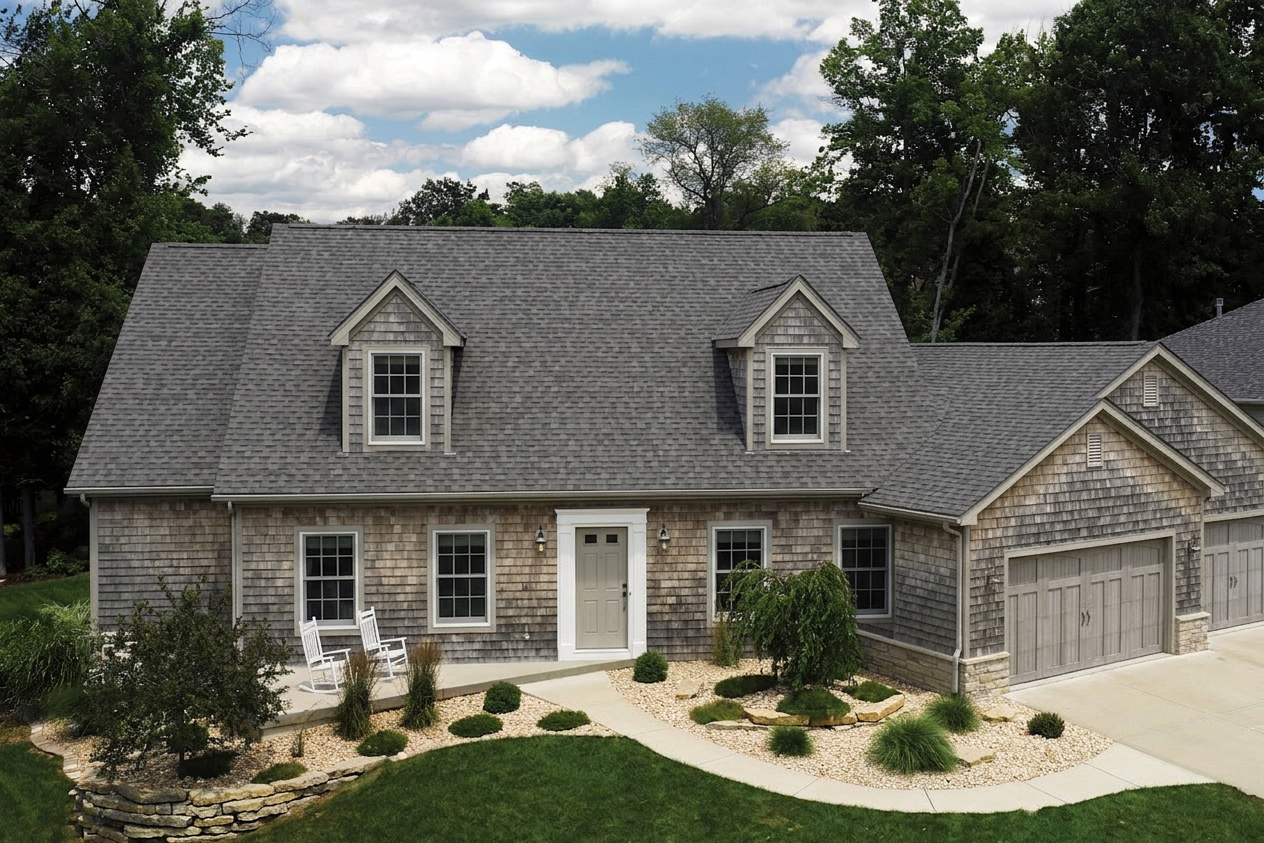
17th-century New England origin, 1930s-1950s American revival.
Cape Cod architecture originated in 17th-century New England, where settlers built compact 1.5-story homes with steep roofs to shed snow and central chimneys for heat. The Cape Cod Revival of the 1930s through the 1950s, especially through the work of Royal Barry Wills, brought the style to suburban America. Key features include the 1.5-story height, a steep gabled roof, central chimney, two front-facing dormer windows, weathered cedar-shingle siding, and a compact symmetric front. Florida's coastal-cottage builds borrow the style heavily.
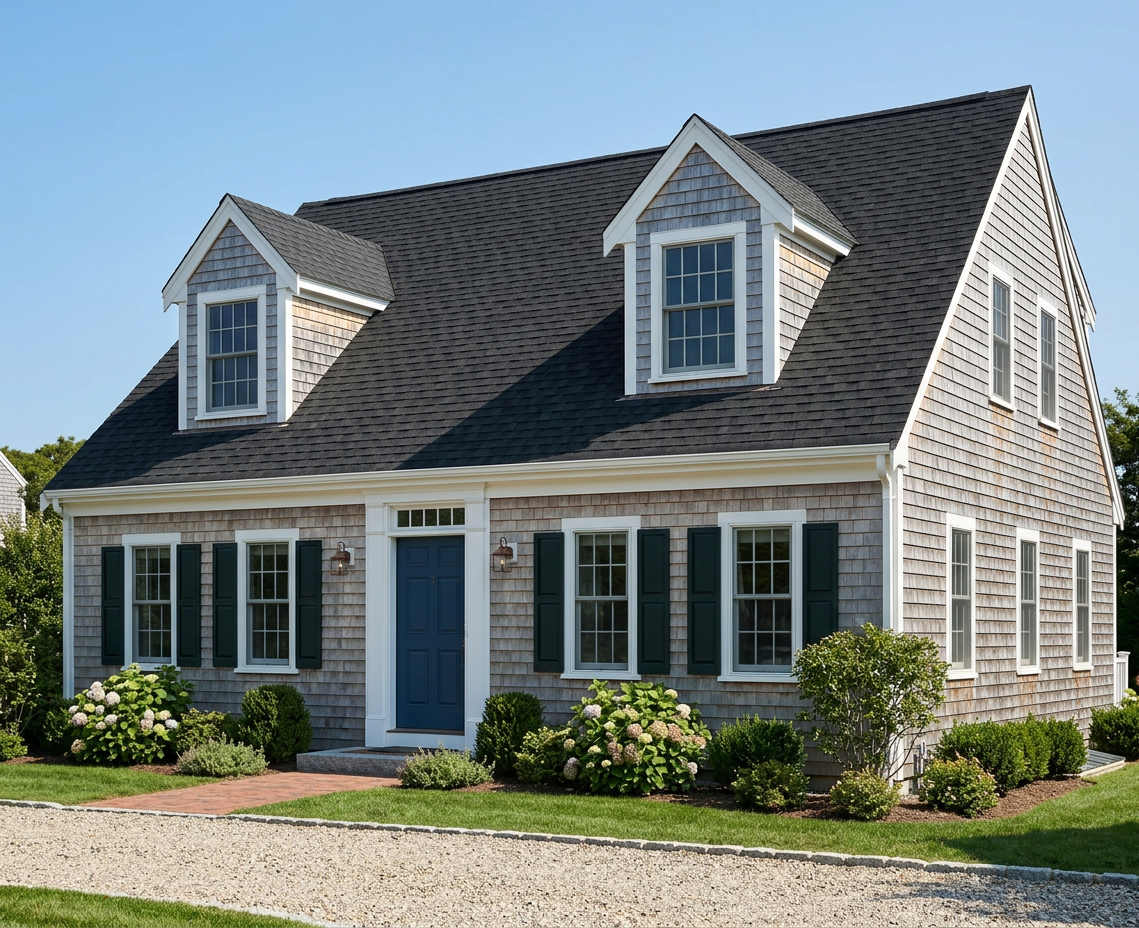
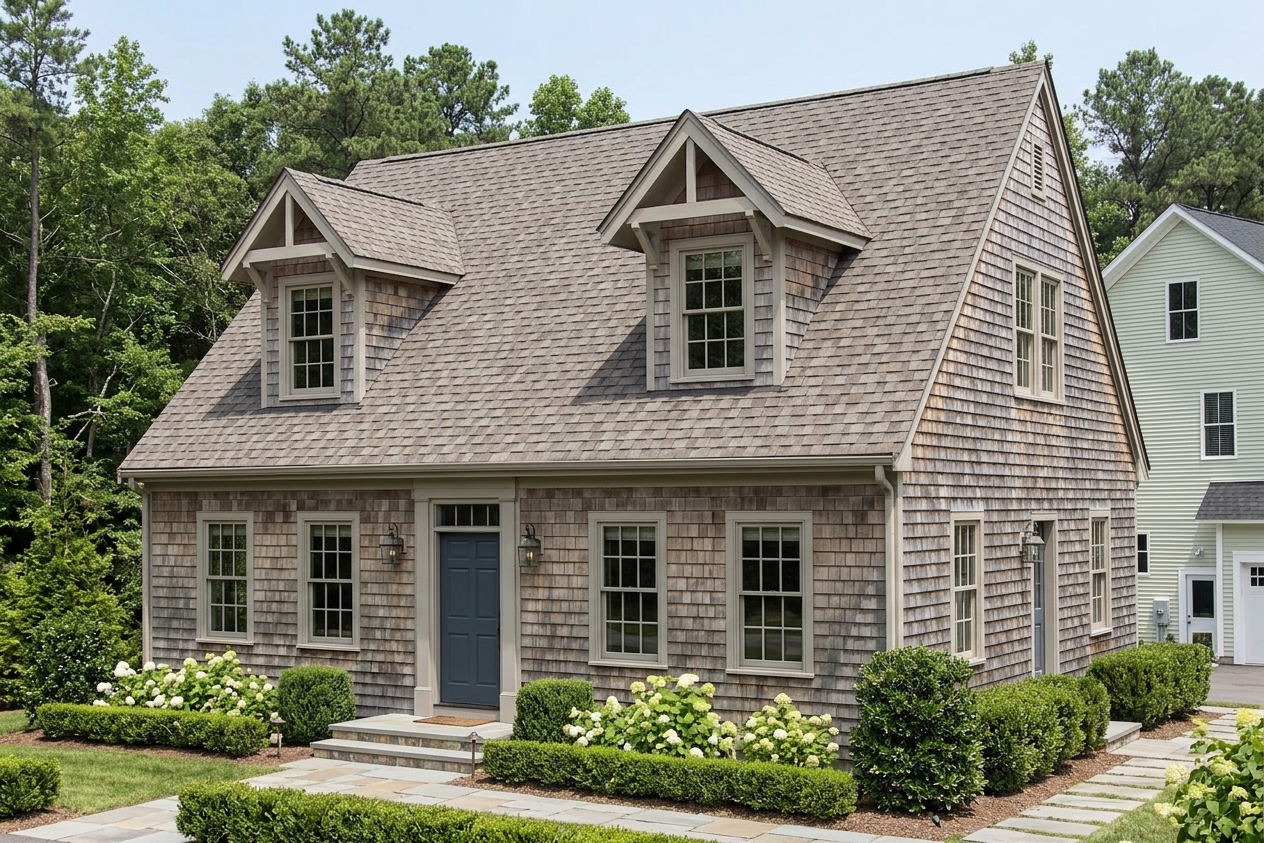
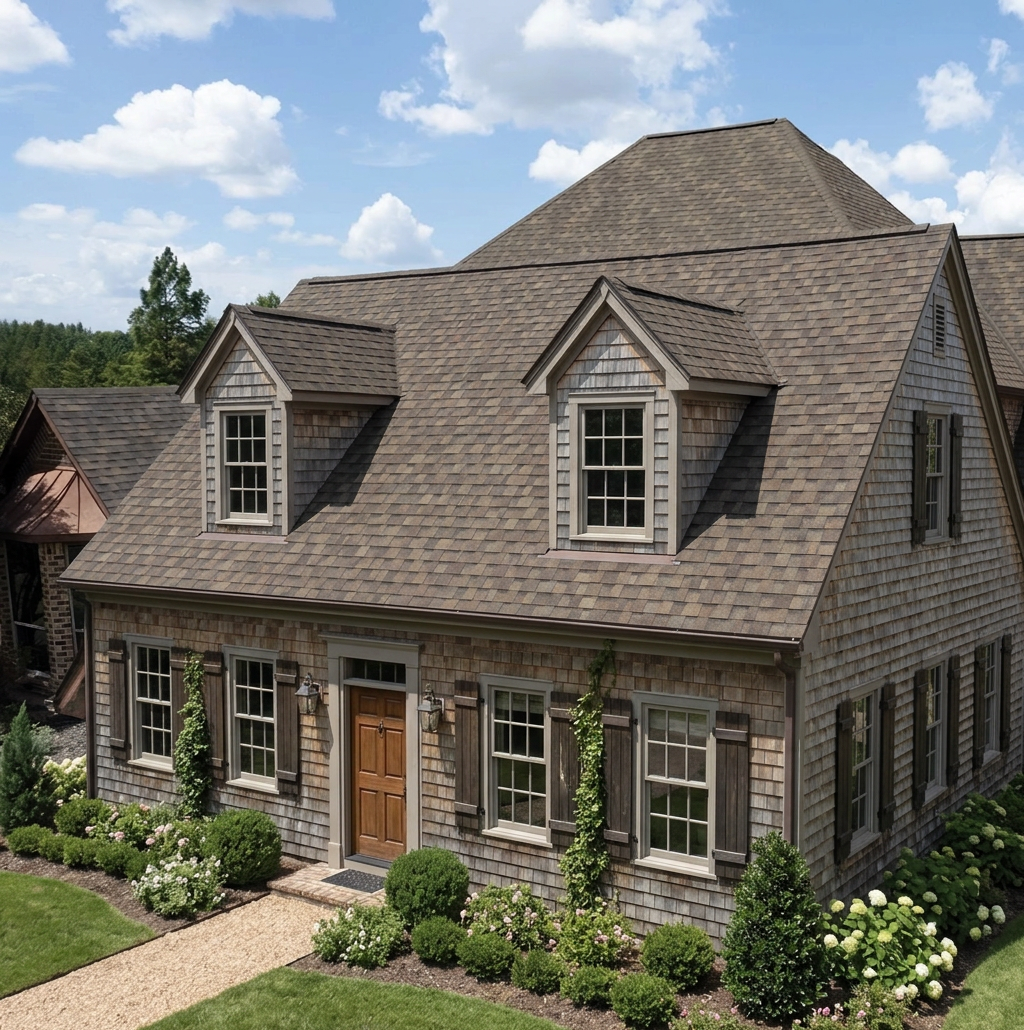
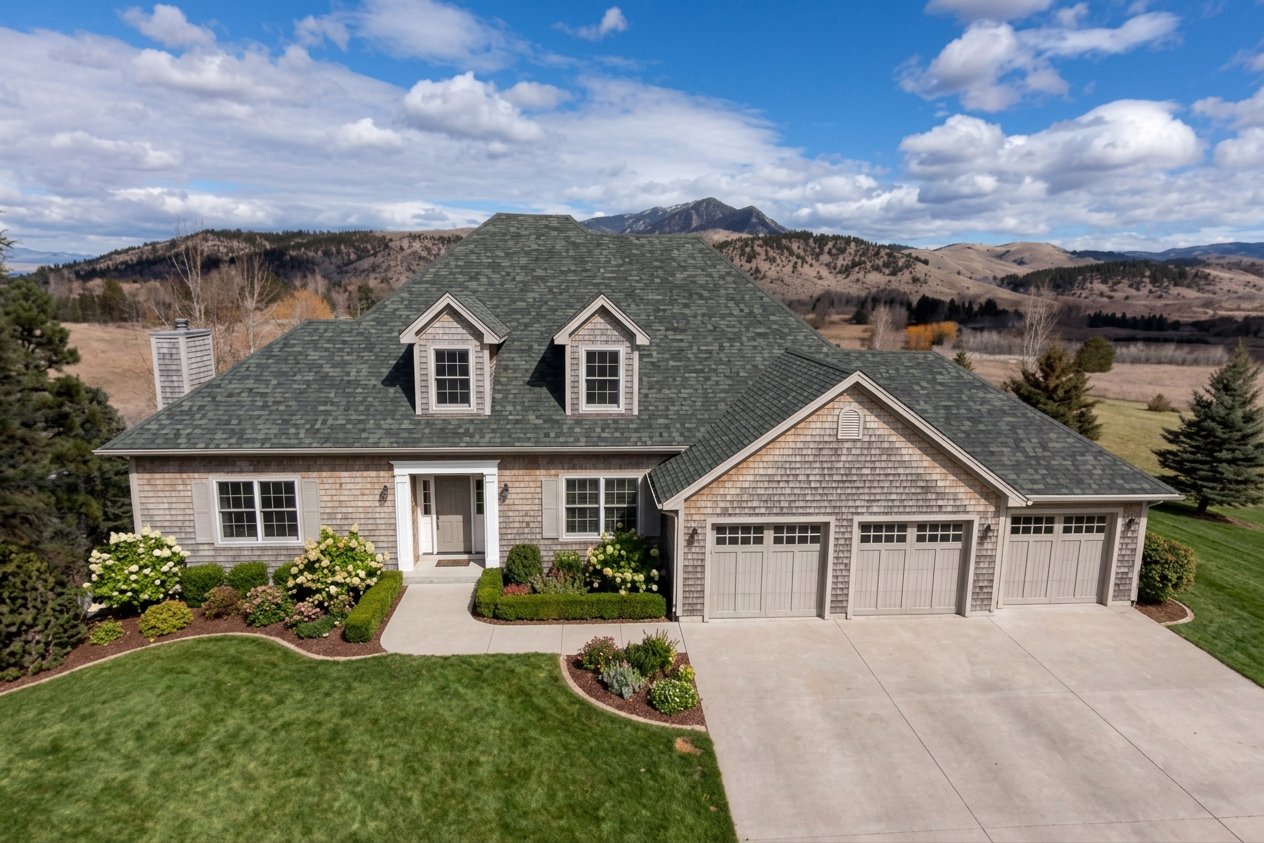
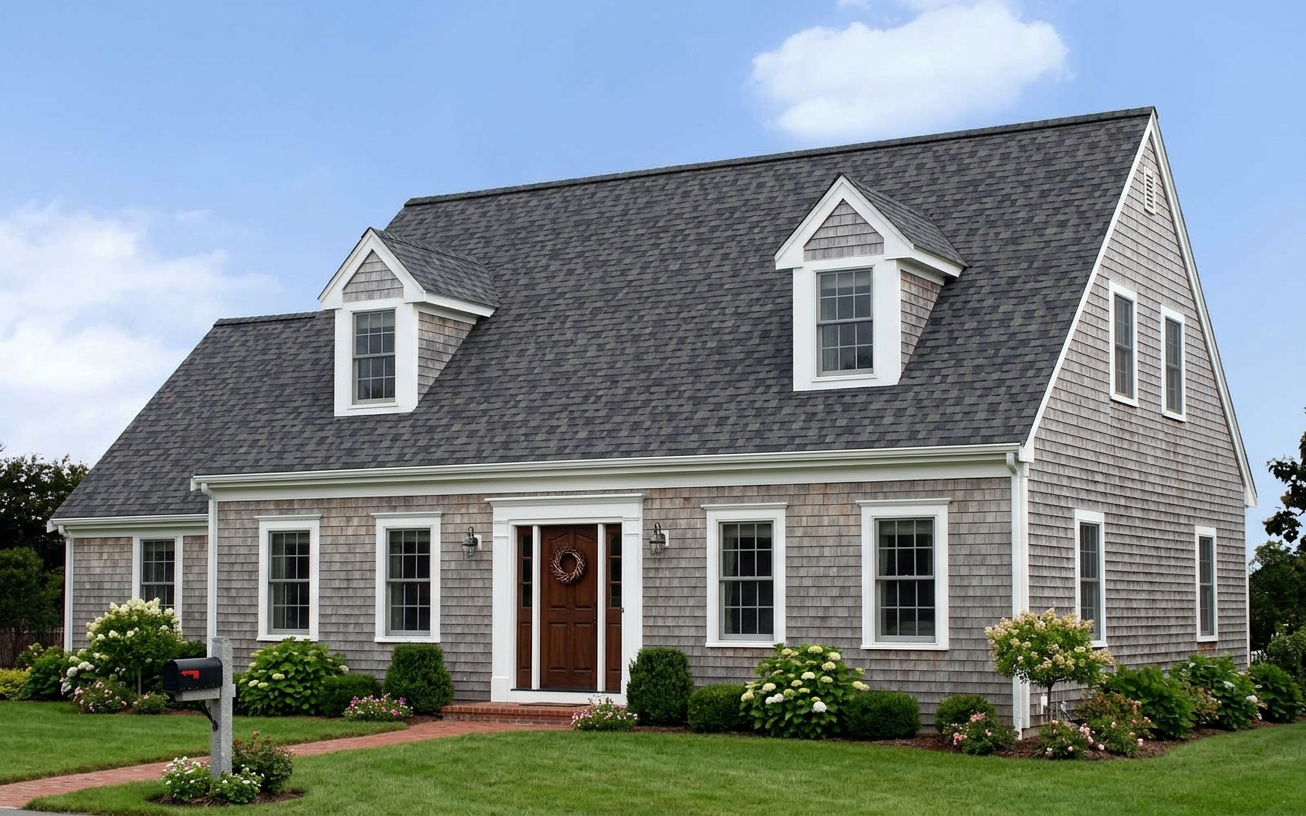
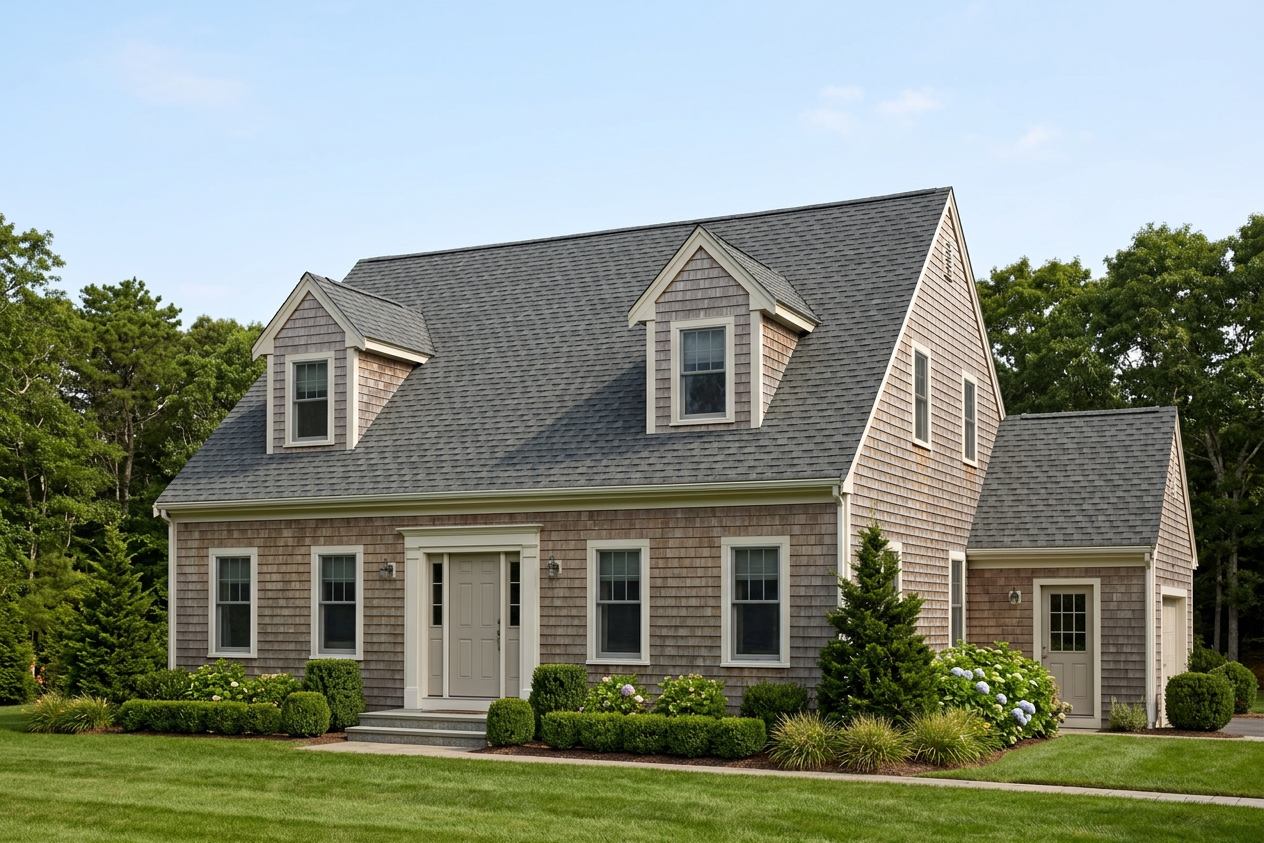
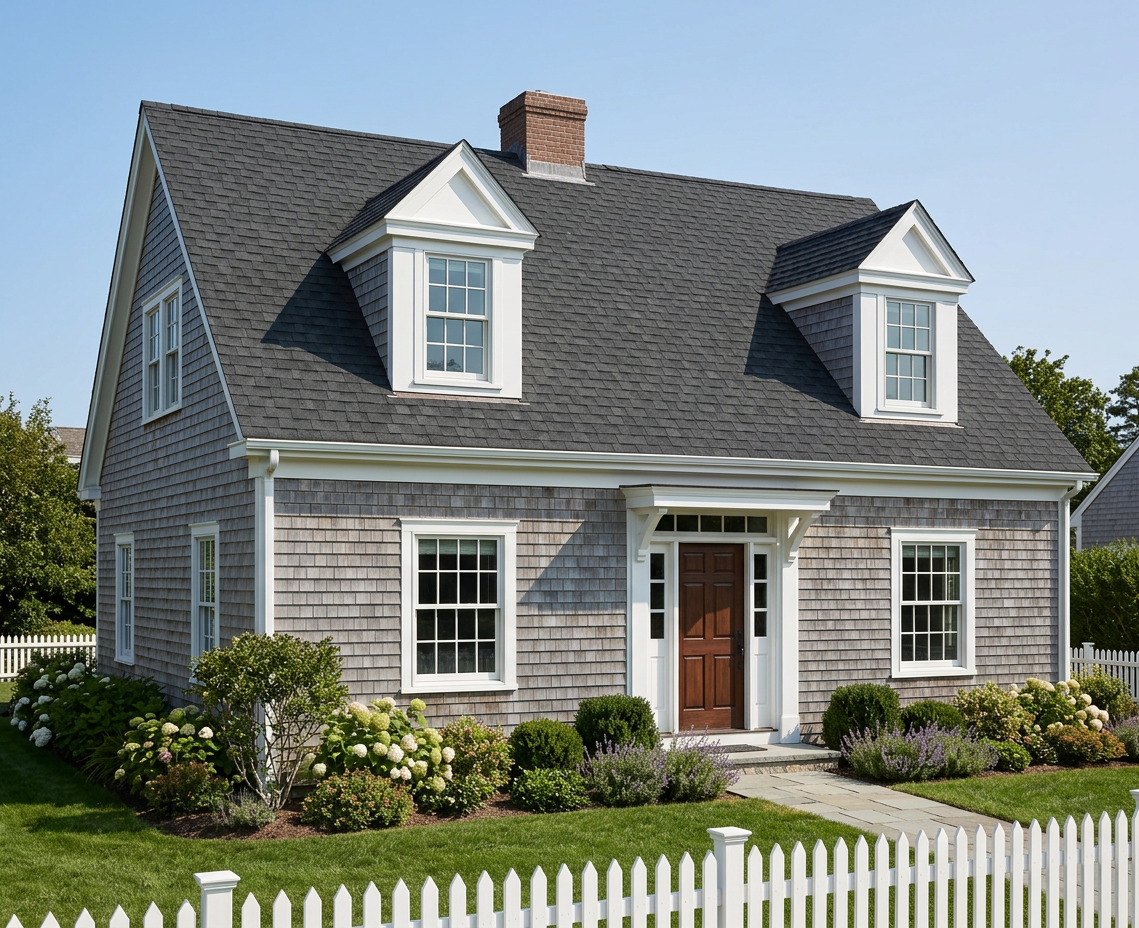
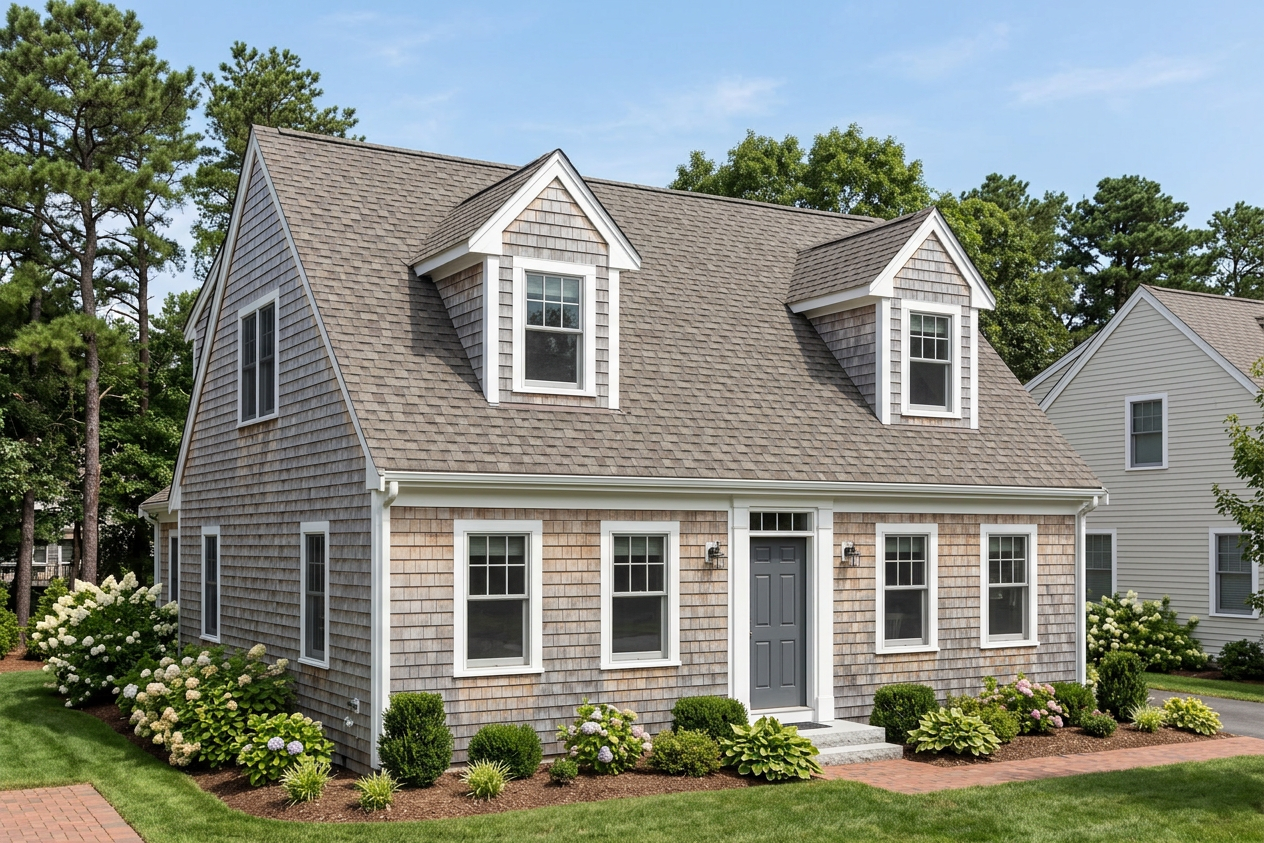
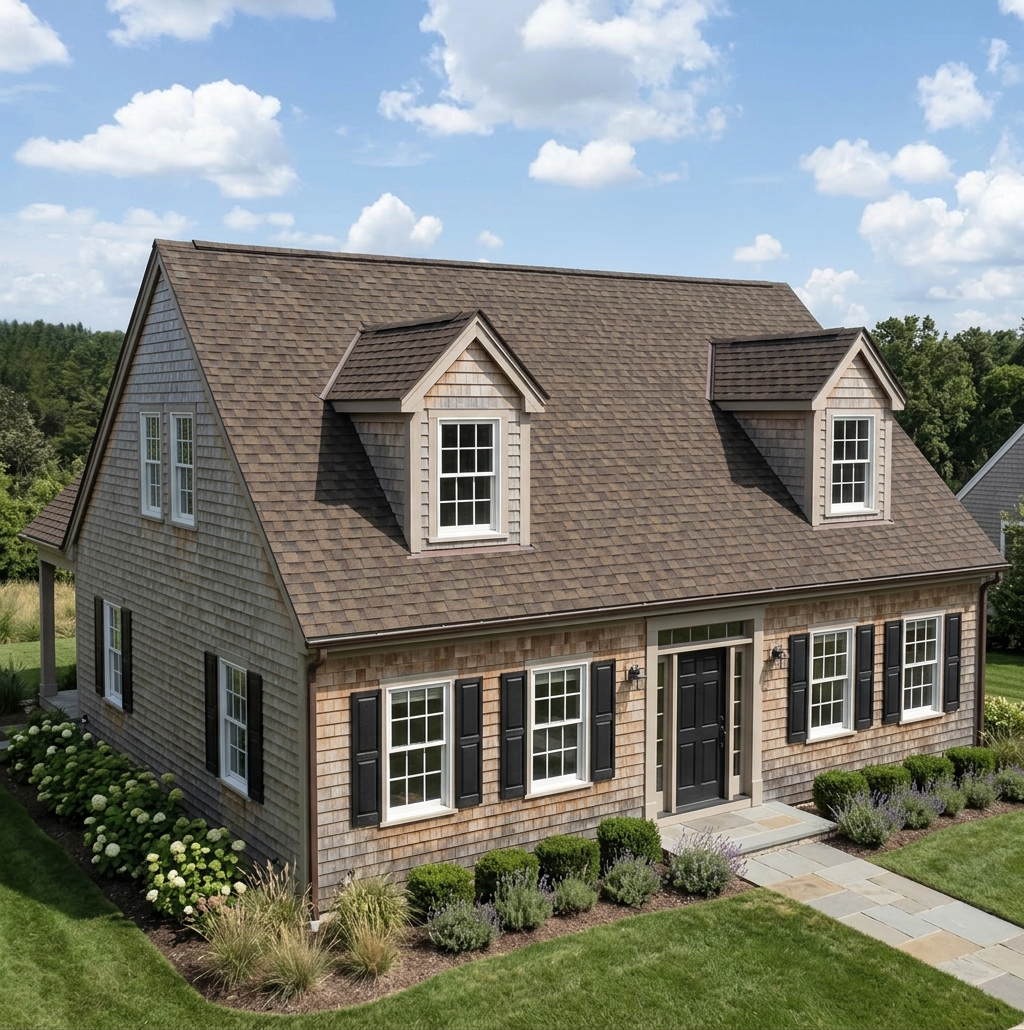
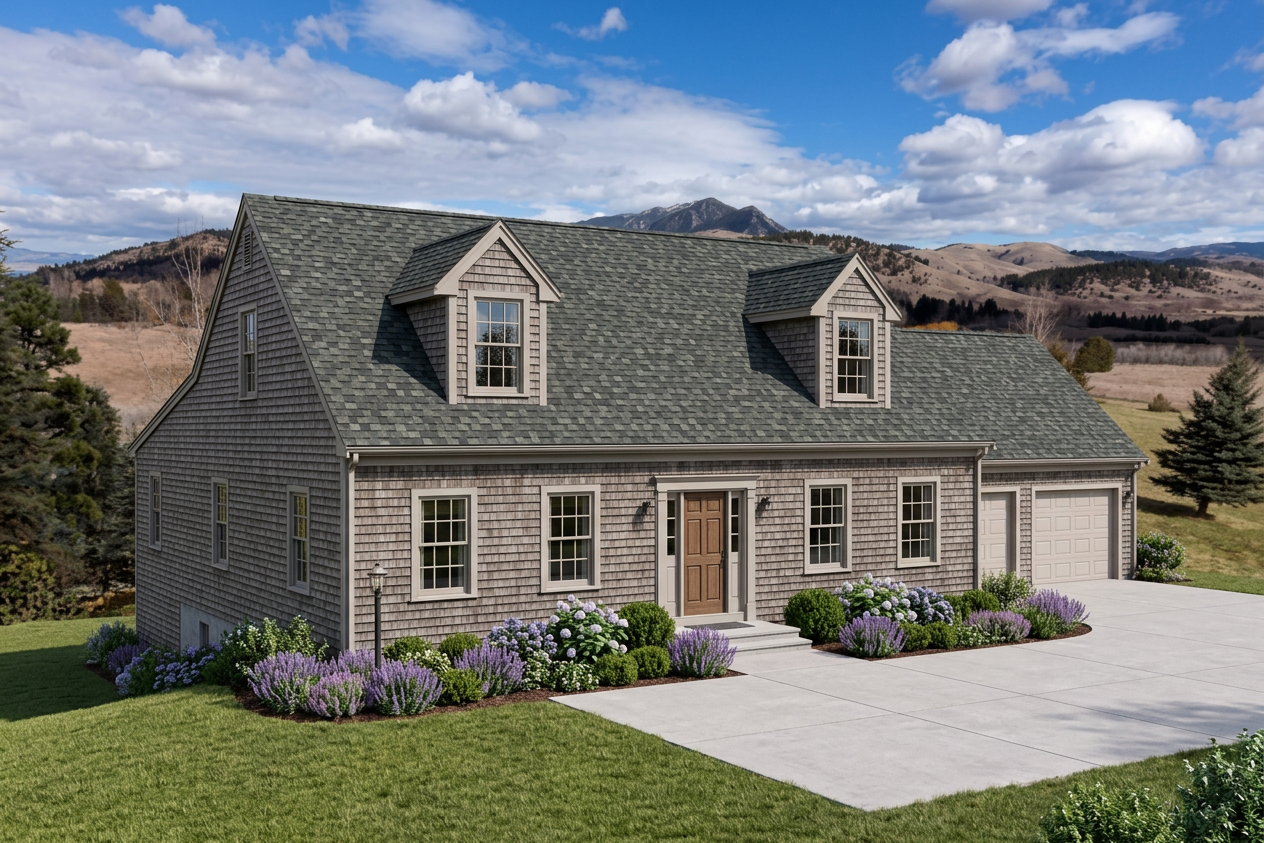
Upload a phone photo of your house and pre-load this exact cape cod-and-charcoal pairing in the visualizer. Swap to any of the recommended shingles below in one tap. No signup, no email.
Cape Cod calls for a steep roof pitch (10:12 minimum) and visible front dormers.
Cape Cod calls for a steep roof pitch (10:12 minimum) and visible front dormers. Florida coastal Capes often substitute a hipped or shallow-gabled roof for hurricane-resistance reasons; the substitution converts the look toward 'coastal cottage' rather than true Cape Cod. Decide which lineage you want before specifying roof design.
Charcoal is the safest mid-tone roof for resale.
Charcoal is the single most-installed asphalt color in the architectural category nationally, which means it appeals to the widest pool of resale buyers and translates across most home styles. If you are not strongly committed to a more decisive color (true black, weathered wood), charcoal is the lowest-risk choice.
Install quality matters more than SKU.
All seven recommended SKUs hit Class A fire and 110-150 mph wind ratings. The bigger variable on a cape cod elevation is install quality: ridge-line straightness, valley flashing, starter strip alignment. Insist on a Master Elite or equivalent certified contractor and a written workmanship warranty separate from the manufacturer's material warranty.
The questions homeowners ask before they commit. Answered without sales spin.
Less common than in New England but well-represented in older Florida coastal communities (St. Augustine Beach, parts of Cocoa Beach, Sandestin). New coastal builds often borrow Cape Cod features (steep roof, dormers, cedar shingles) without committing to the full style.
Cape Cod's defining geometry is a 1.5-story home with usable second-floor space lit by front dormers. Without dormers, the second-floor windows would face only the sides of the house and the front facade reads as a single-story bungalow rather than a Cape.
Charcoal is a half-step warmer and lighter than true black. On cape cod architecture, charcoal reads as slightly softer and more traditional; true black reads as more graphic and modern. Both are correct -- the choice comes down to how decisive you want the elevation to feel.
Minimally. Modern ceramic-coated granules hold color for 25 plus years. Charcoal tends to drift slightly warmer over the first 5 years -- a barely visible shift -- then stabilizes. Source: NRCA field-aging data.
All renders on this page were generated by fal.ai's nano-banana-2 image-edit model on top of REAL install photos from each manufacturer. The roof color, granule texture, and shingle pattern come directly from the source photo and are preserved during the edit. The facade is restyled to Cape Cod. The result is photorealistic but not identical to any specific real home -- use it for visual comparison, then open the free visualizer to see the same SKU on a photo of your own house.