
Craftsman Homes With a Charcoal Roof: 21 Rendered Examples 2026
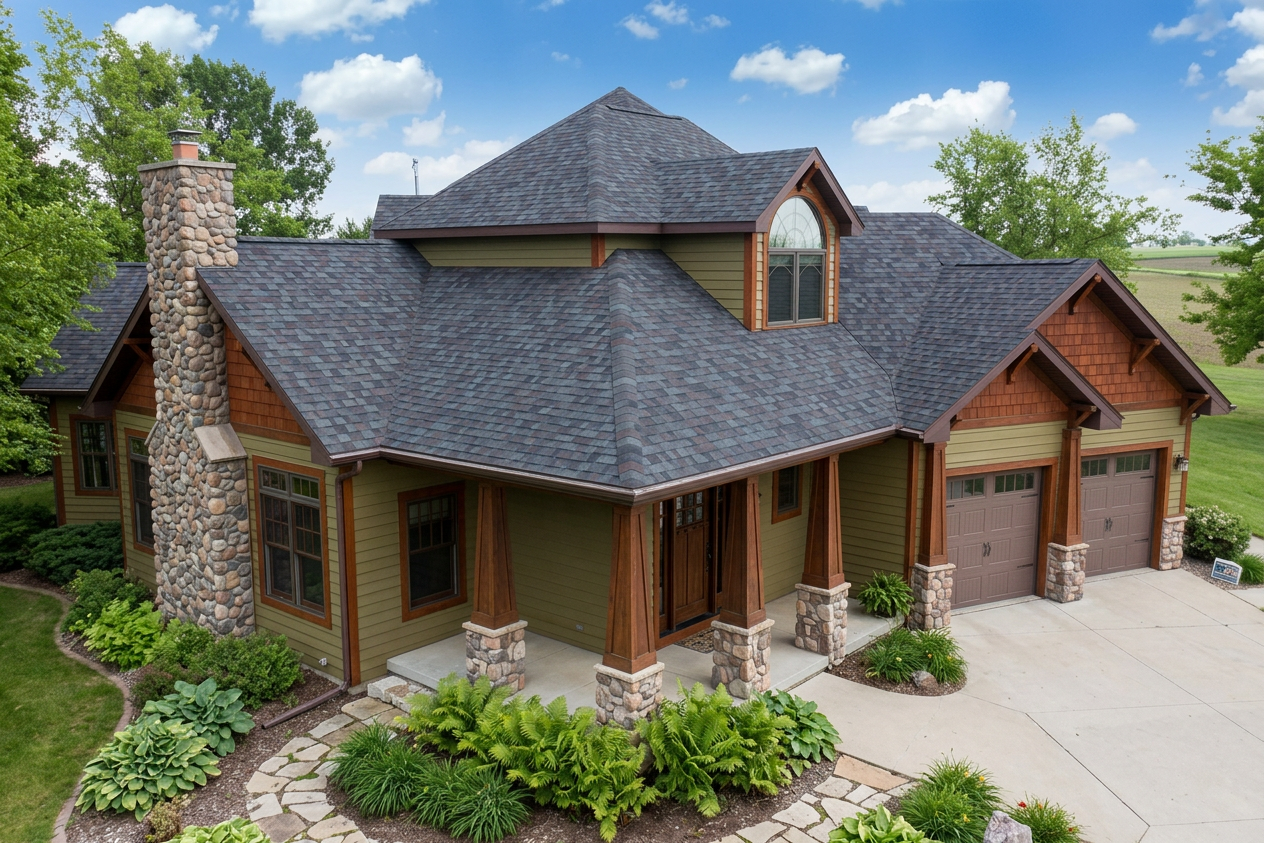
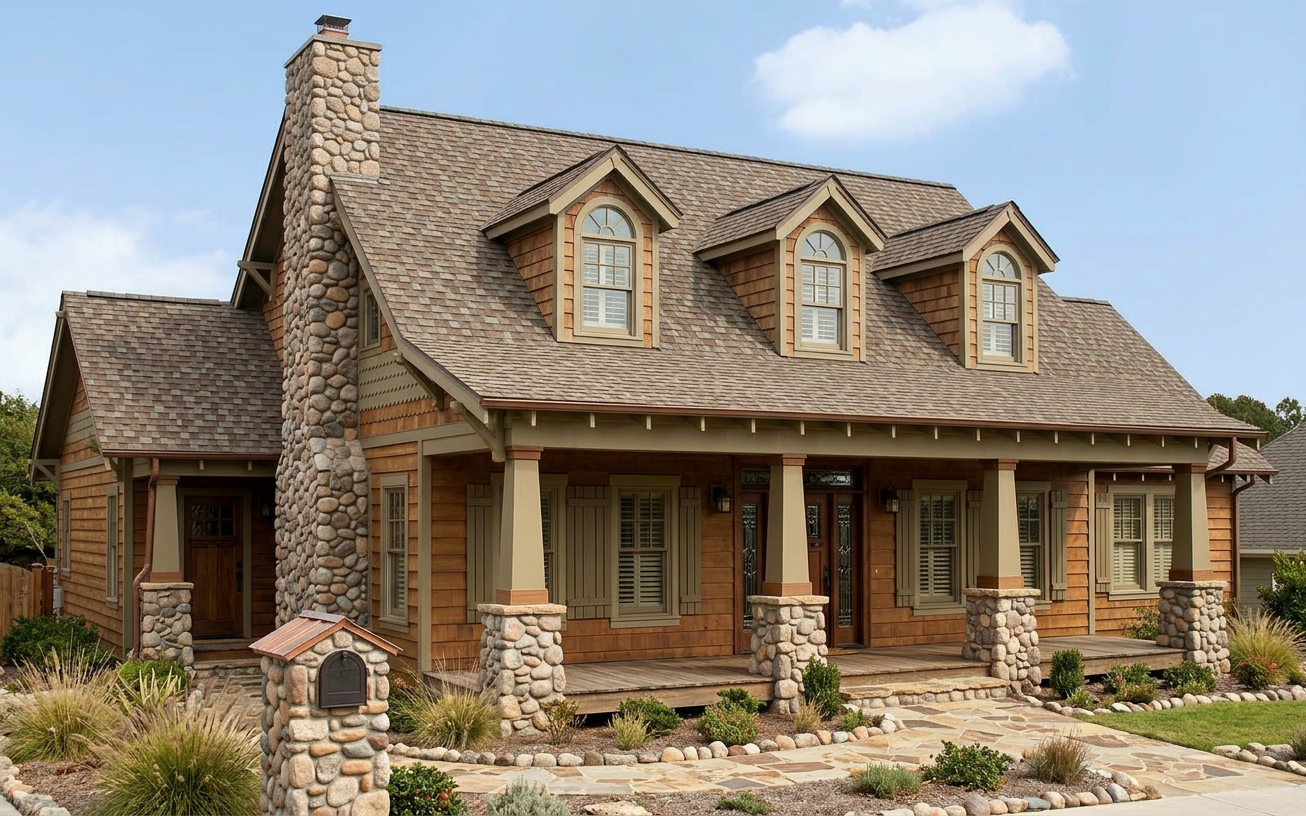
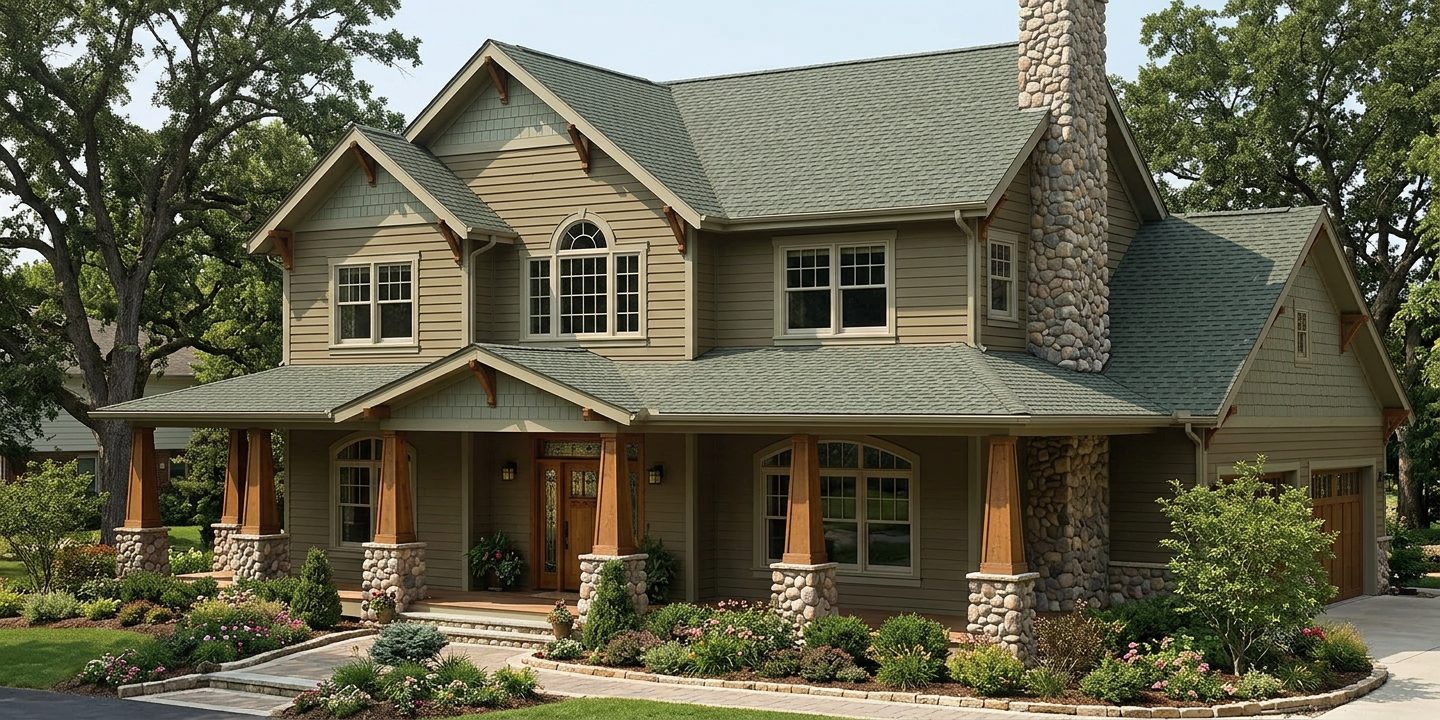
Charcoal works particularly well on a Craftsman because the style is defined by layered texture, not flat color. The granule variation in a charcoal shingle - shifting from cool gray to near-black across the surface - reads like natural shadow depth beneath wide overhanging eaves.
That textural quality suits the exposed rafter tails and tapered porch columns well, giving the roof a crafted, handmade presence that genuinely reinforces the artistic and tactile character of the full facade seen from the street.
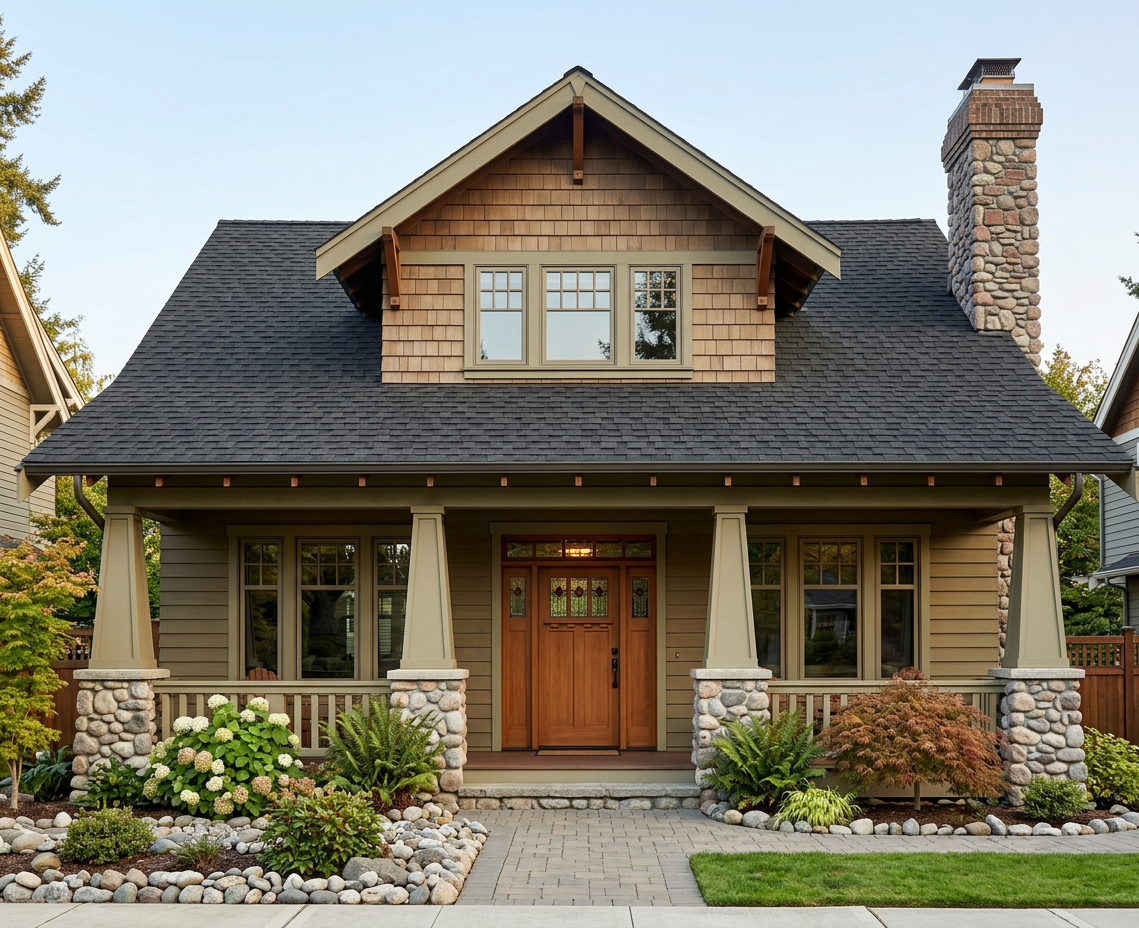
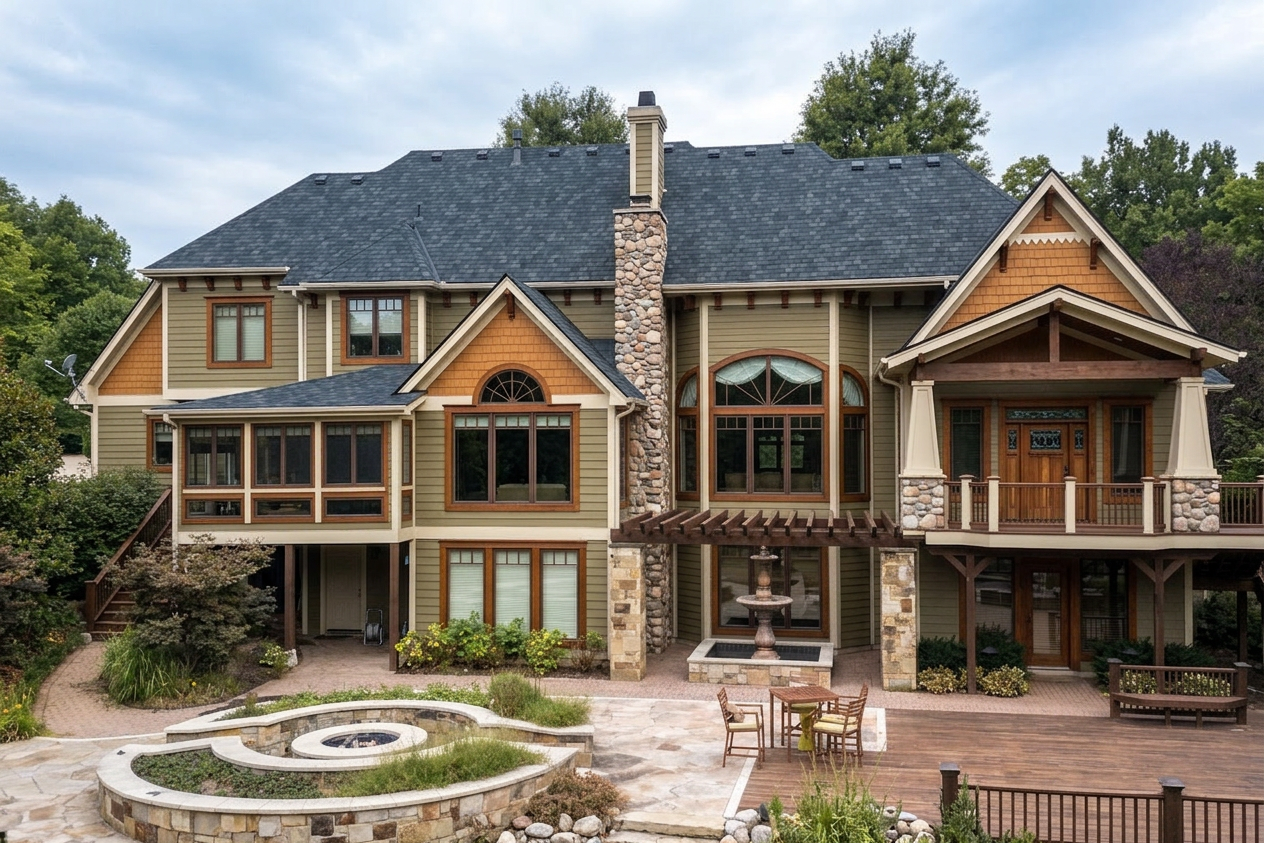
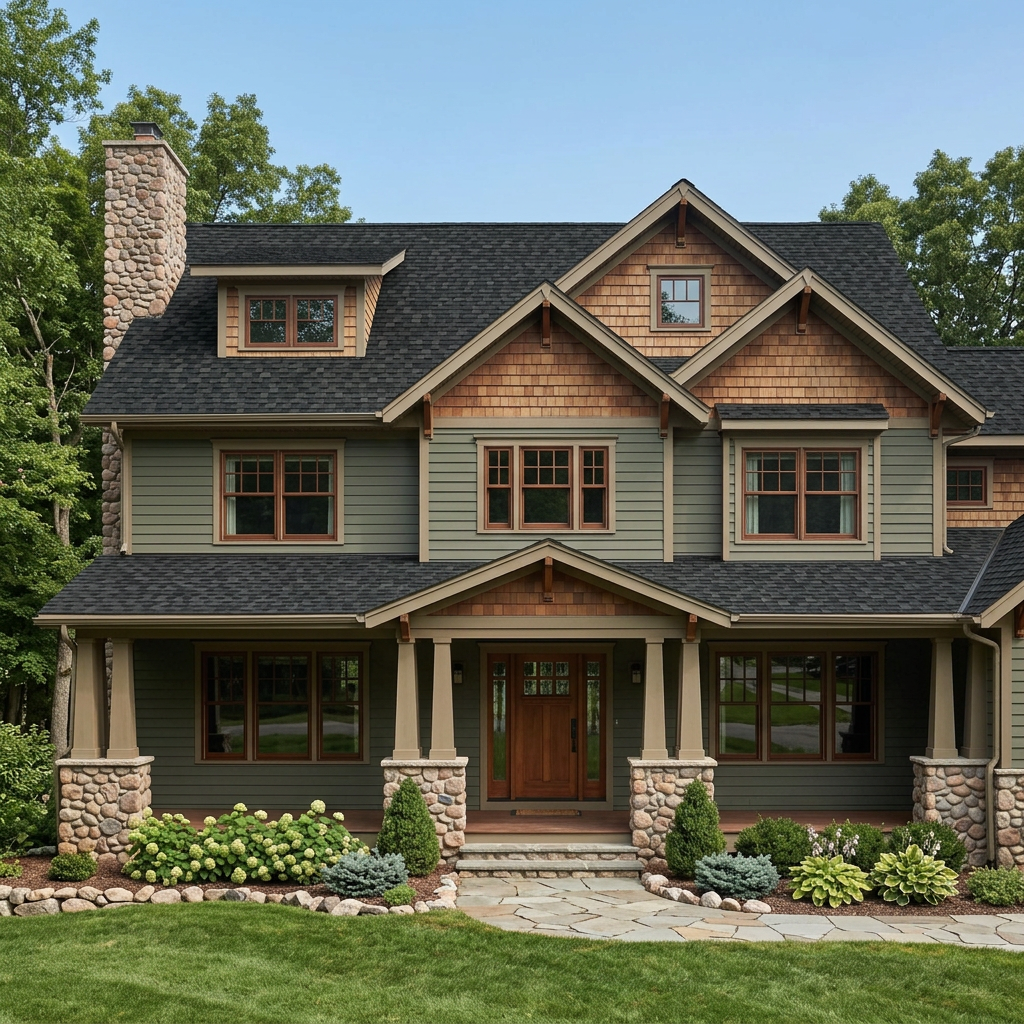
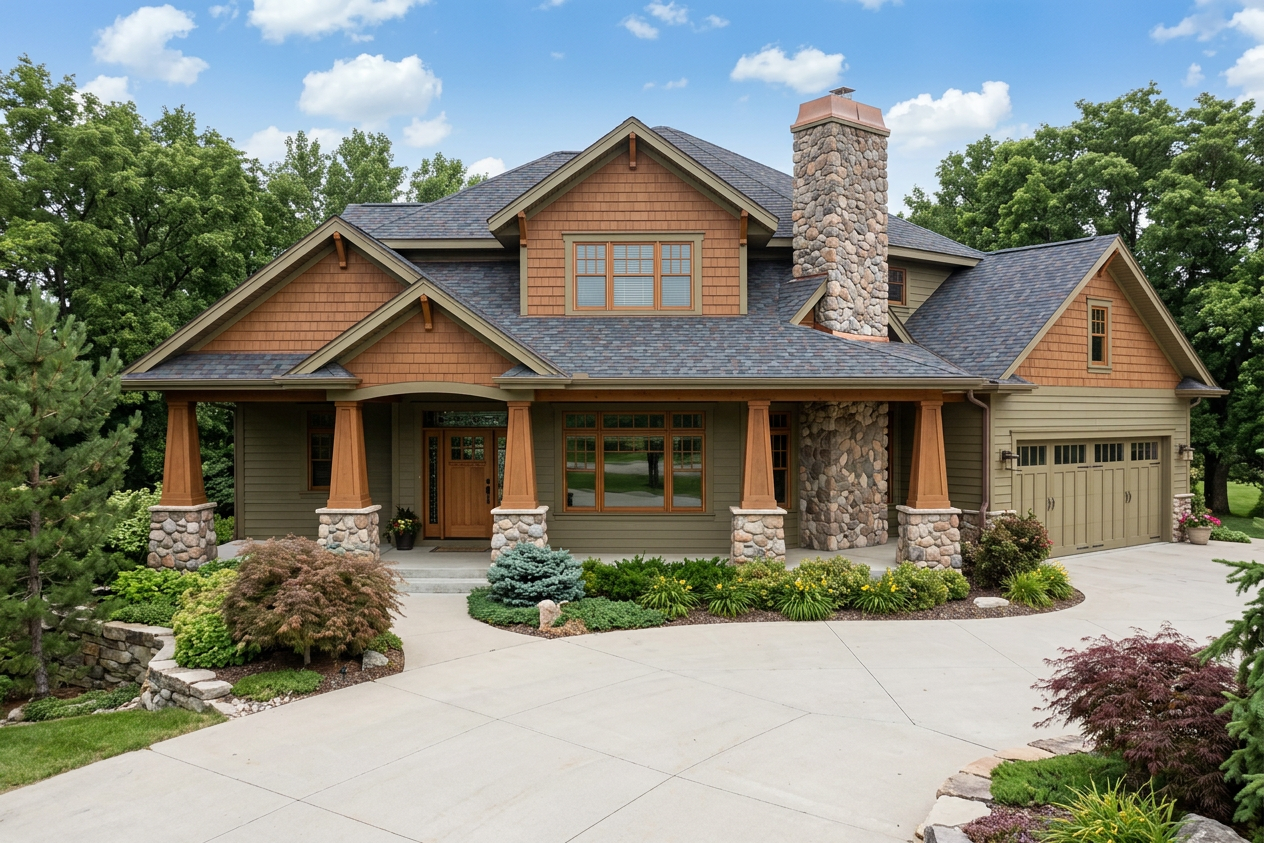
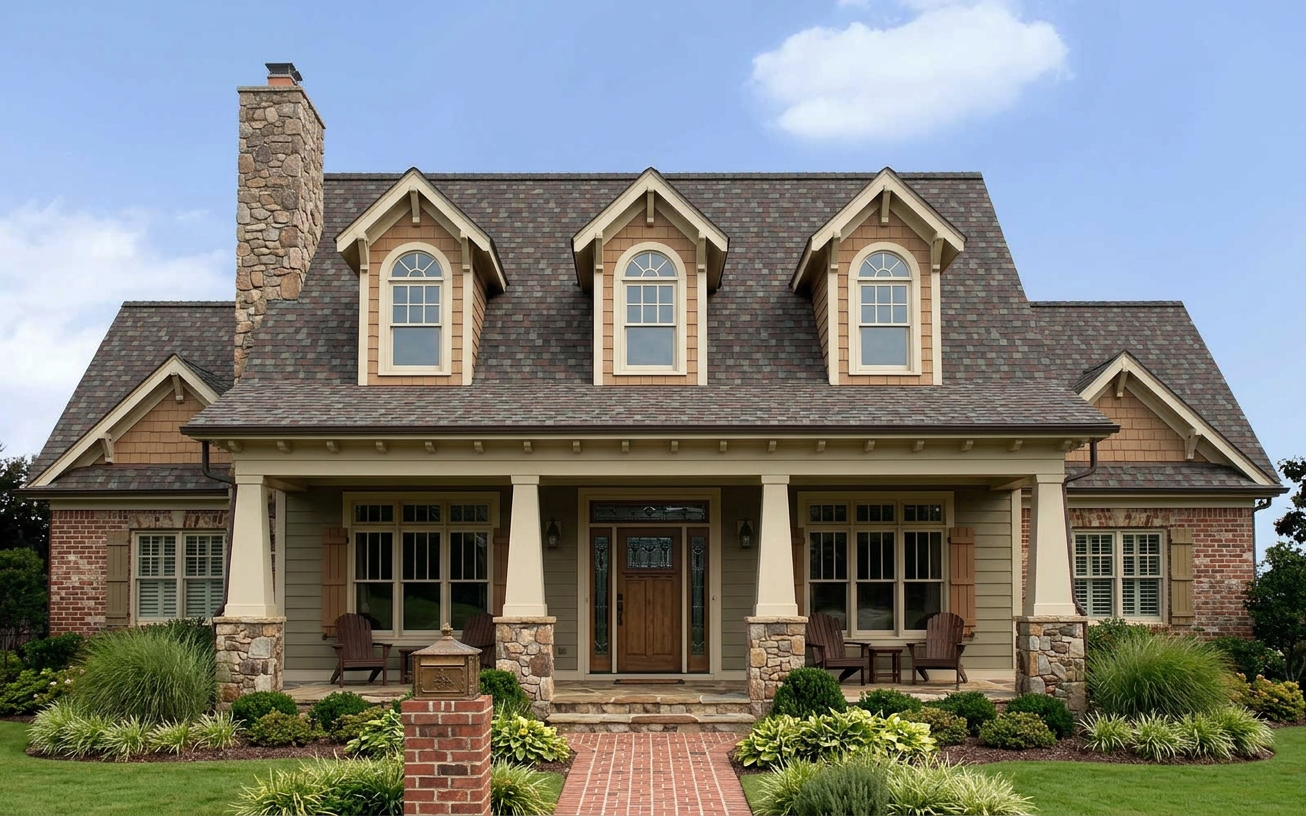
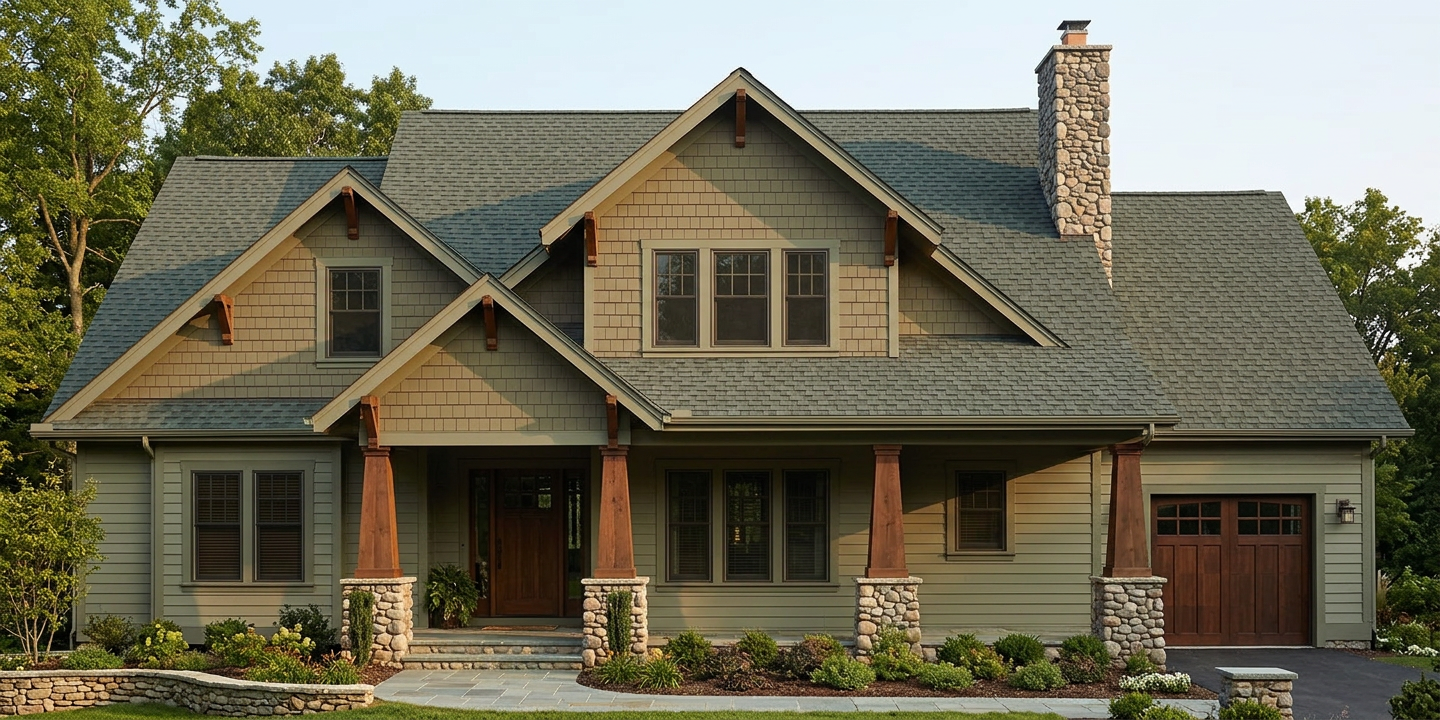
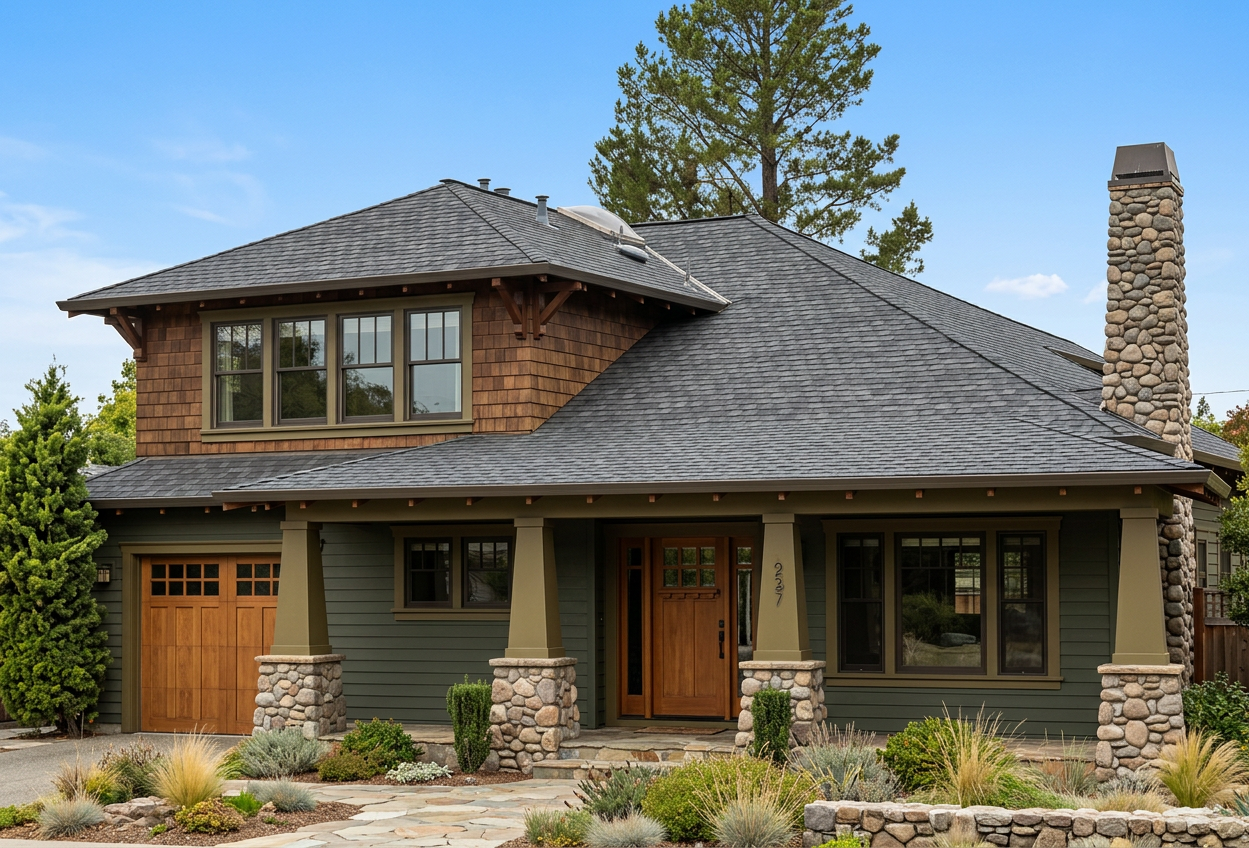
Early-20th-century American style derived from the English Arts & Crafts movement.
Craftsman architecture emerged in the United States between 1905 and the late 1920s as a reaction against Victorian ornamentation. The style draws directly from the English Arts and Crafts movement and the work of Greene & Greene in Pasadena. Key facade features include low-pitched gabled roofs with wide overhanging eaves, exposed rafter tails, tapered square columns set on stone bases, deep covered front porches, and mixed siding -- horizontal clapboard paired with decorative shingle in the gable ends. Natural materials and honest construction details are the defining theme.
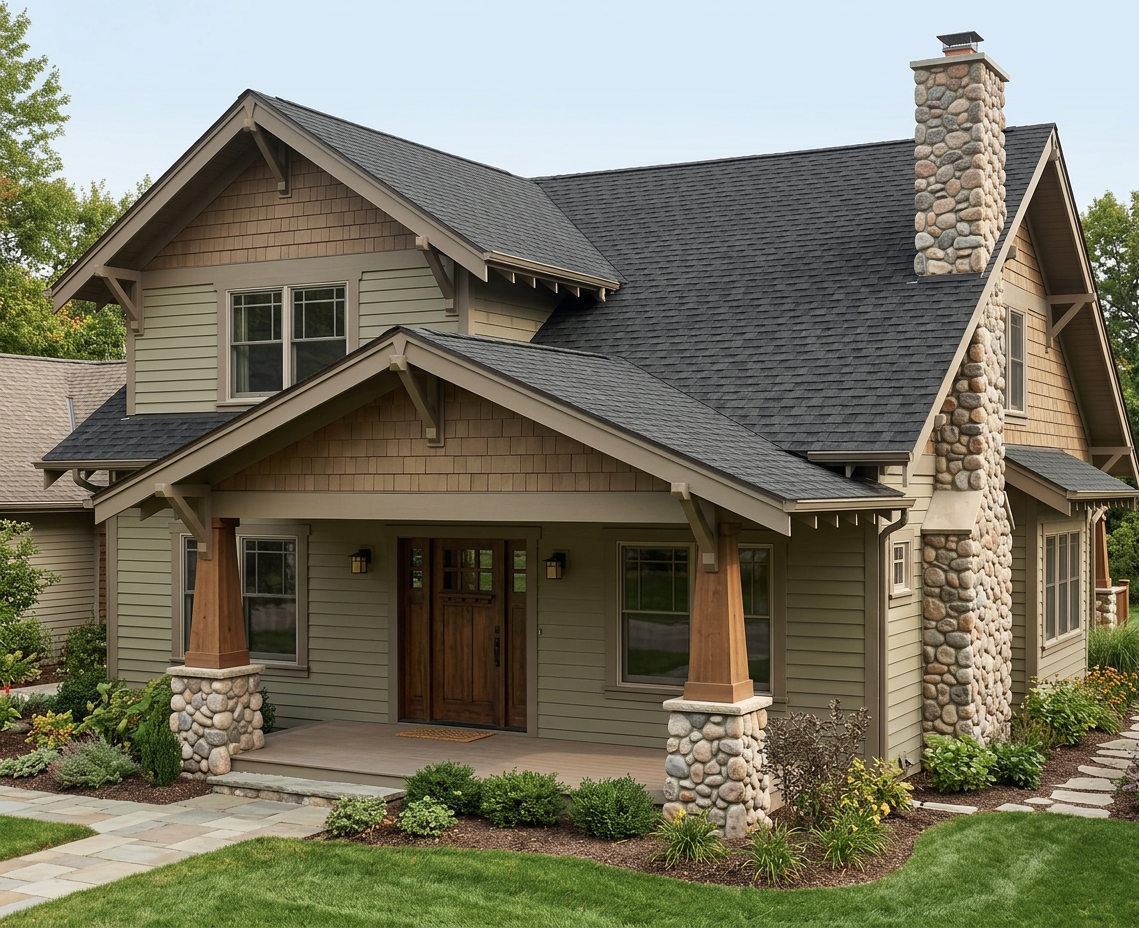
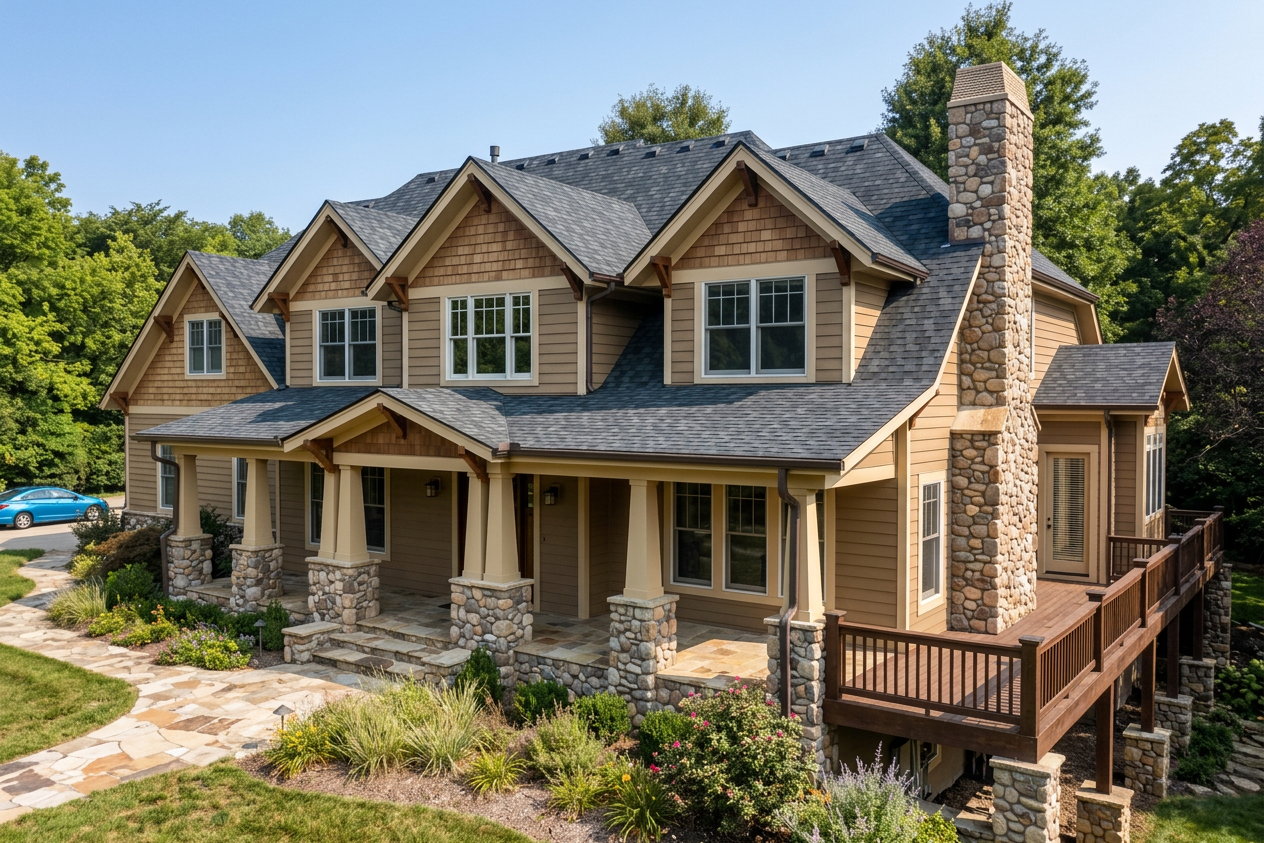
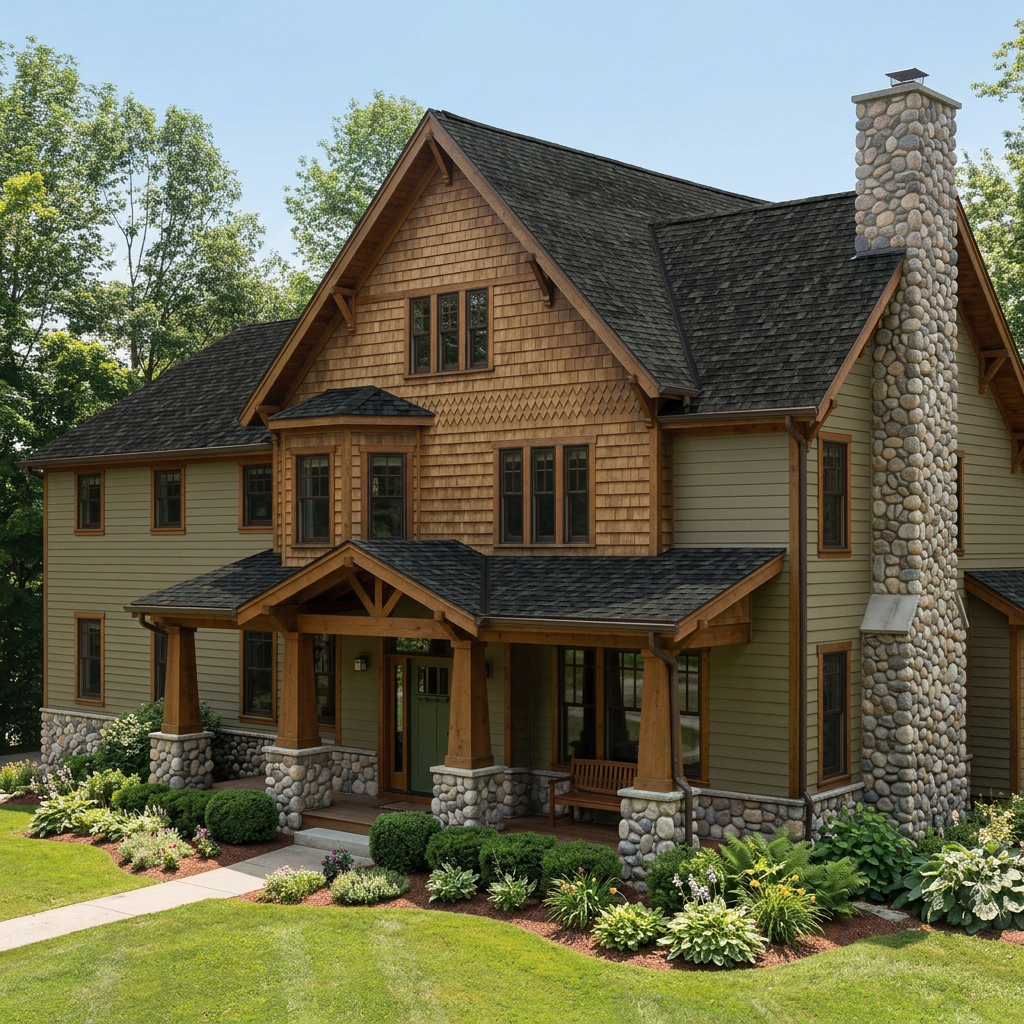
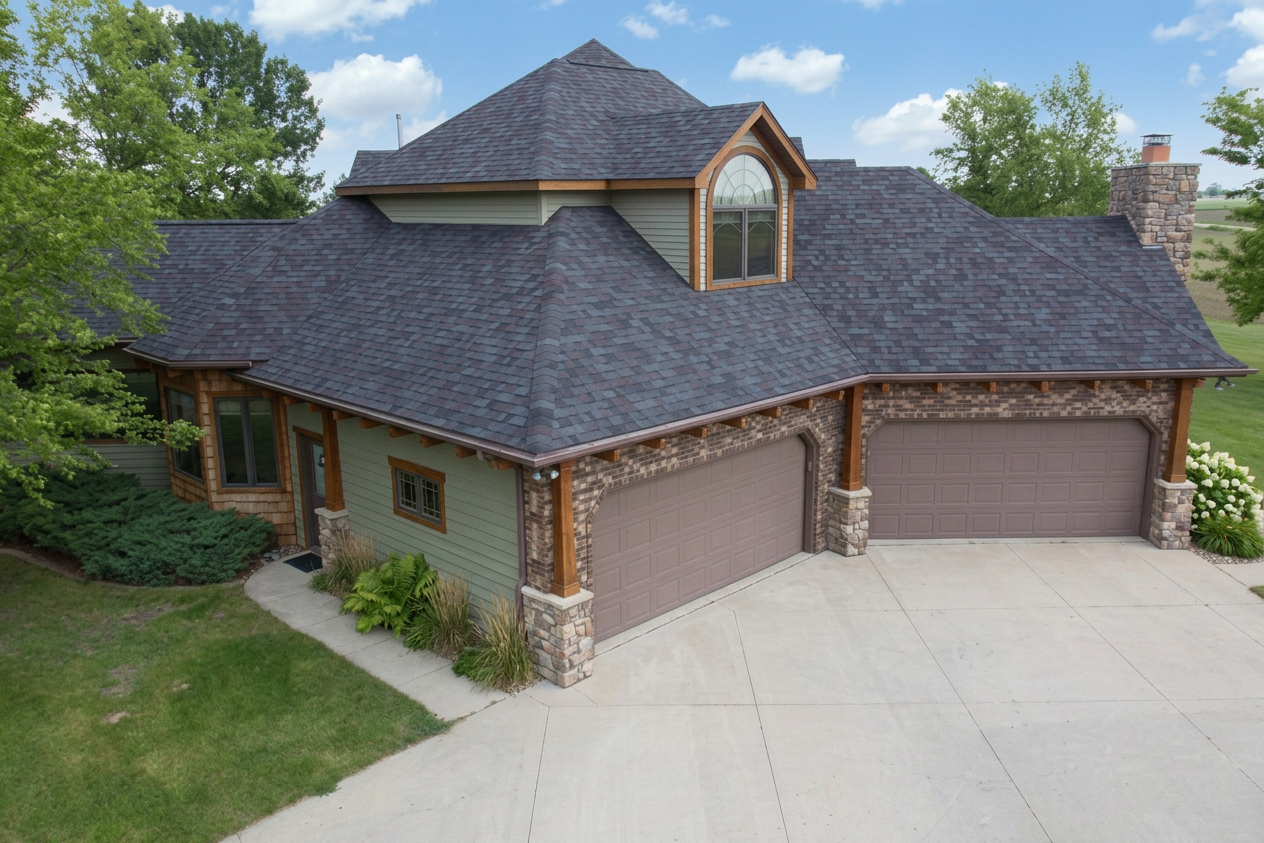
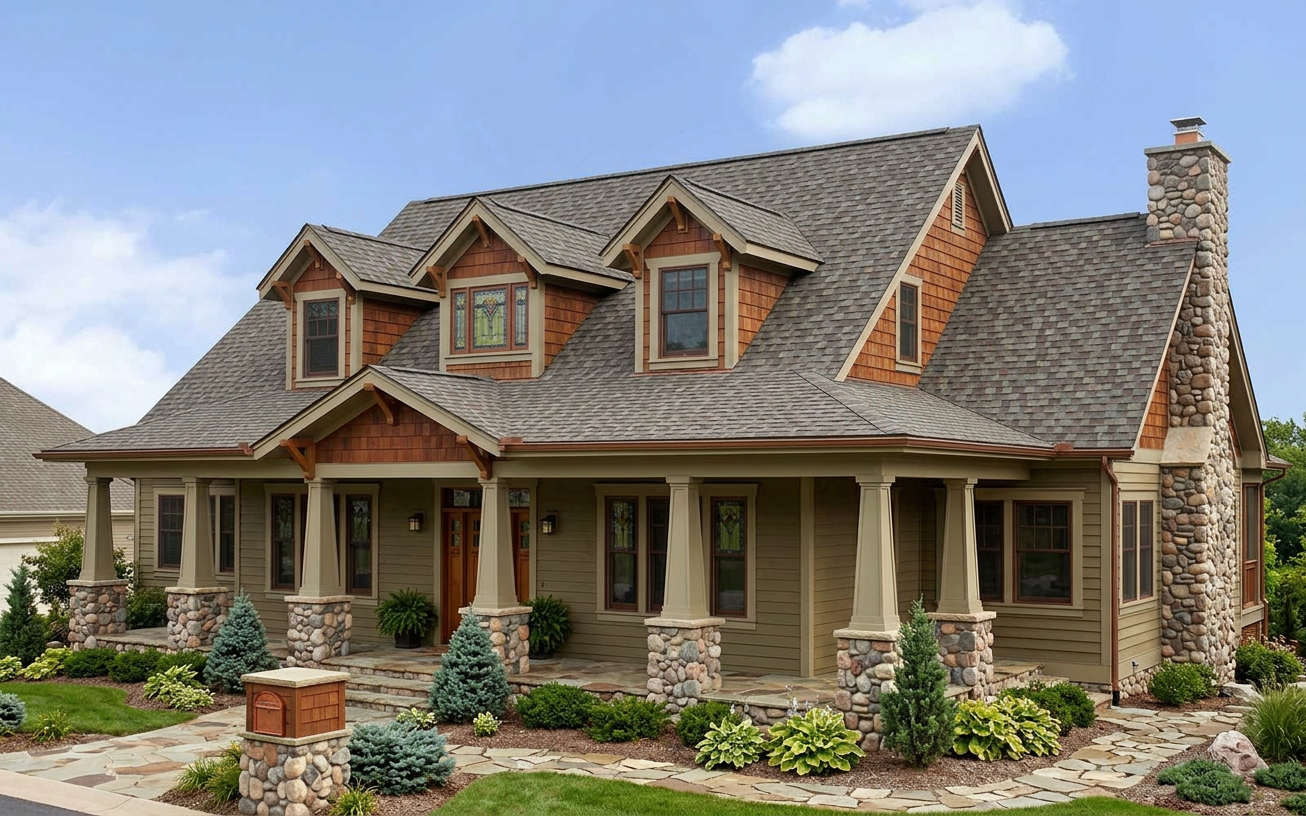
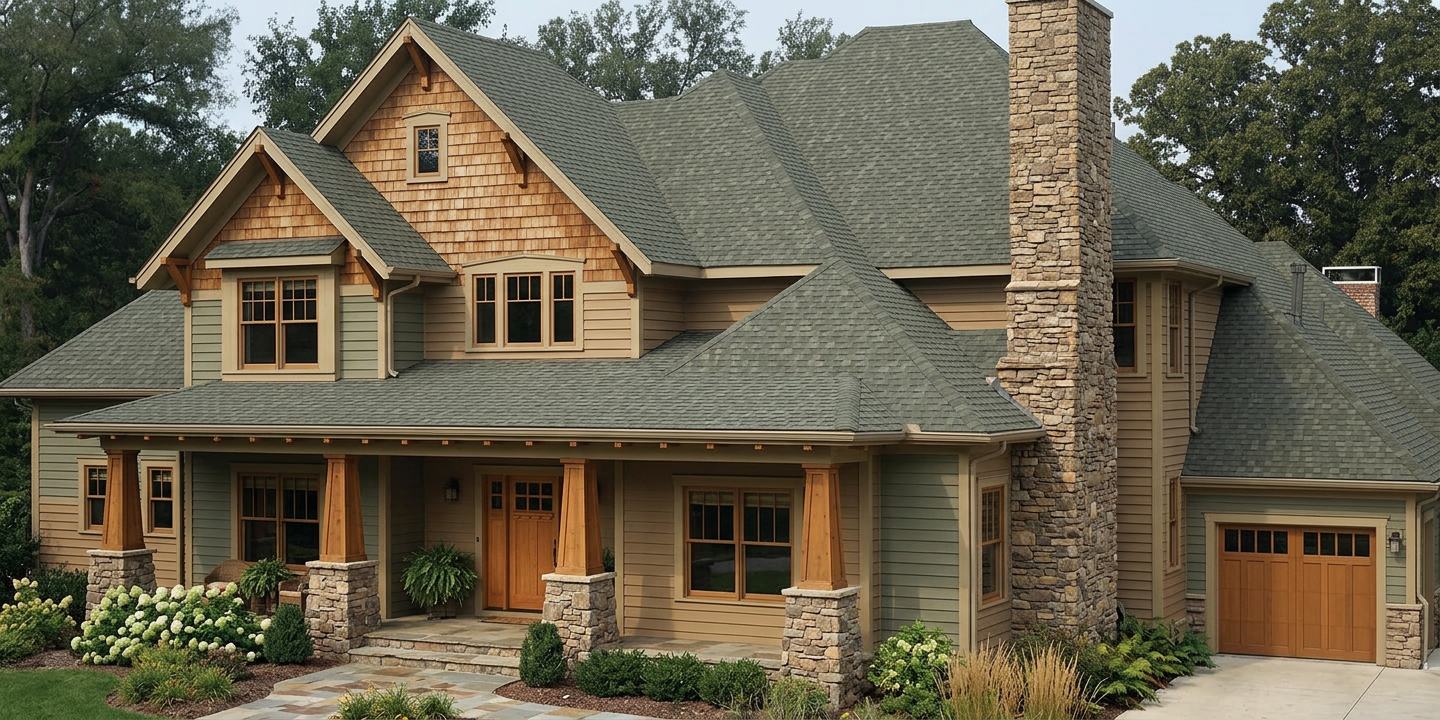
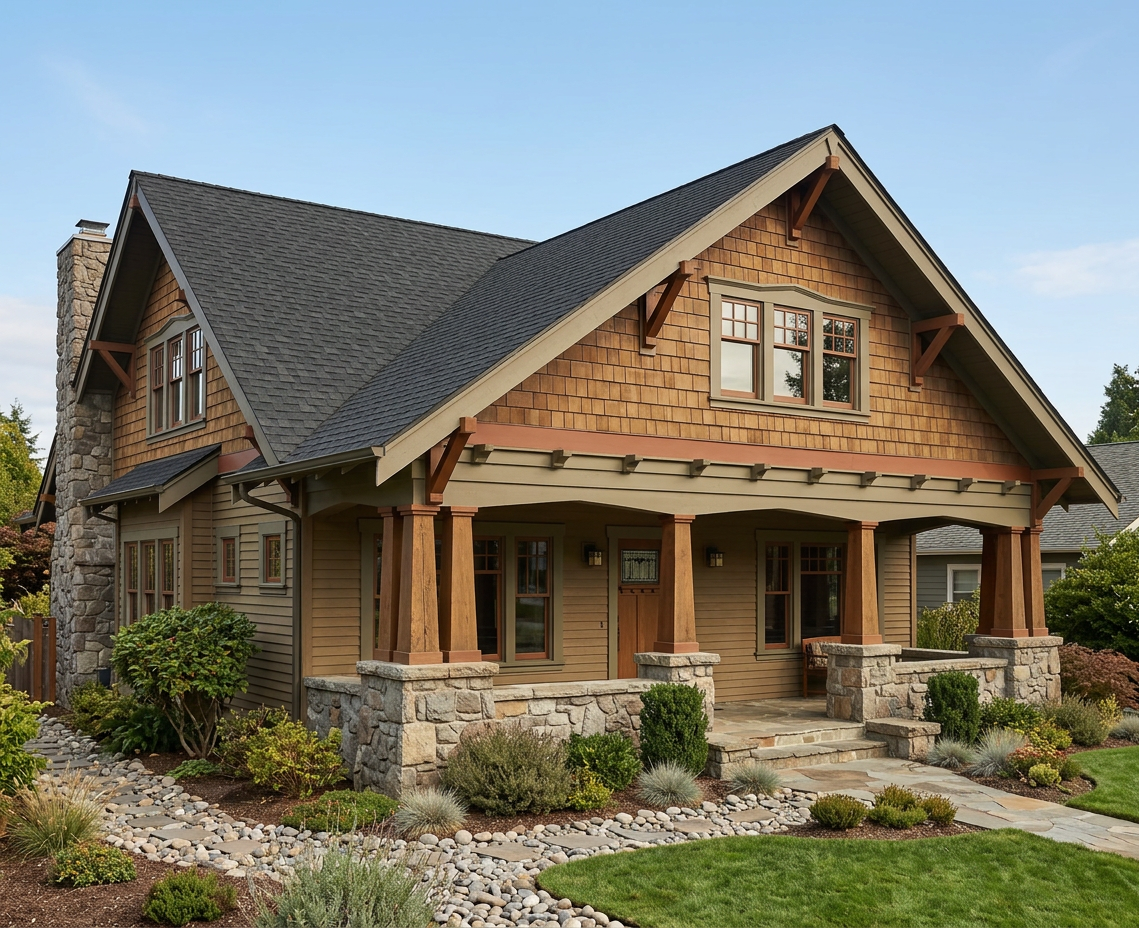
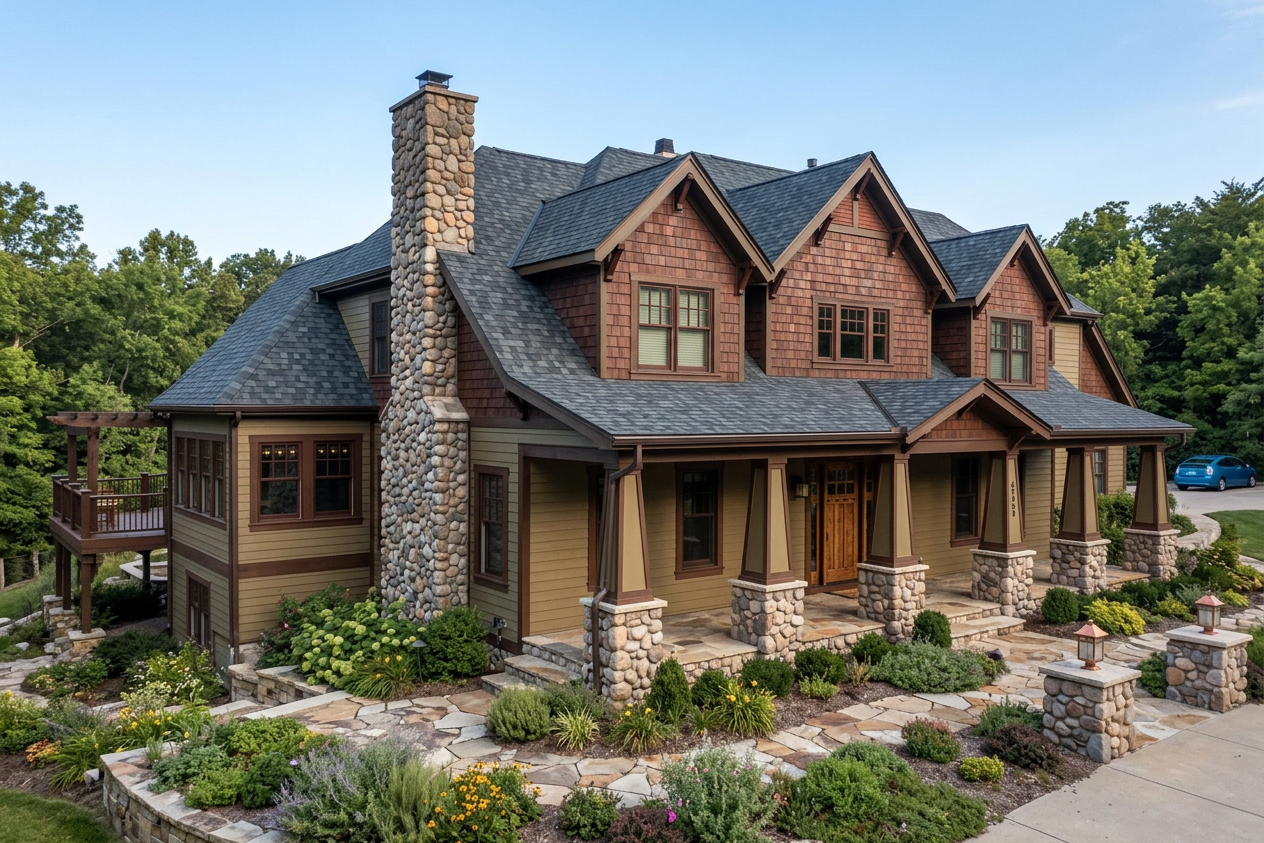
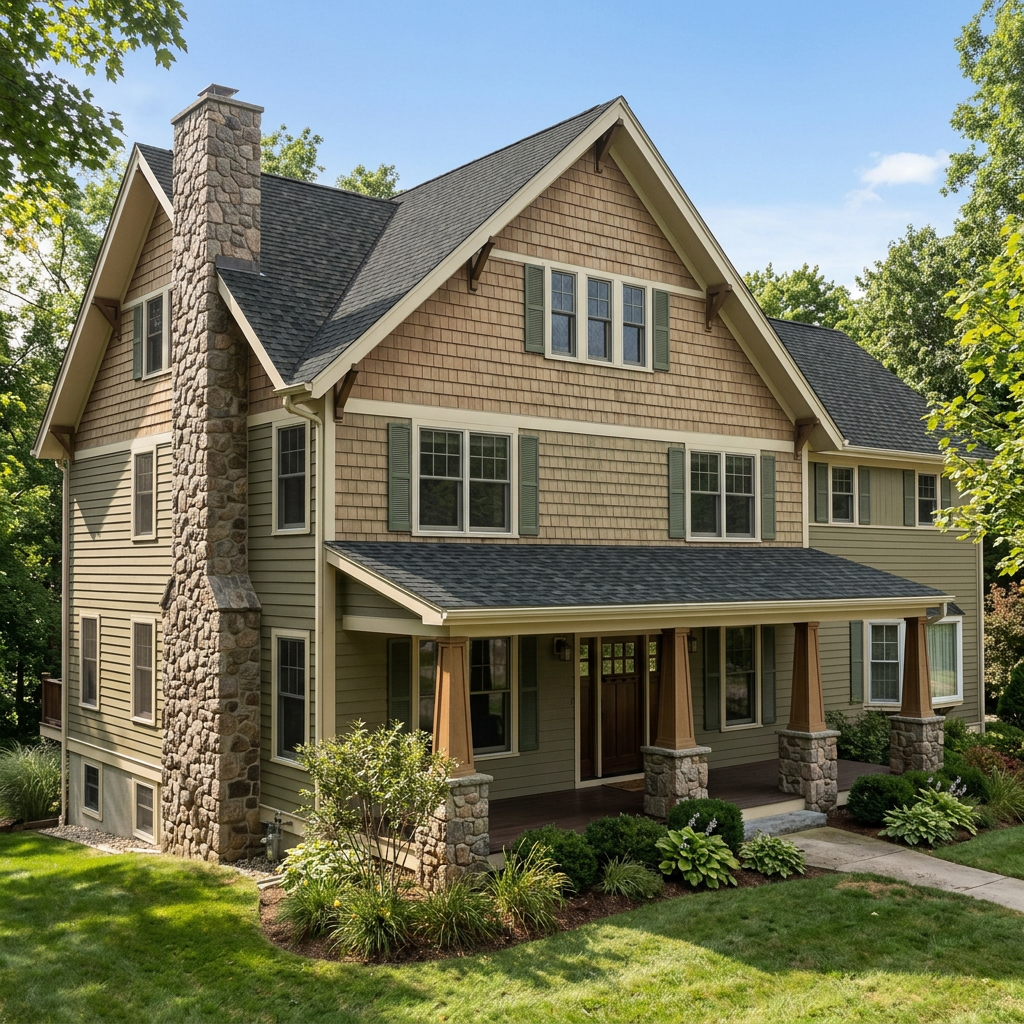
Upload a phone photo of your house and pre-load this exact craftsman-and-charcoal pairing in the visualizer. Swap to any of the recommended shingles below in one tap. No signup, no email.
Craftsman calls for the roof to extend the architecture rather than cap it.
Craftsman calls for the roof to extend the architecture rather than cap it. The wide eaves and exposed rafter tails are non-negotiable -- if your existing build does not have them, plan to add them during the re-roof. Skipping these details turns a craftsman into a generic ranch and the roof color choice loses half its impact.
Charcoal is the safest mid-tone roof for resale.
Charcoal is the single most-installed asphalt color in the architectural category nationally, which means it appeals to the widest pool of resale buyers and translates across most home styles. If you are not strongly committed to a more decisive color (true black, weathered wood), charcoal is the lowest-risk choice.
Install quality matters more than SKU.
All seven recommended SKUs hit Class A fire and 110-150 mph wind ratings. The bigger variable on a craftsman elevation is install quality: ridge-line straightness, valley flashing, starter strip alignment. Insist on a Master Elite or equivalent certified contractor and a written workmanship warranty separate from the manufacturer's material warranty.
The questions homeowners ask before they commit. Answered without sales spin.
Yes. The wide eaves provide natural shade, the deep front porches handle Florida heat well, and the natural-materials palette (wood, stone) photographs beautifully in Florida light. Modern craftsman builds are common in Tampa, Orlando, and the Florida Panhandle.
4:12 to 6:12 (low to medium pitch). Anything steeper reads as Victorian; anything flatter reads as ranch. The roof should feel like a hat the house wears comfortably, with eaves that extend at least 18 inches past the wall.
Charcoal is a half-step warmer and lighter than true black. On craftsman architecture, charcoal reads as slightly softer and more traditional; true black reads as more graphic and modern. Both are correct -- the choice comes down to how decisive you want the elevation to feel.
Minimally. Modern ceramic-coated granules hold color for 25 plus years. Charcoal tends to drift slightly warmer over the first 5 years -- a barely visible shift -- then stabilizes. Source: NRCA field-aging data.
All renders on this page were generated by fal.ai's nano-banana-2 image-edit model on top of REAL install photos from each manufacturer. The roof color, granule texture, and shingle pattern come directly from the source photo and are preserved during the edit. The facade is restyled to Craftsman. The result is photorealistic but not identical to any specific real home -- use it for visual comparison, then open the free visualizer to see the same SKU on a photo of your own house.