
Craftsman Homes With a Brown Roof: 21 Rendered Examples 2026
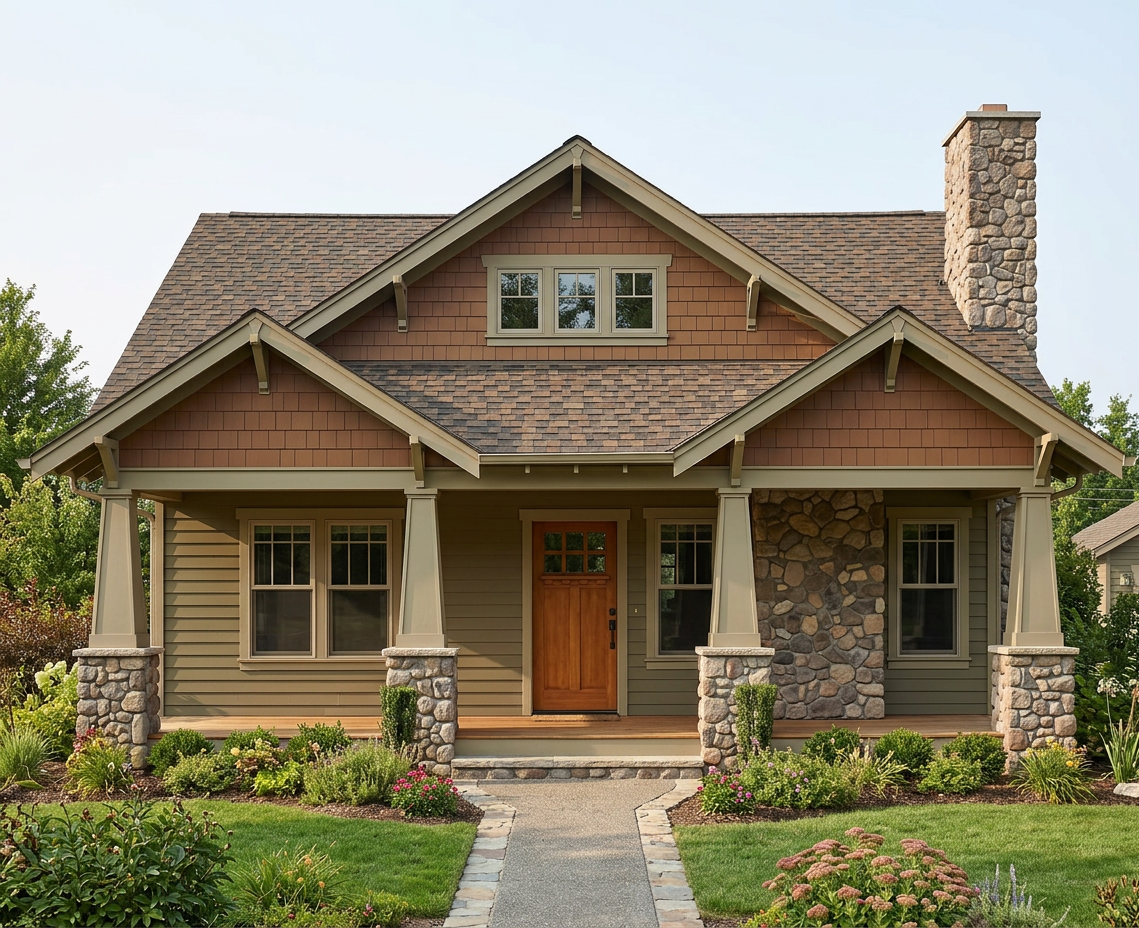
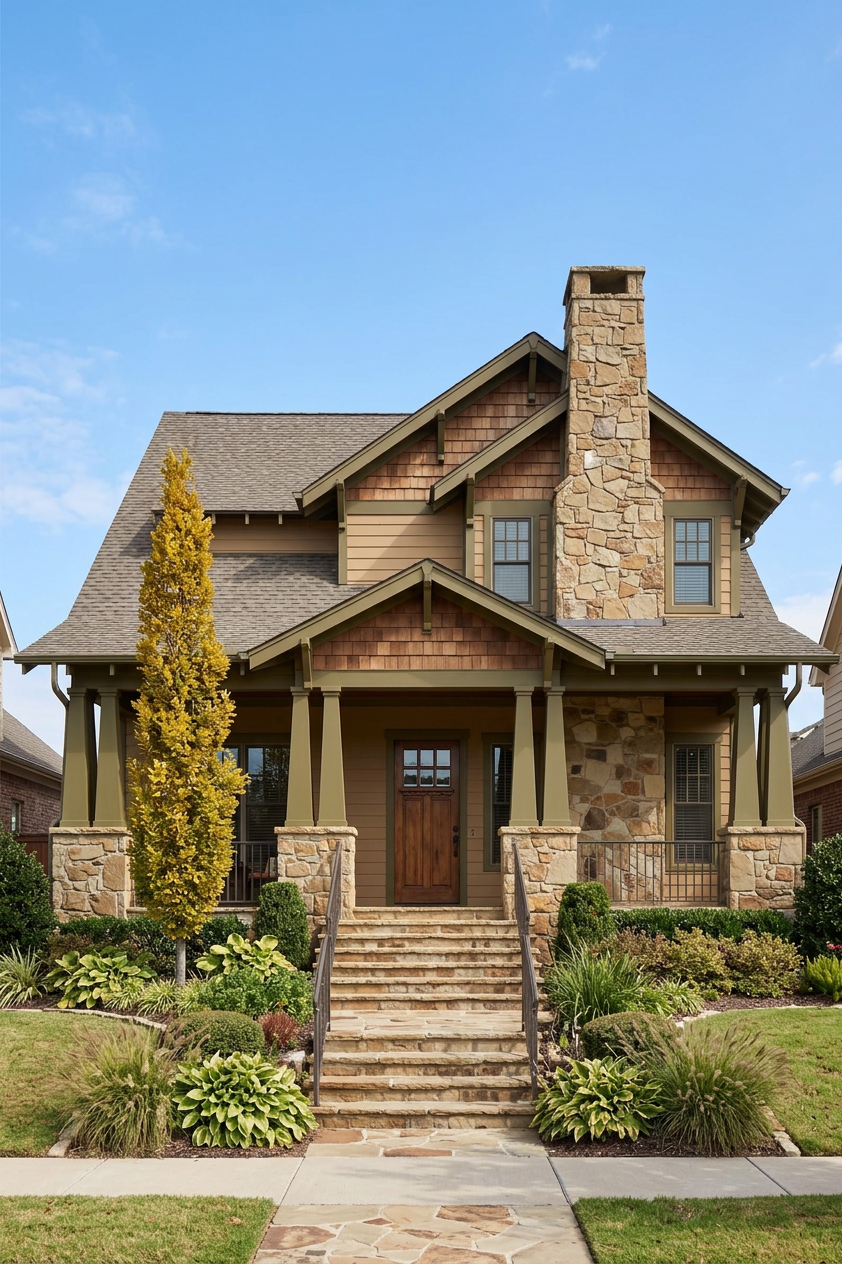
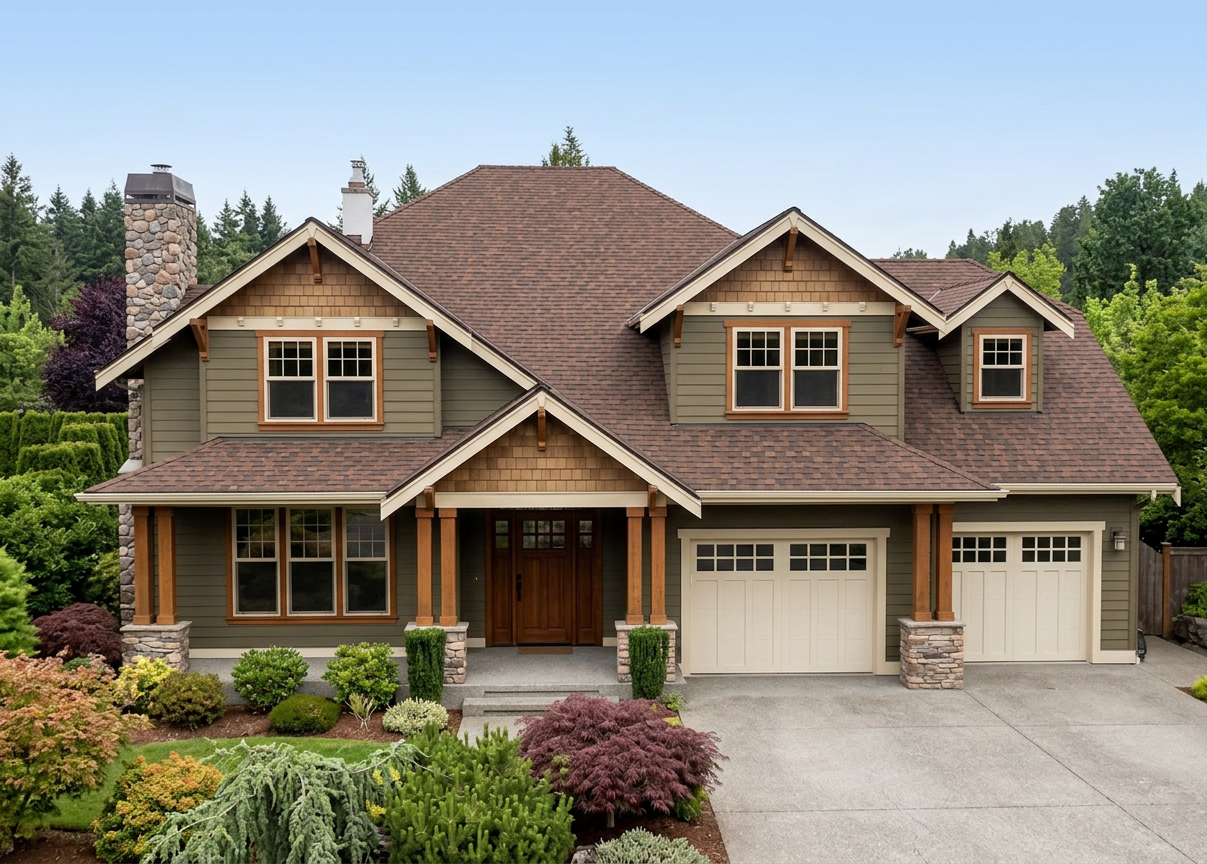
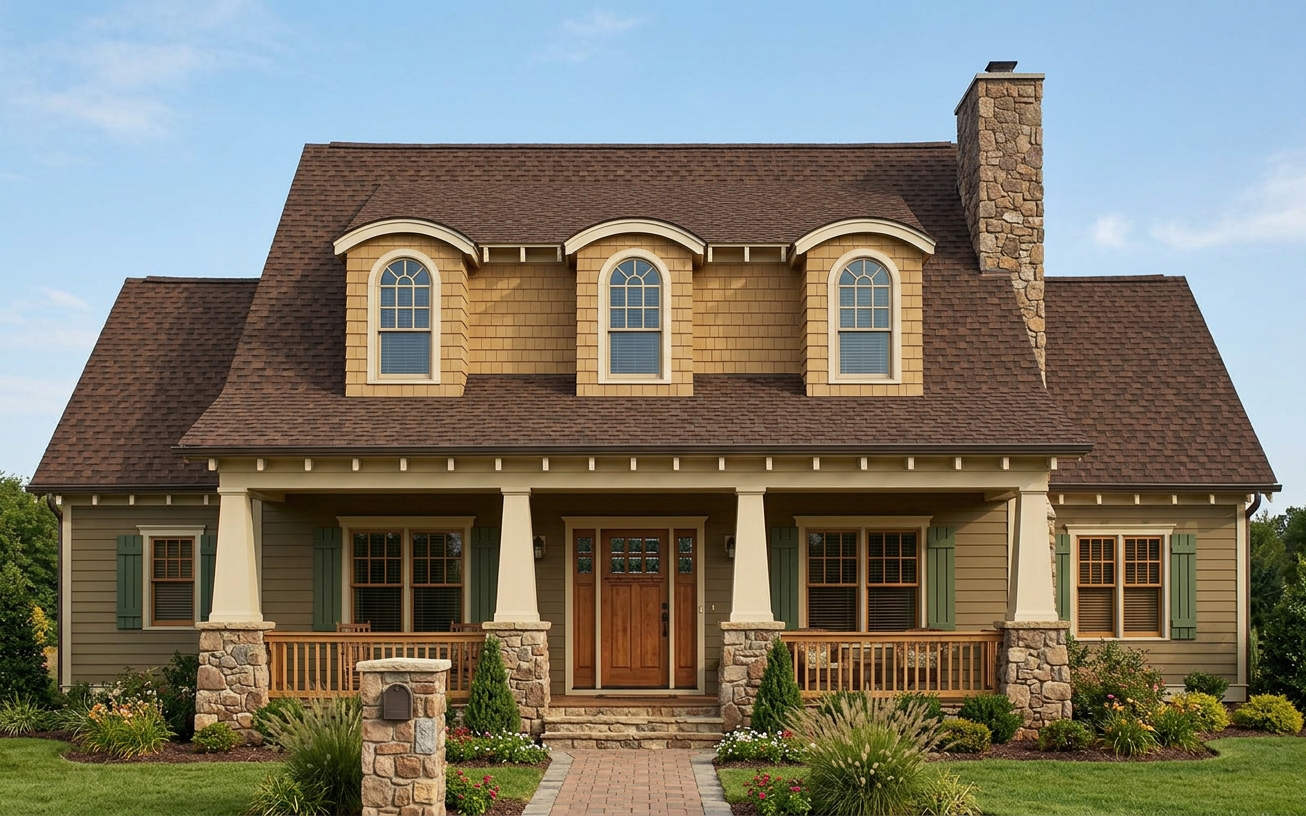
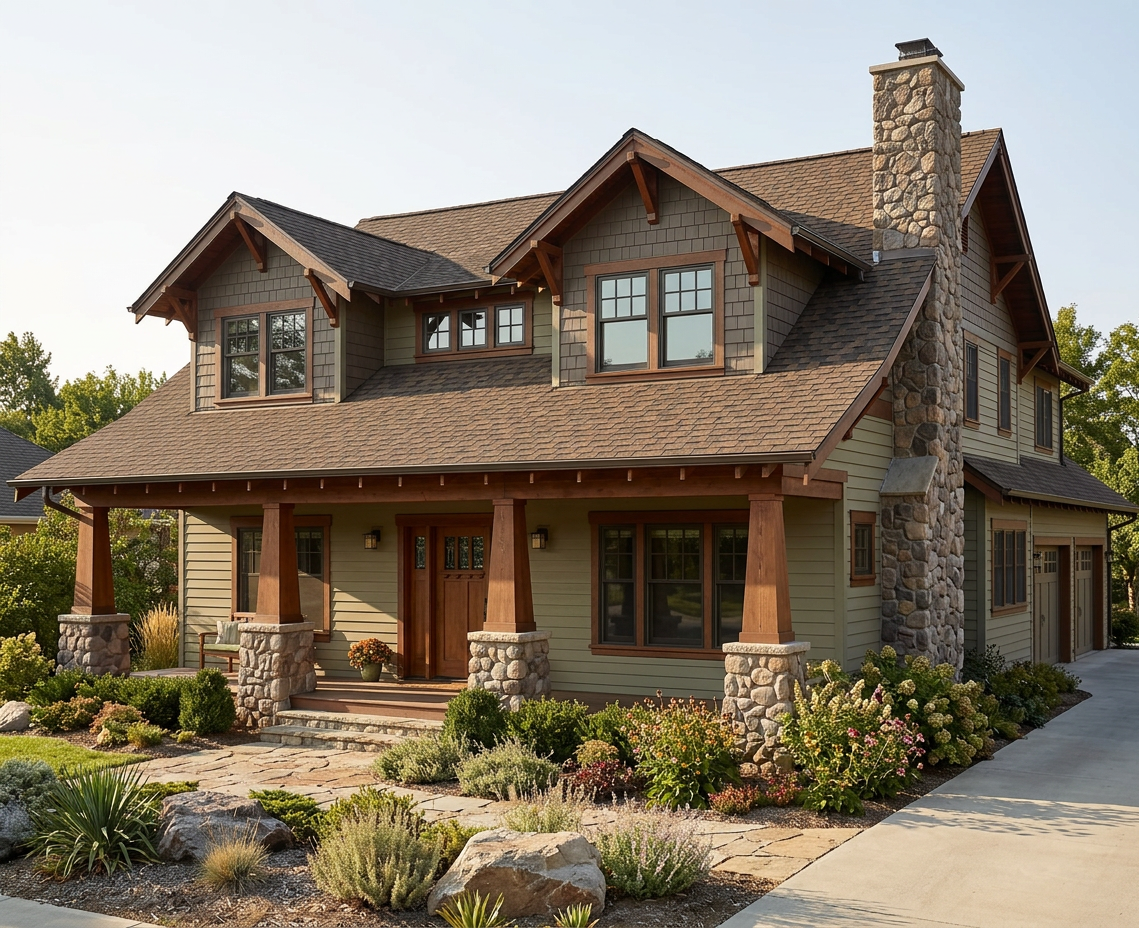
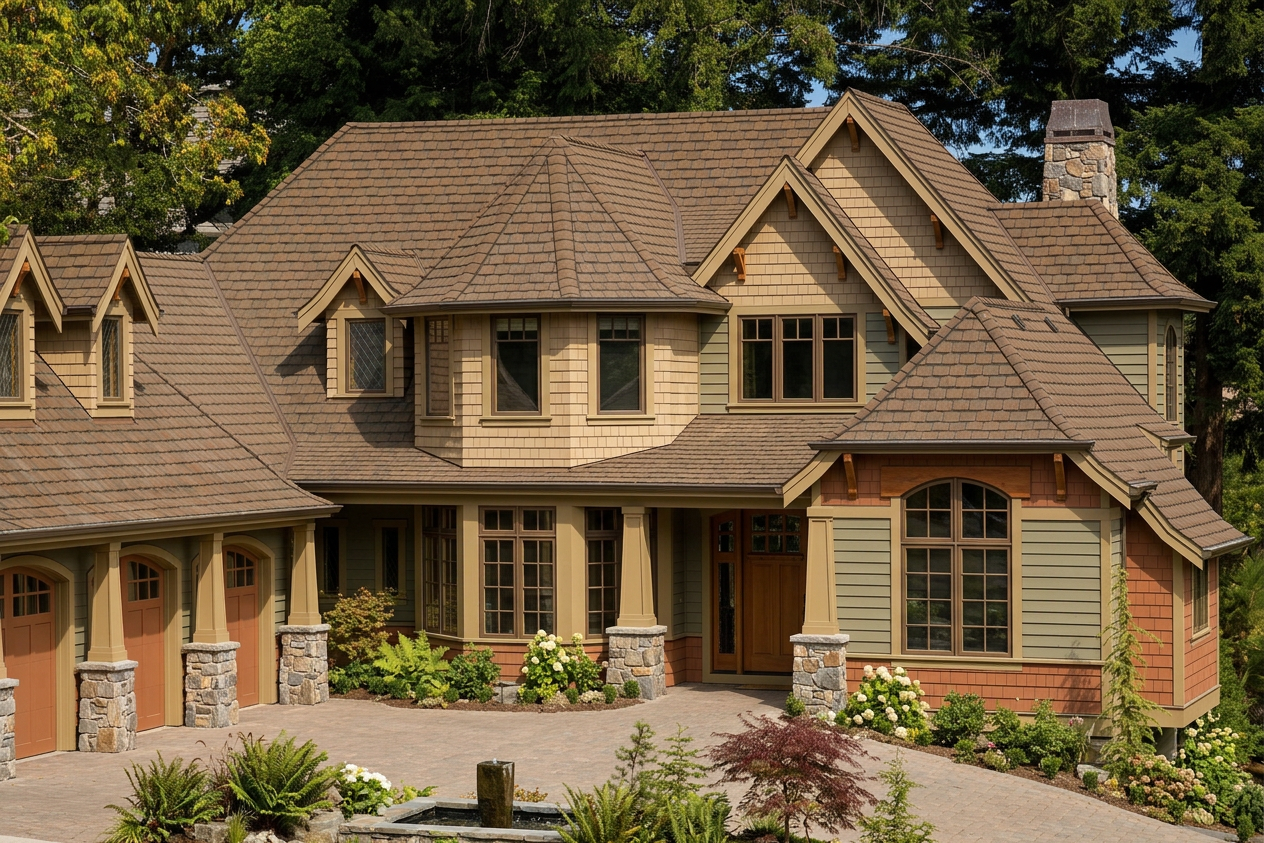
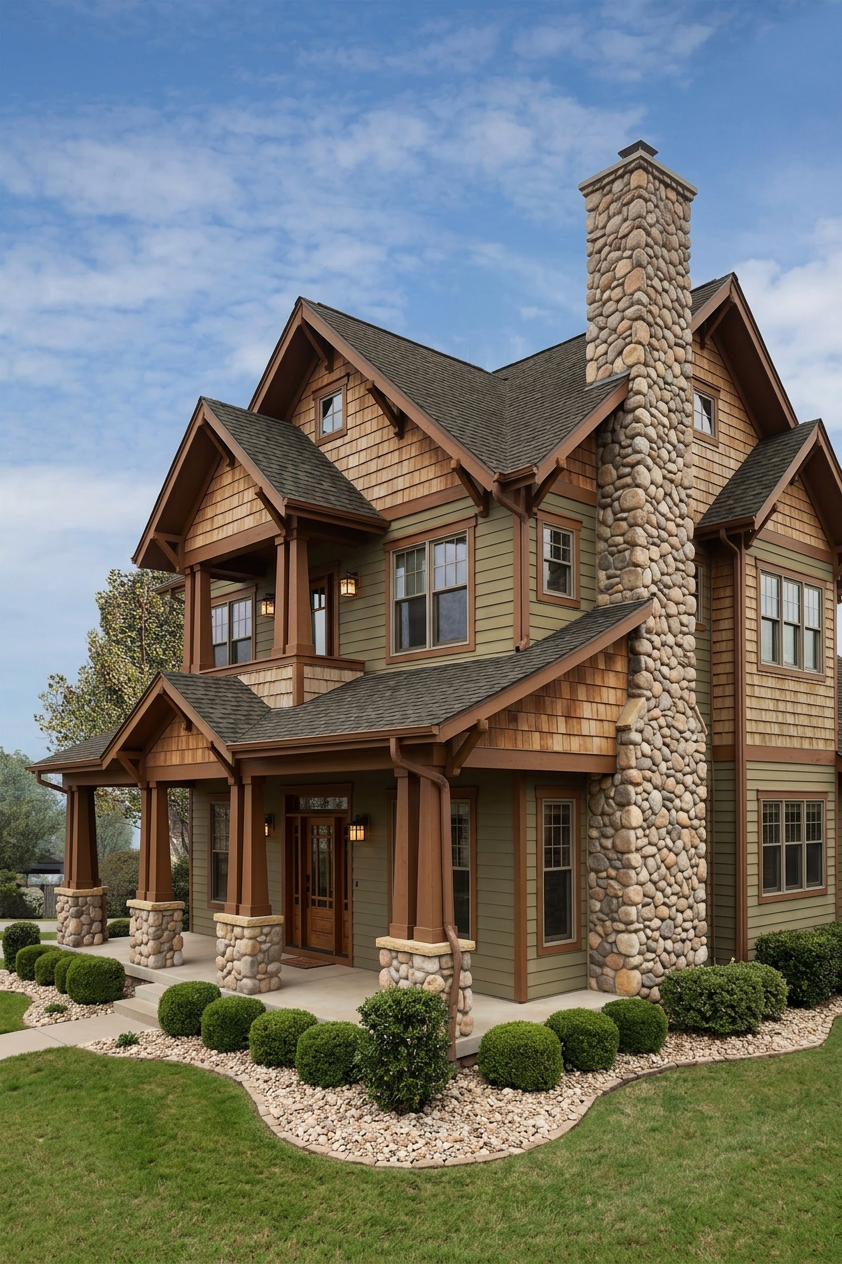
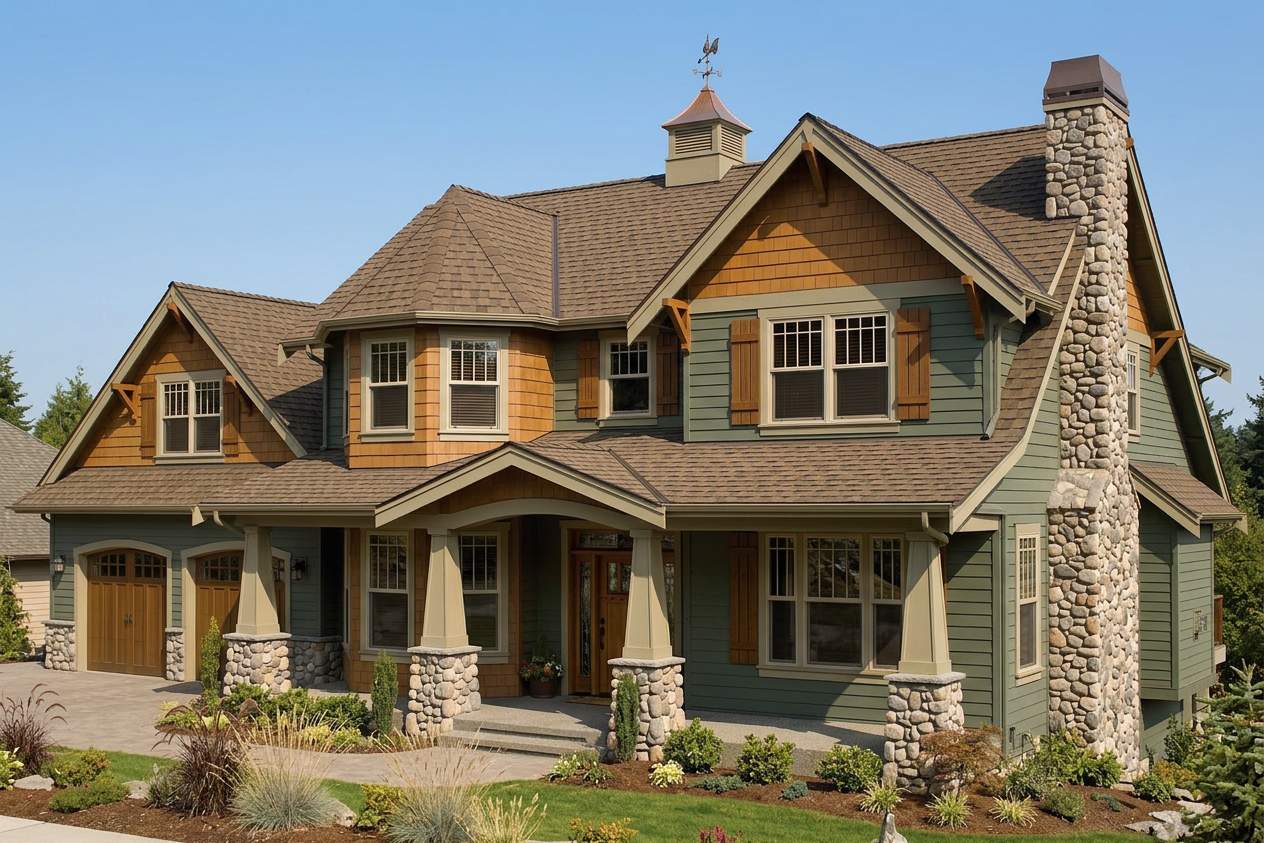
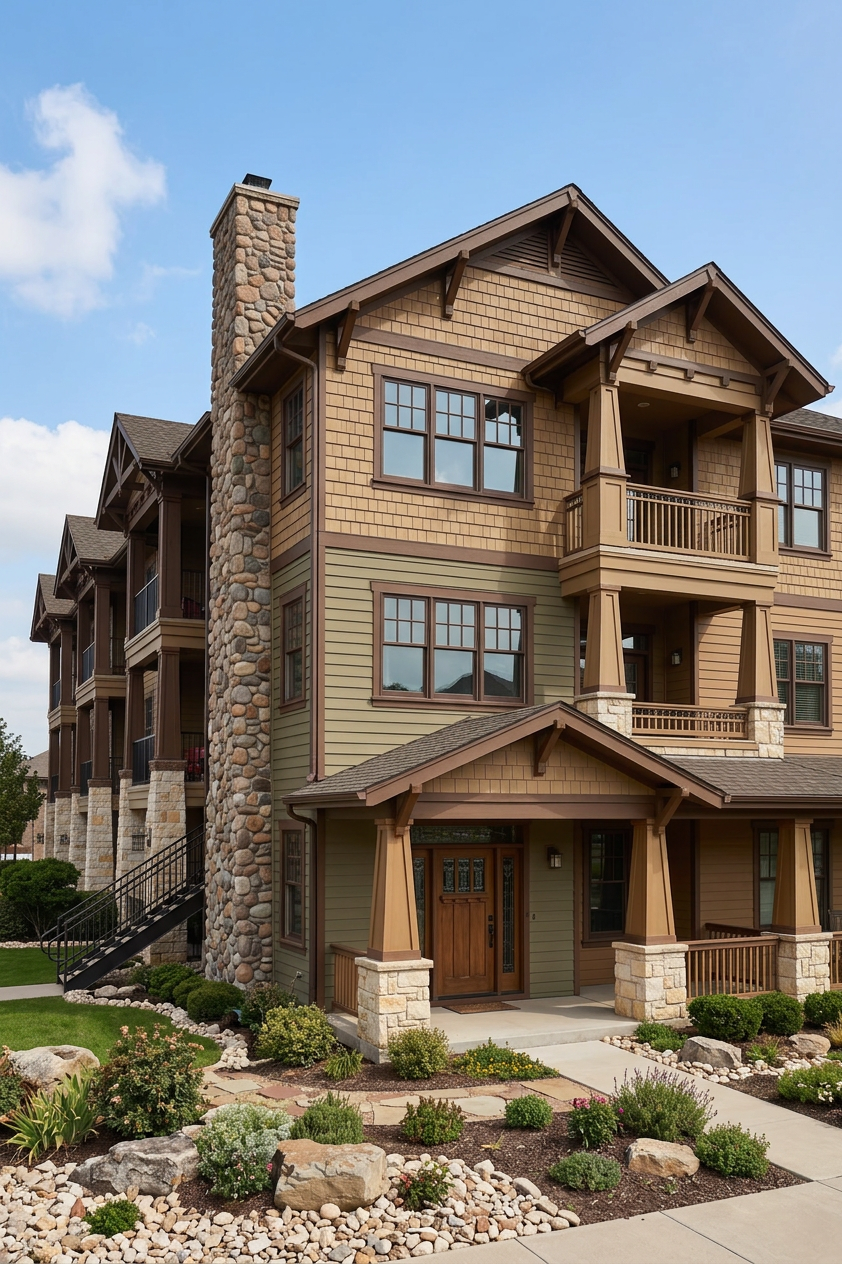
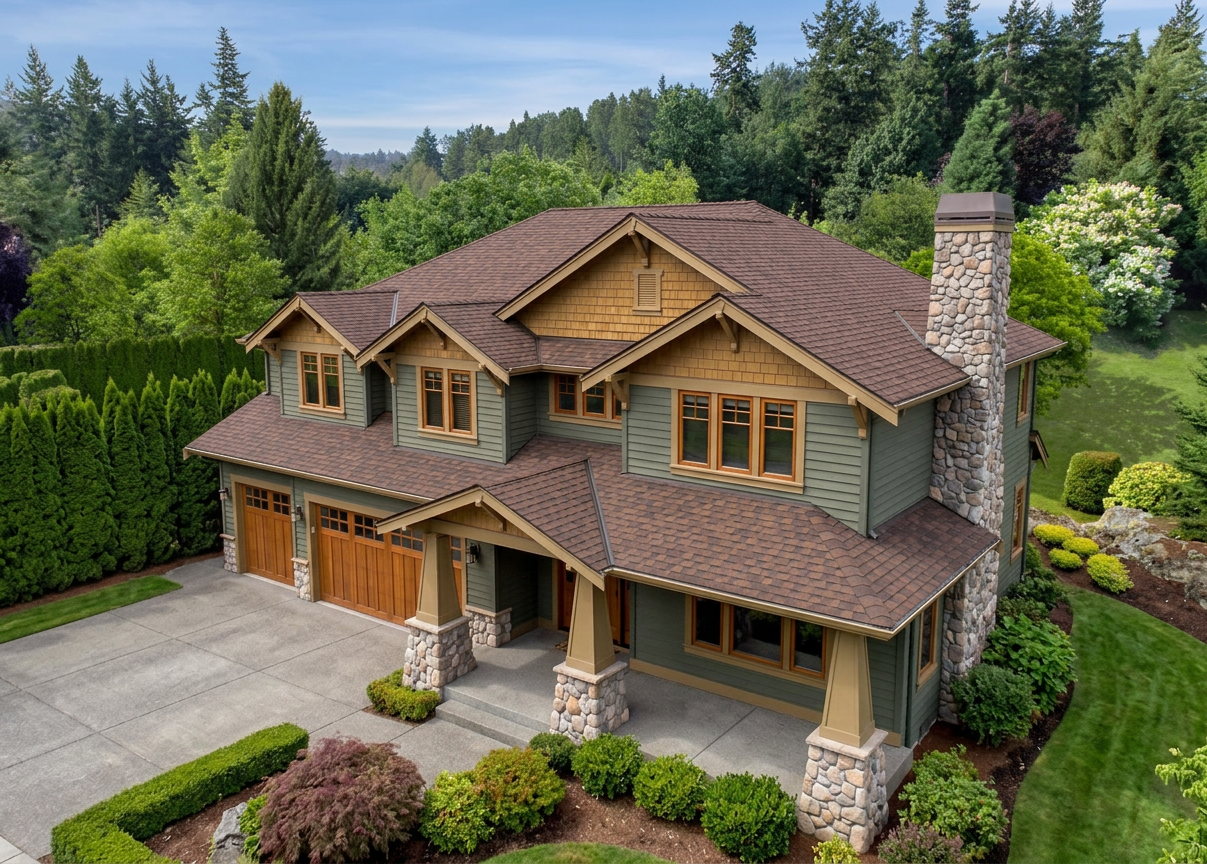
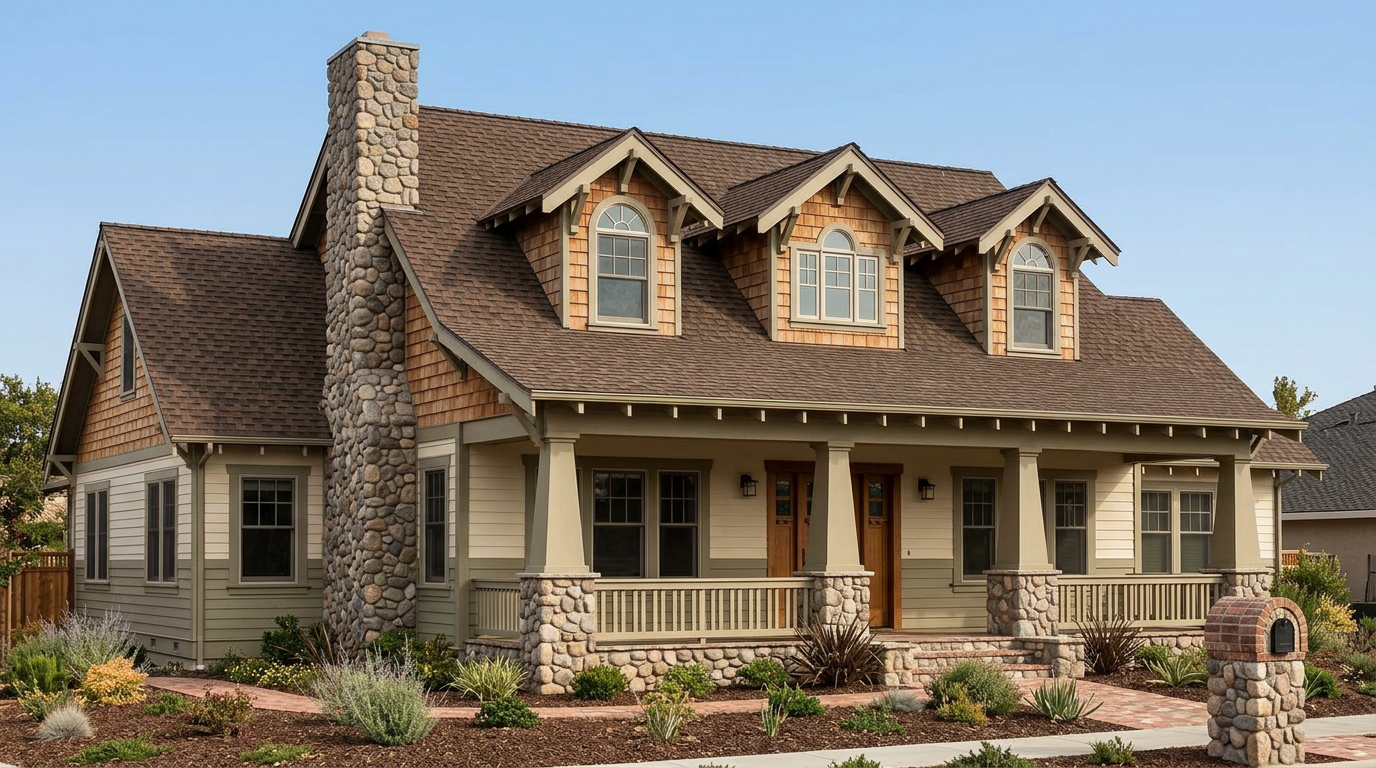
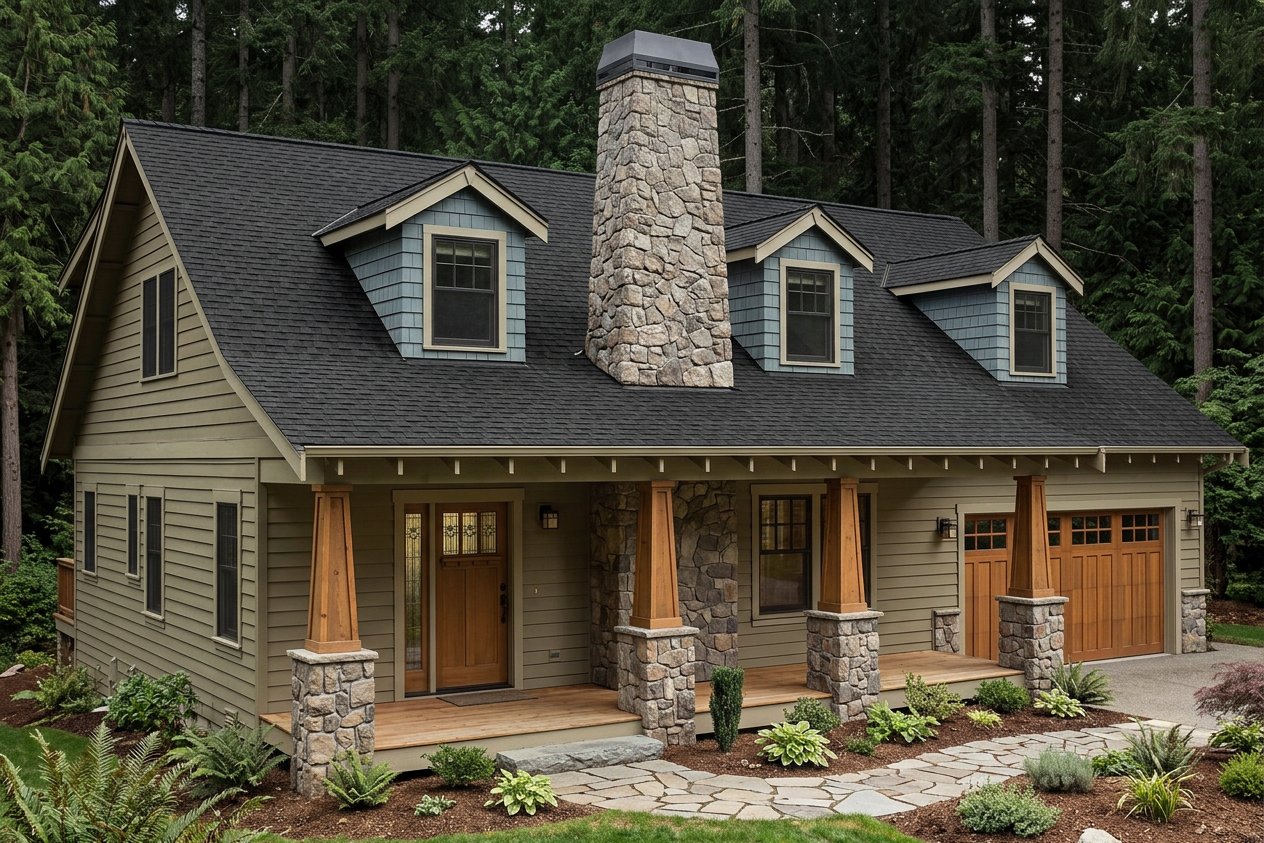
Few pairings feel as settled as Craftsman and brown. The style's exposed rafter tails, tapered columns, and mixed shingle-and-clapboard siding already speak in warm, organic tones, and a brown roof continues that material conversation overhead rather than interrupting it with contrast.
Amber and tobacco granule accents in modern brown asphalt blend naturally with cedar shingle, stone piers, and painted wood trim - keeping the entire elevation firmly and consistently in the earthy register the style has always demanded of the palette.


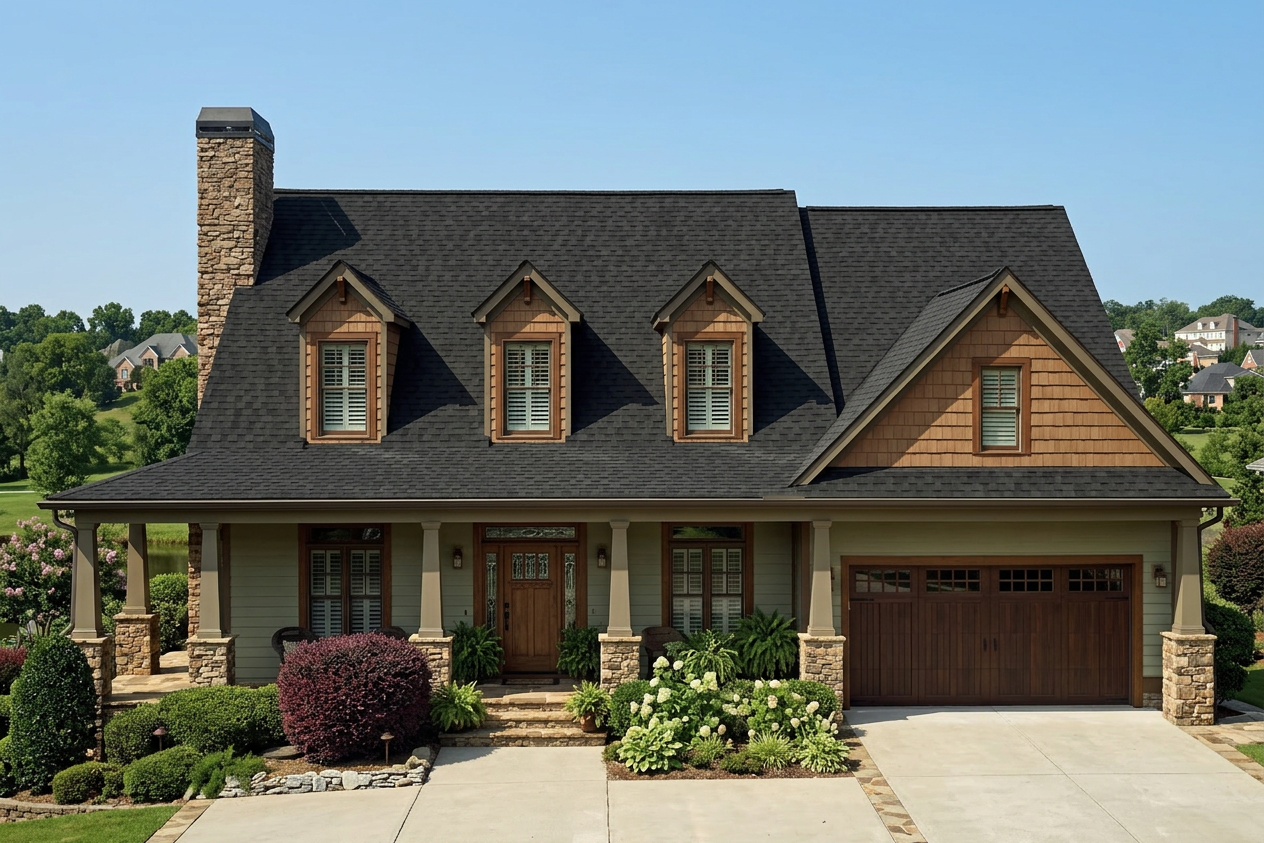
Early-20th-century American style derived from the English Arts & Crafts movement.
Craftsman architecture emerged in the United States between 1905 and the late 1920s as a reaction against Victorian ornamentation. The style draws directly from the English Arts and Crafts movement and the work of Greene & Greene in Pasadena. Key facade features include low-pitched gabled roofs with wide overhanging eaves, exposed rafter tails, tapered square columns set on stone bases, deep covered front porches, and mixed siding -- horizontal clapboard paired with decorative shingle in the gable ends. Natural materials and honest construction details are the defining theme.
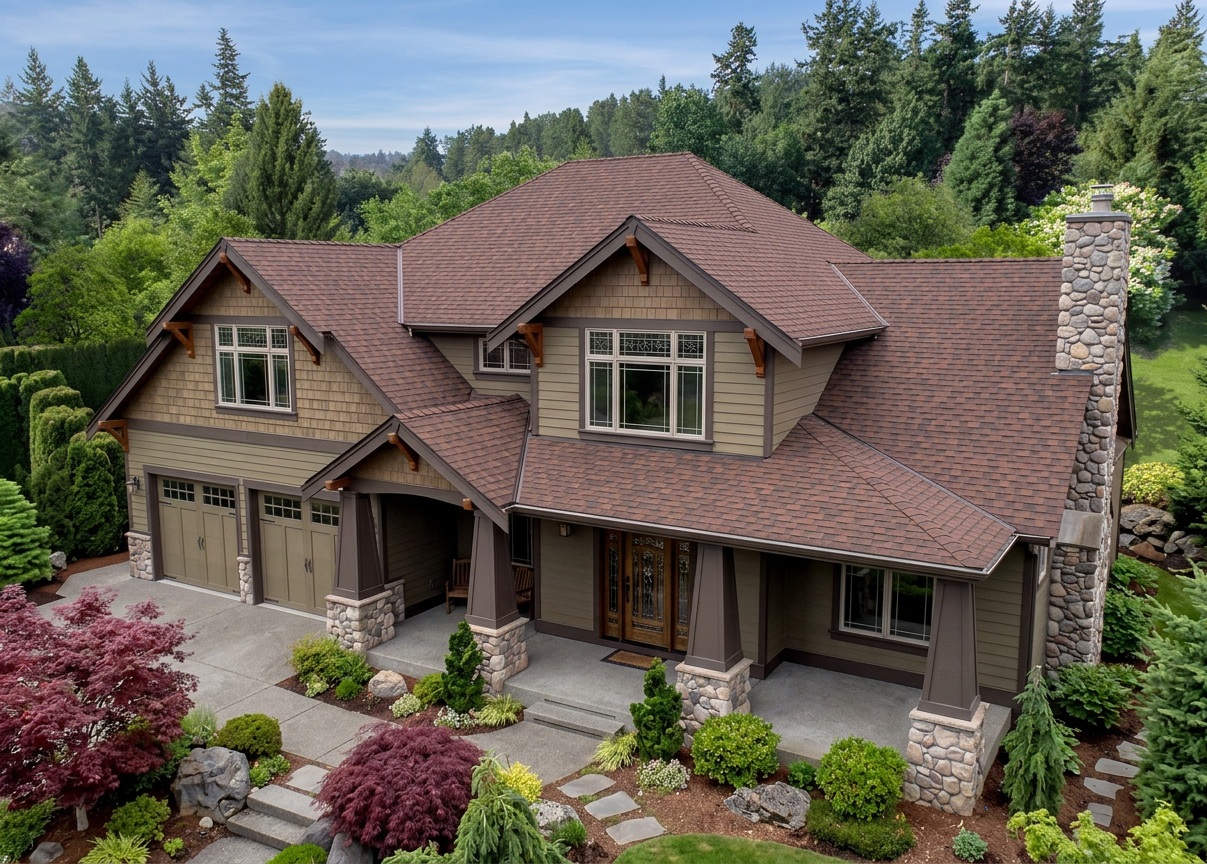
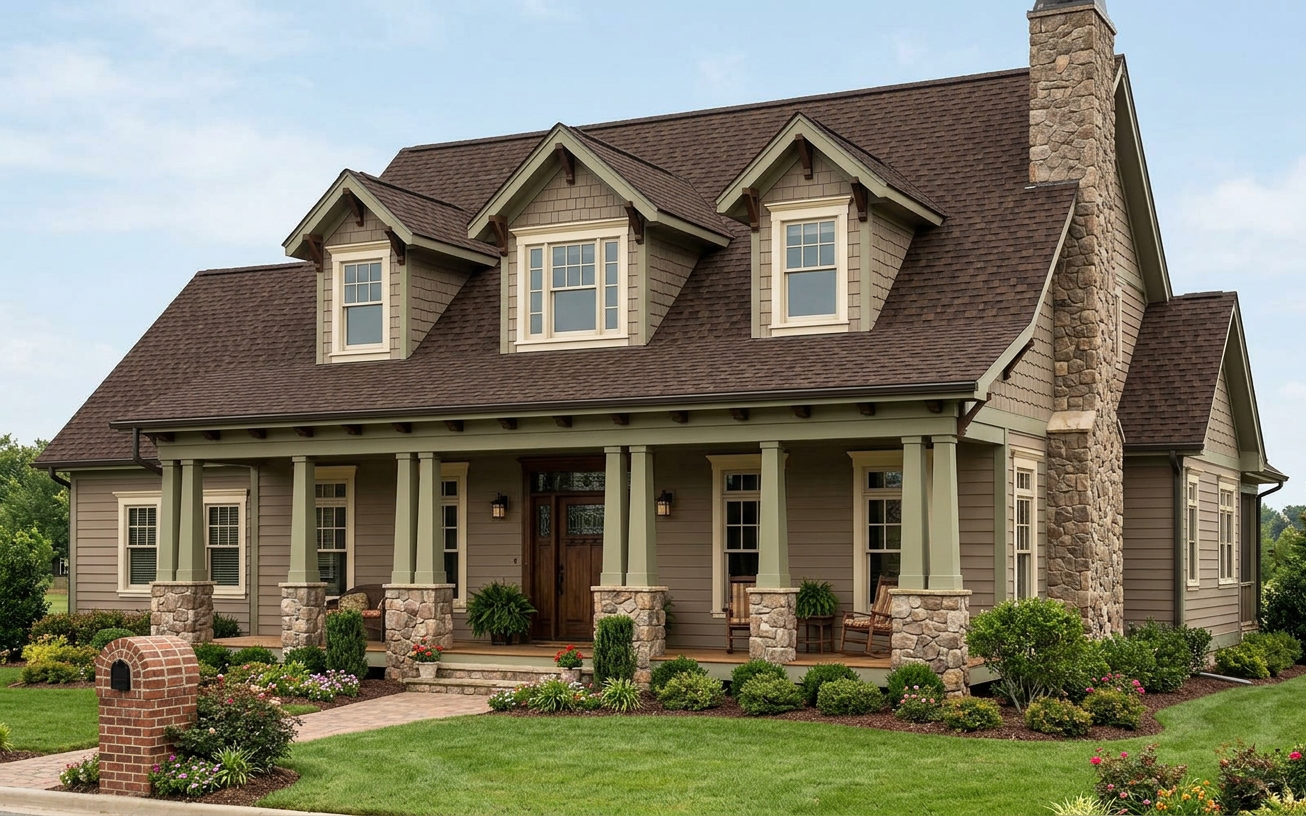
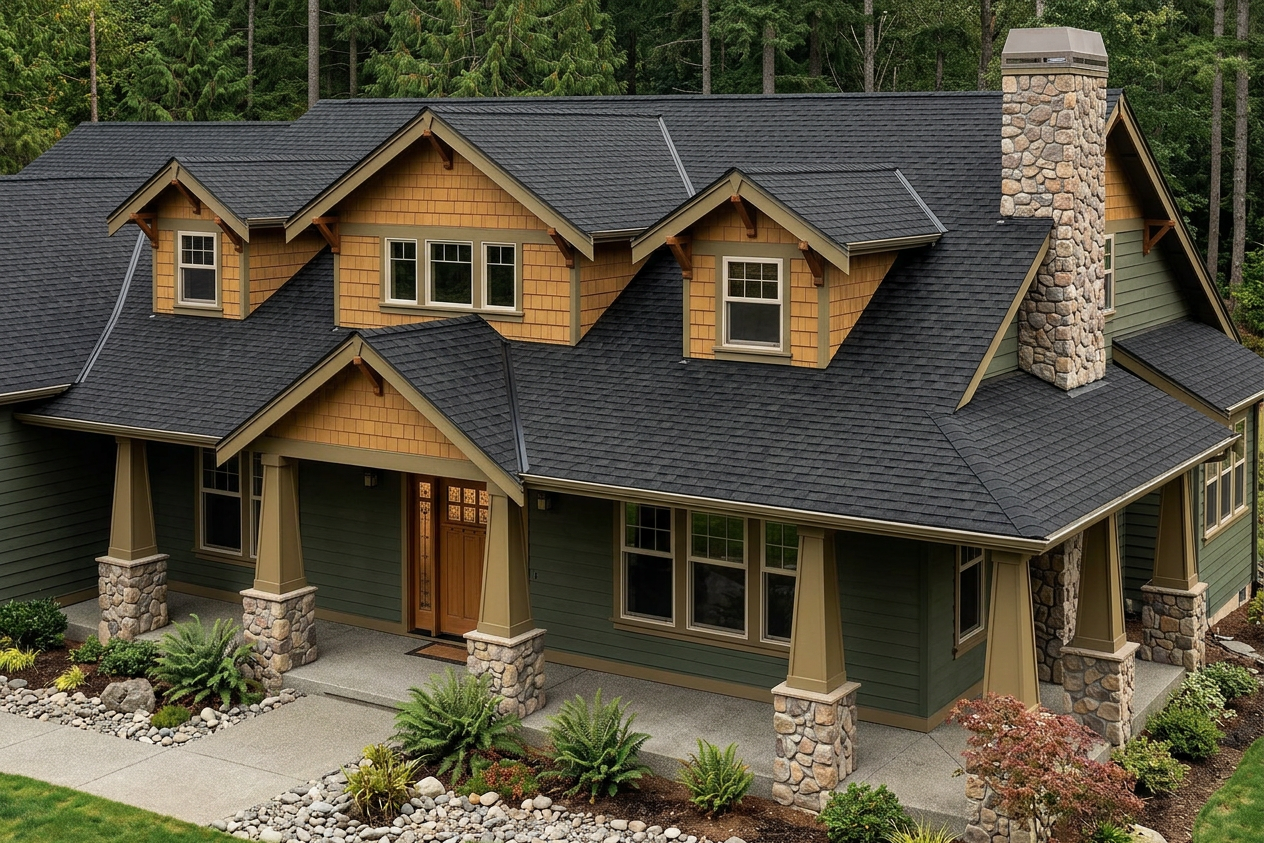
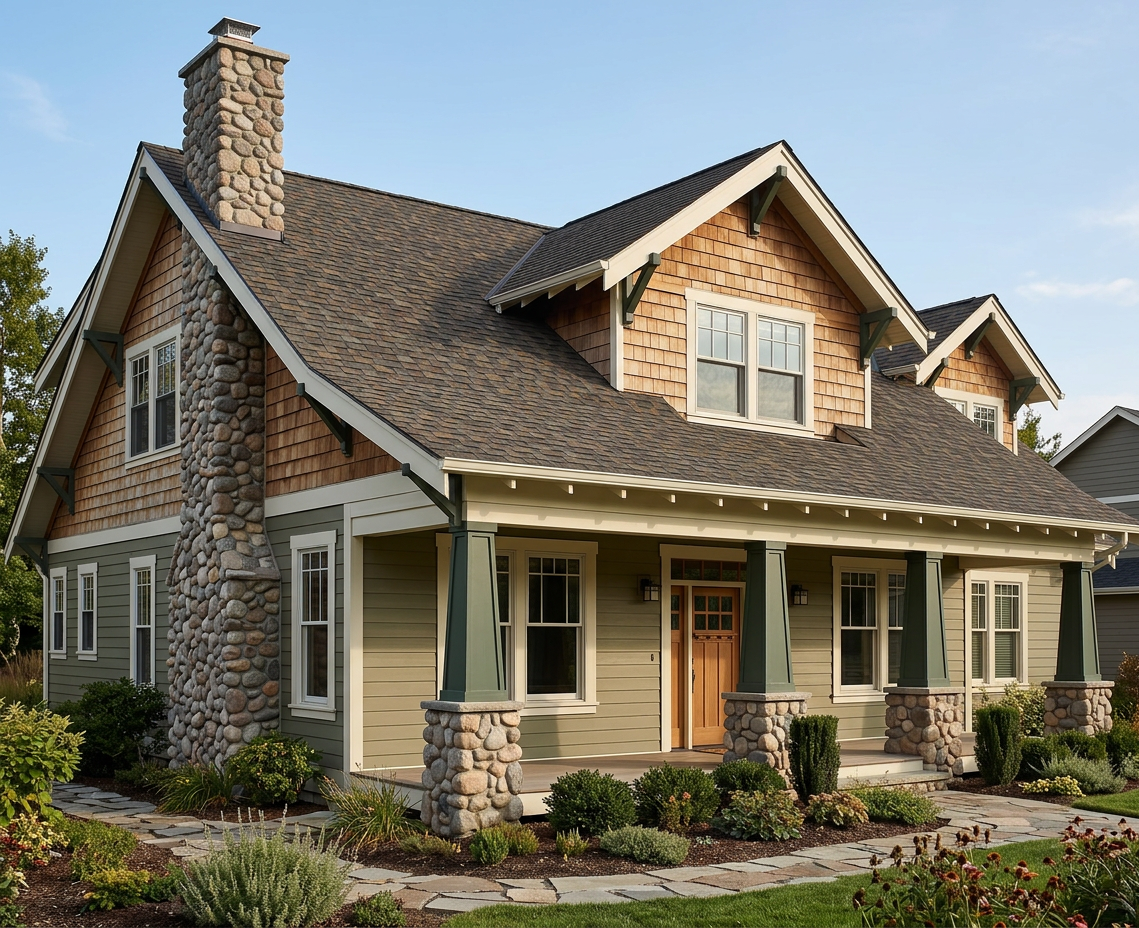
Upload a phone photo of your house and pre-load this exact craftsman-and-brown pairing in the visualizer. Swap to any of the recommended shingles below in one tap. No signup, no email.
Craftsman calls for the roof to extend the architecture rather than cap it.
Craftsman calls for the roof to extend the architecture rather than cap it. The wide eaves and exposed rafter tails are non-negotiable -- if your existing build does not have them, plan to add them during the re-roof. Skipping these details turns a craftsman into a generic ranch and the roof color choice loses half its impact.
Brown reads as architecturally correct on warm-tone elevations.
Brown asphalt sits naturally with red brick, cream stucco, natural stone, and bronze hardware -- the warm-tone material families that traditional and revival styles depend on. On stark cool palettes (white-and-black, white-and-charcoal modern farmhouse) brown can read as dated; on warm palettes it reads as deliberate.
Install quality matters more than SKU.
All seven recommended SKUs hit Class A fire and 110-150 mph wind ratings. The bigger variable on a craftsman elevation is install quality: ridge-line straightness, valley flashing, starter strip alignment. Insist on a Master Elite or equivalent certified contractor and a written workmanship warranty separate from the manufacturer's material warranty.
The questions homeowners ask before they commit. Answered without sales spin.
Yes. The wide eaves provide natural shade, the deep front porches handle Florida heat well, and the natural-materials palette (wood, stone) photographs beautifully in Florida light. Modern craftsman builds are common in Tampa, Orlando, and the Florida Panhandle.
4:12 to 6:12 (low to medium pitch). Anything steeper reads as Victorian; anything flatter reads as ranch. The roof should feel like a hat the house wears comfortably, with eaves that extend at least 18 inches past the wall.
On craftsman specifically, yes -- the warm tonal family of the roof reinforces the style's traditional palette. Brown asphalt is one of the most architecturally honest choices for revival-era styles in Florida.
Slightly less visibly. Brown drifts slightly warmer and slightly desaturated over 10 to 15 years of Florida UV. The shift is uniform, so the roof never develops the patchy look that aged gray shingles sometimes show. Source: NRCA Asphalt Shingle Manual.
All renders on this page were generated by fal.ai's nano-banana-2 image-edit model on top of REAL install photos from each manufacturer. The roof color, granule texture, and shingle pattern come directly from the source photo and are preserved during the edit. The facade is restyled to Craftsman. The result is photorealistic but not identical to any specific real home -- use it for visual comparison, then open the free visualizer to see the same SKU on a photo of your own house.