
Mediterranean Homes With a Charcoal Roof: 21 Rendered Examples 2026
Charcoal offers Mediterranean homes a cooler, more restrained alternative to traditional terra-cotta without abandoning warmth entirely. The gray-blue granule variation harmonizes with stucco, rough stone, and wrought iron - the style's core material palette - rather than contrasting sharply against it.
The textured shingle surface also closely echoes the dimensional quality of traditional clay tile seen at a distance, giving the arched entry and smooth stucco walls a grounded, composed overhead plane that suits the style's ornamental character particularly well.
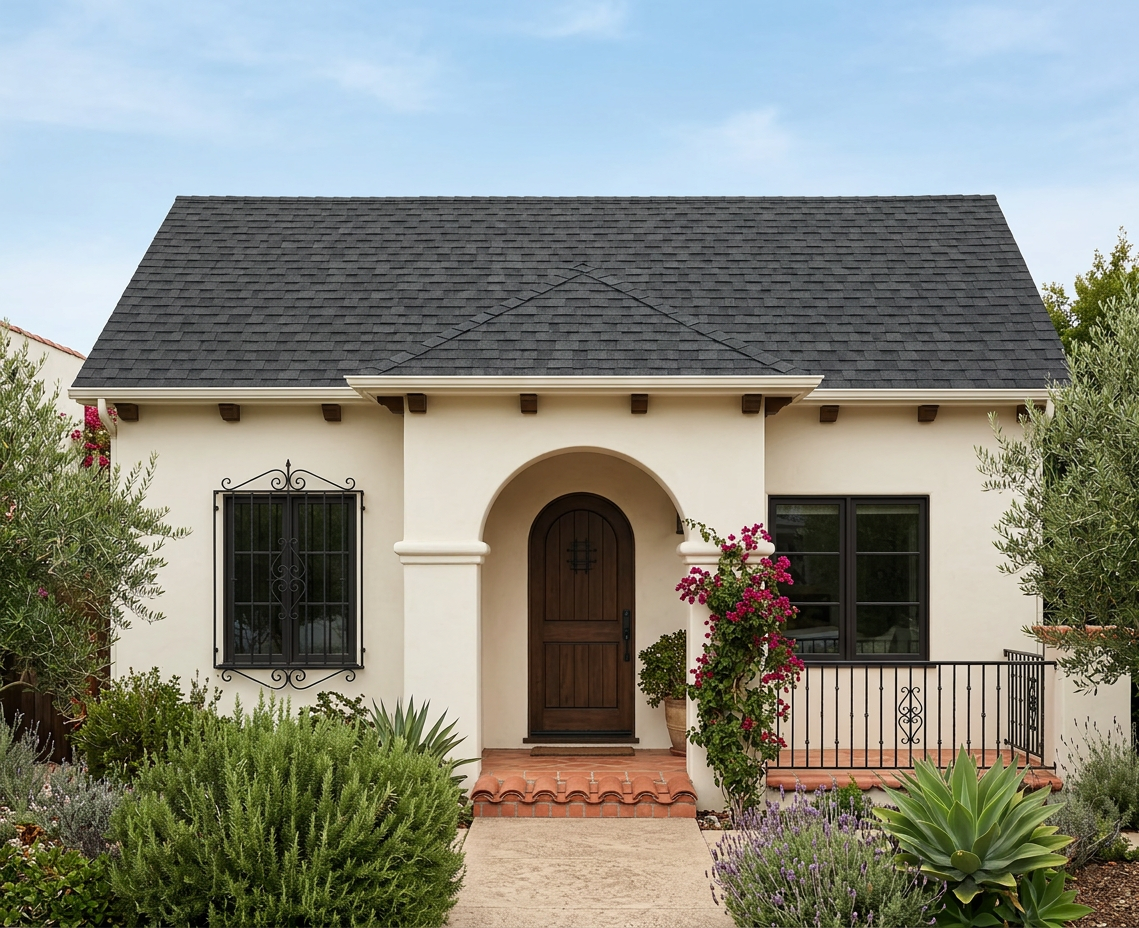

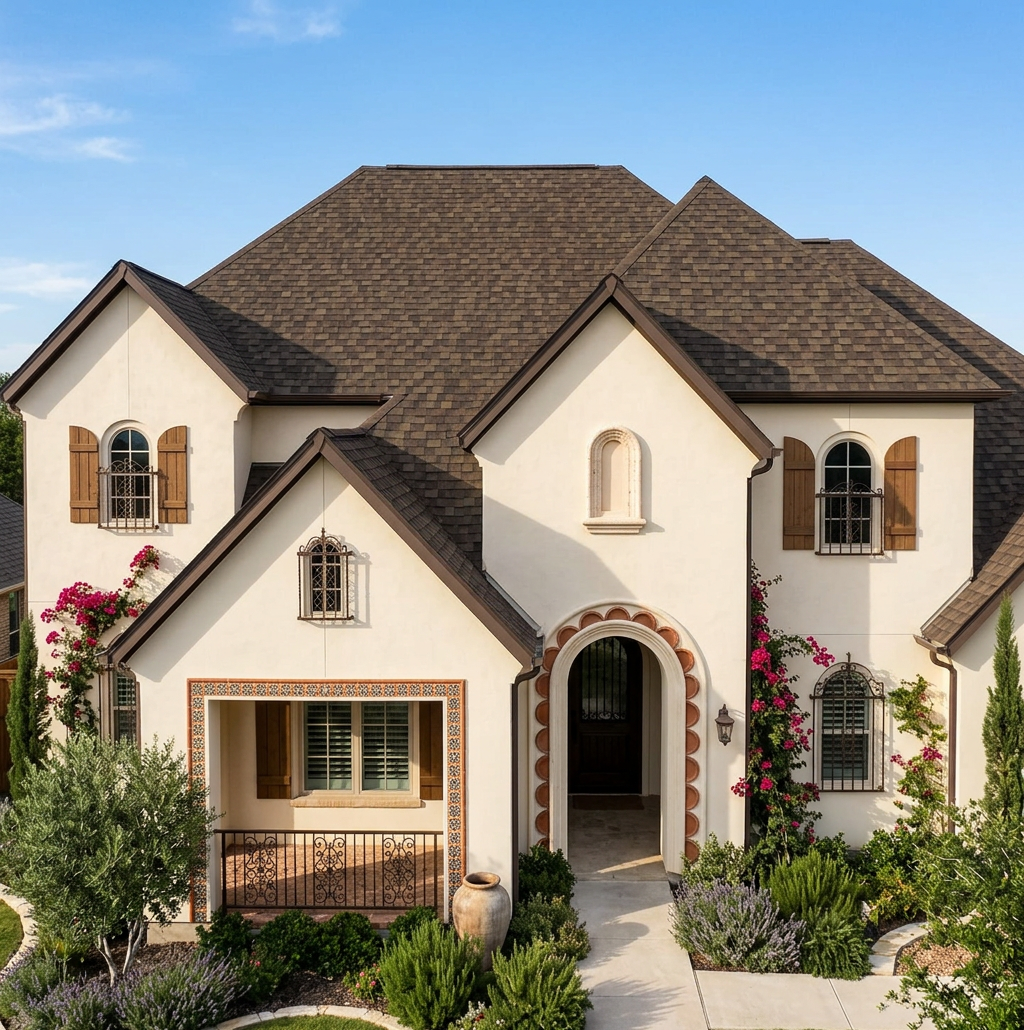
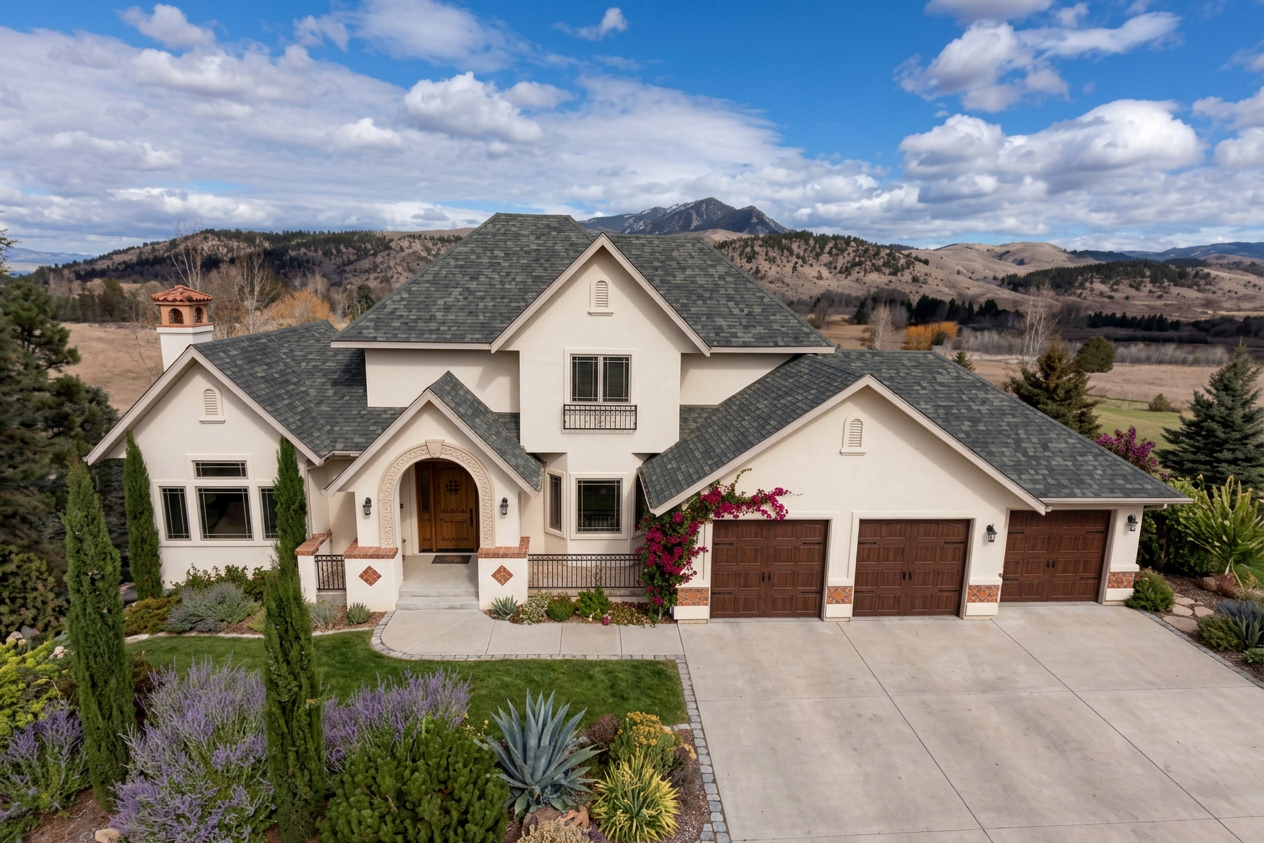
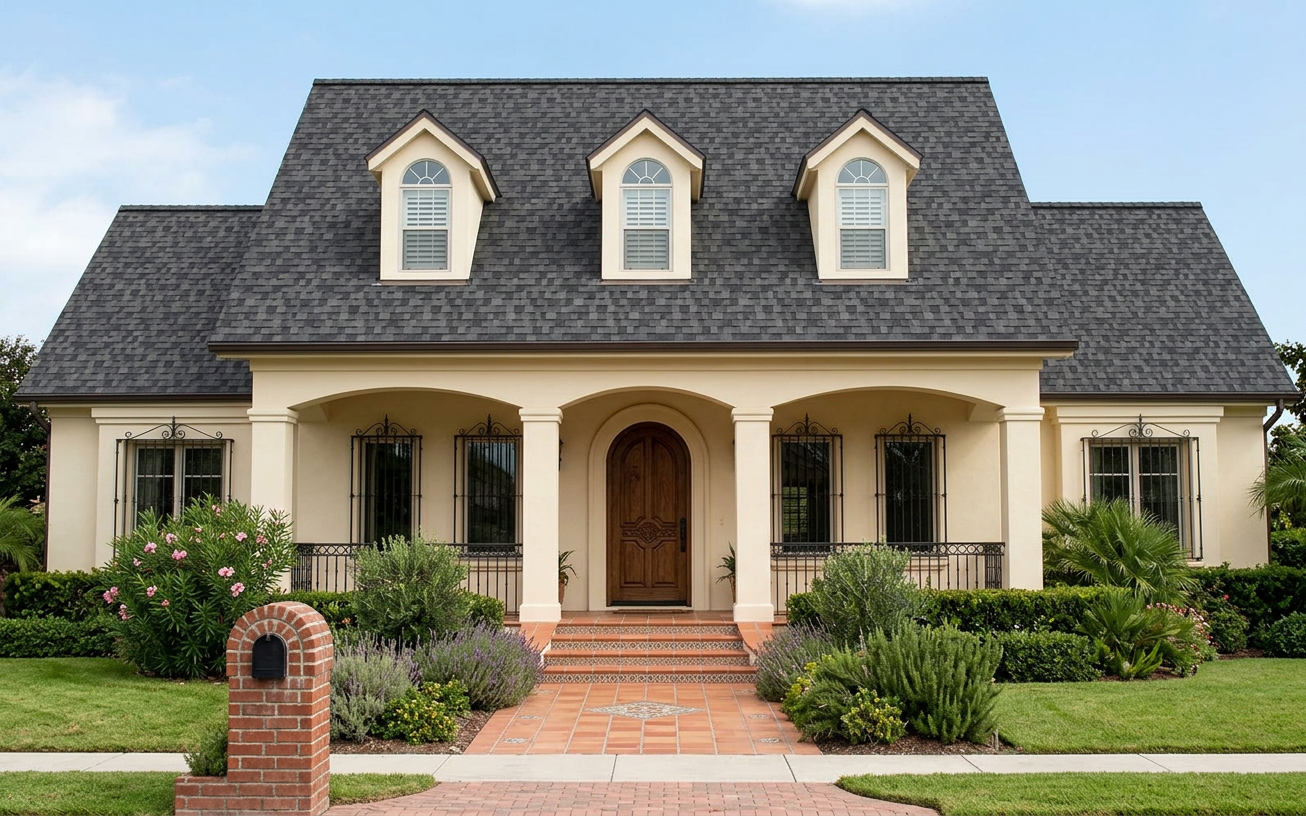
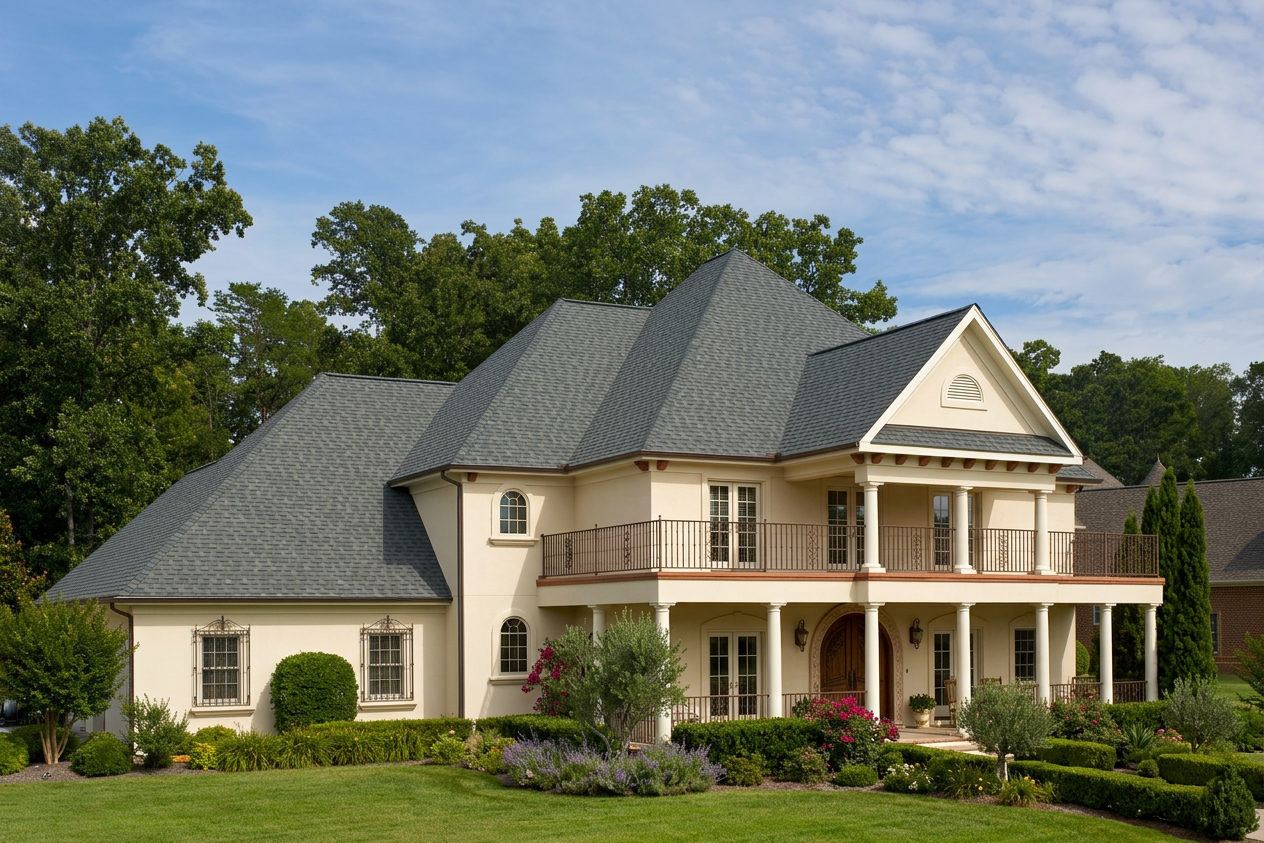
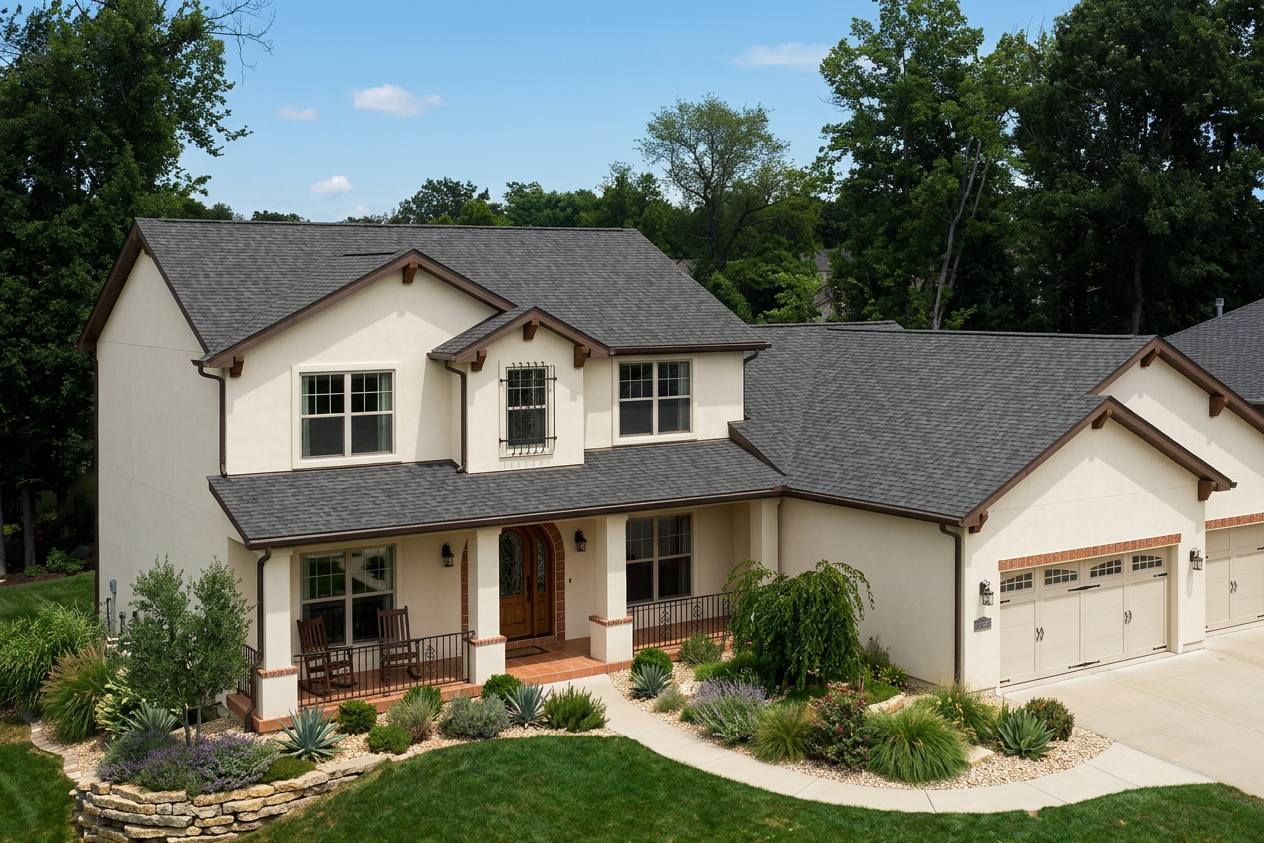
Spanish Colonial + Mediterranean Revival, 1915-1940s, dominant in Florida residential.
Mediterranean Revival emerged in Florida and California between 1915 and the 1940s, drawing on Spanish, Italian, and North African architectural traditions. In Florida, the style is essentially the default for high-end residential -- Addison Mizner's Palm Beach and Boca Raton work, Coral Gables, and most Florida-Mediterranean new builds trace back to this period. Key features include smooth stucco walls in cream or white, arched front entryways, decorative wrought-iron details, terracotta tile accents (traditional), and low-pitched roofs.
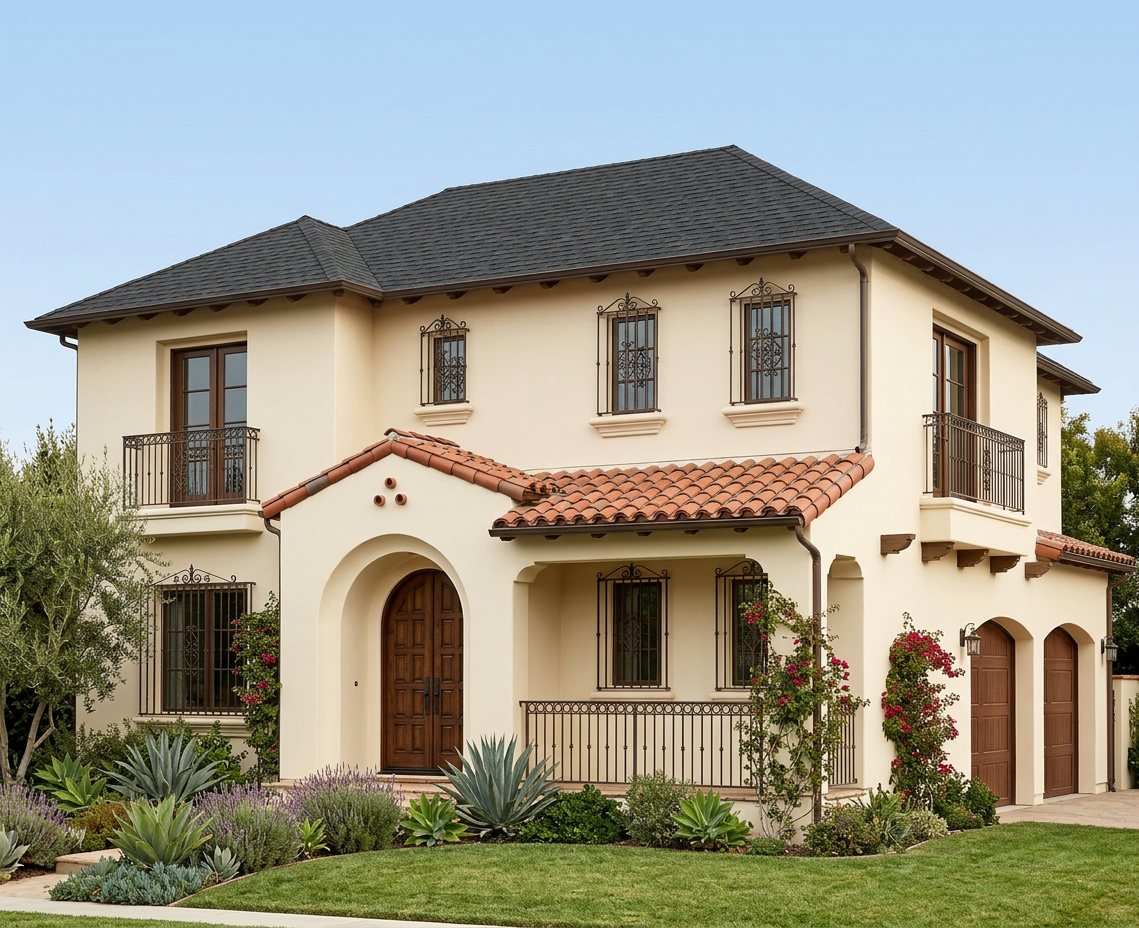
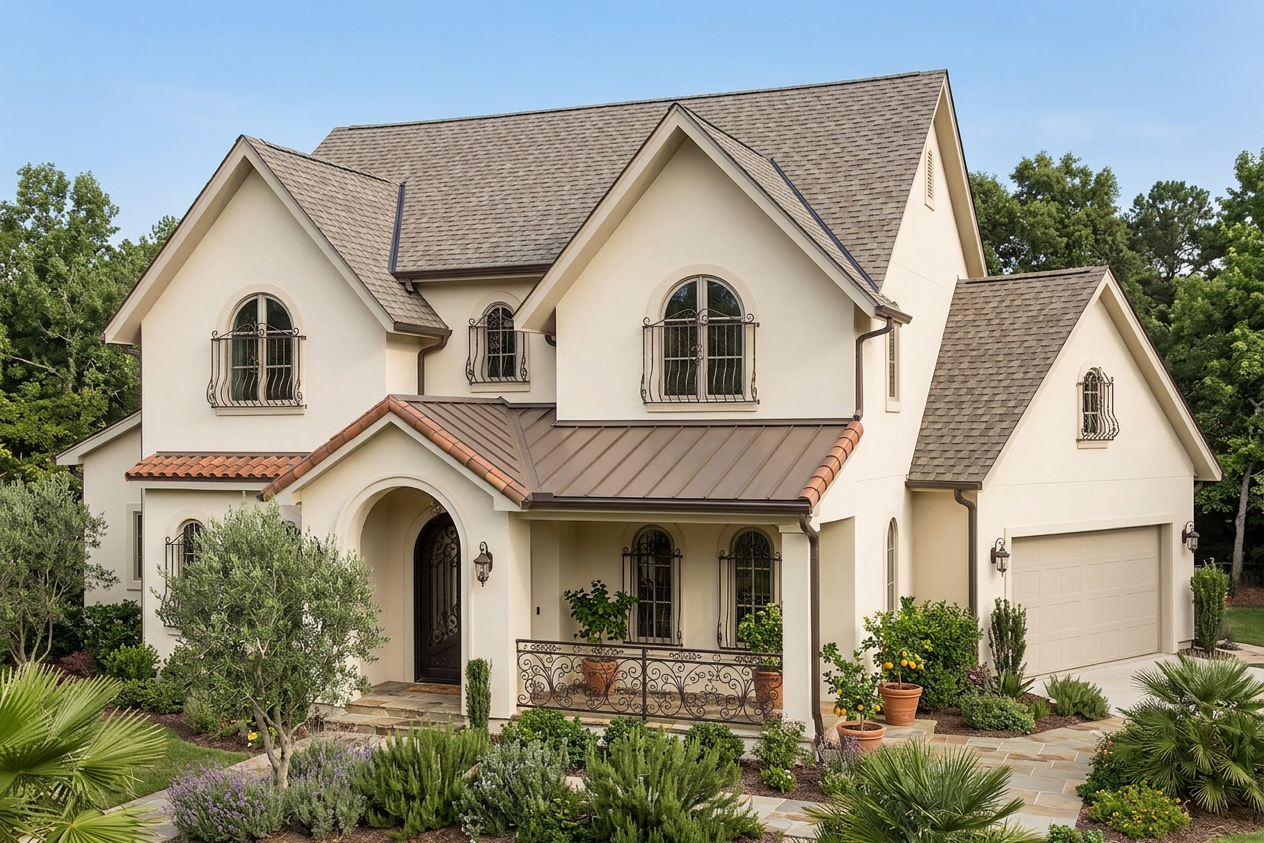
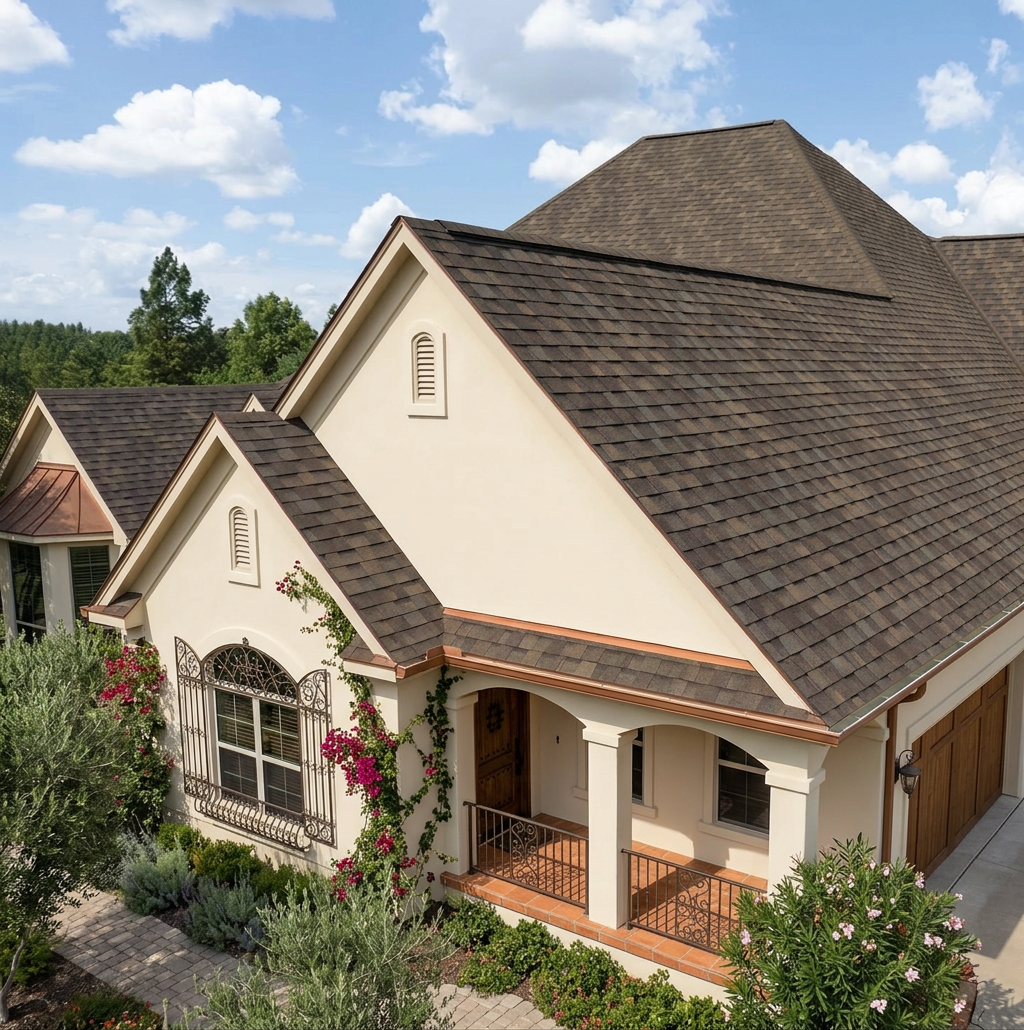
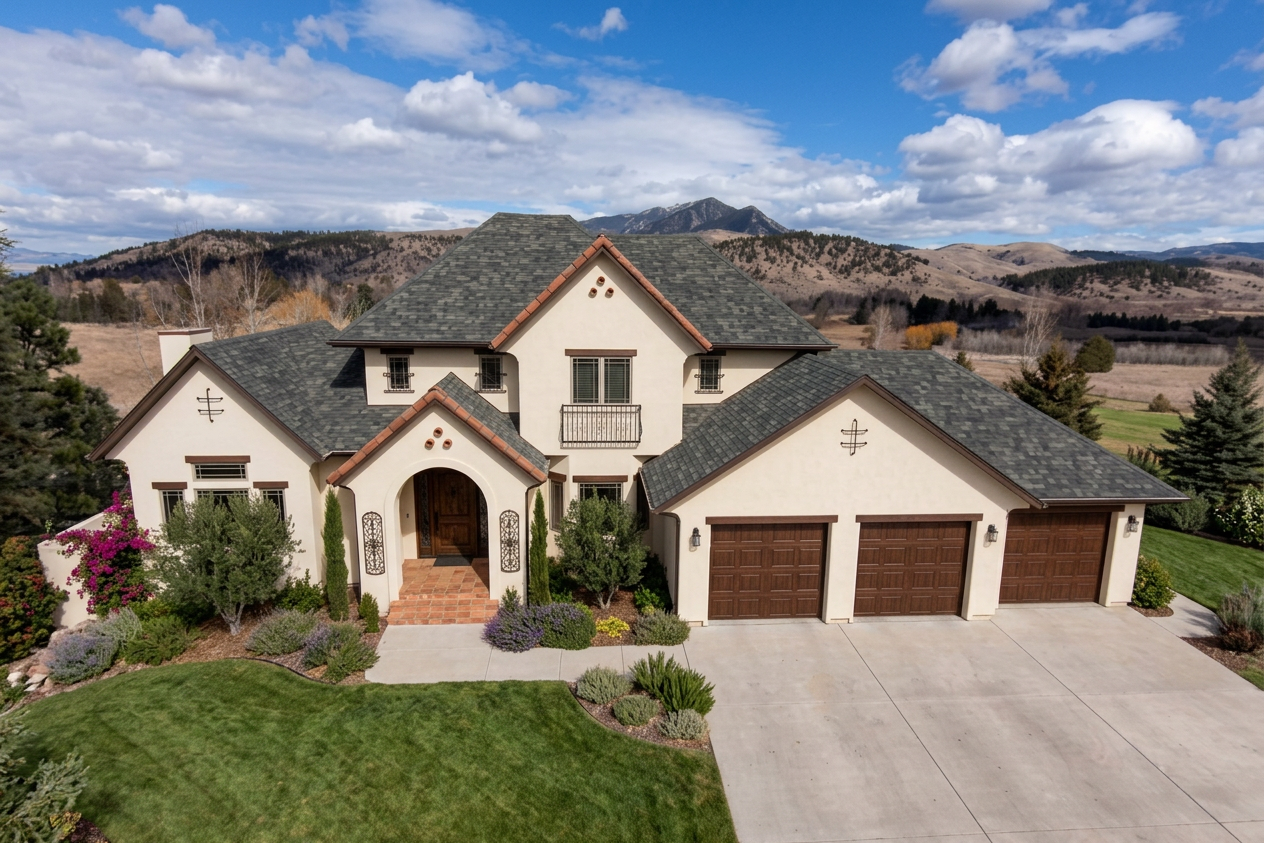
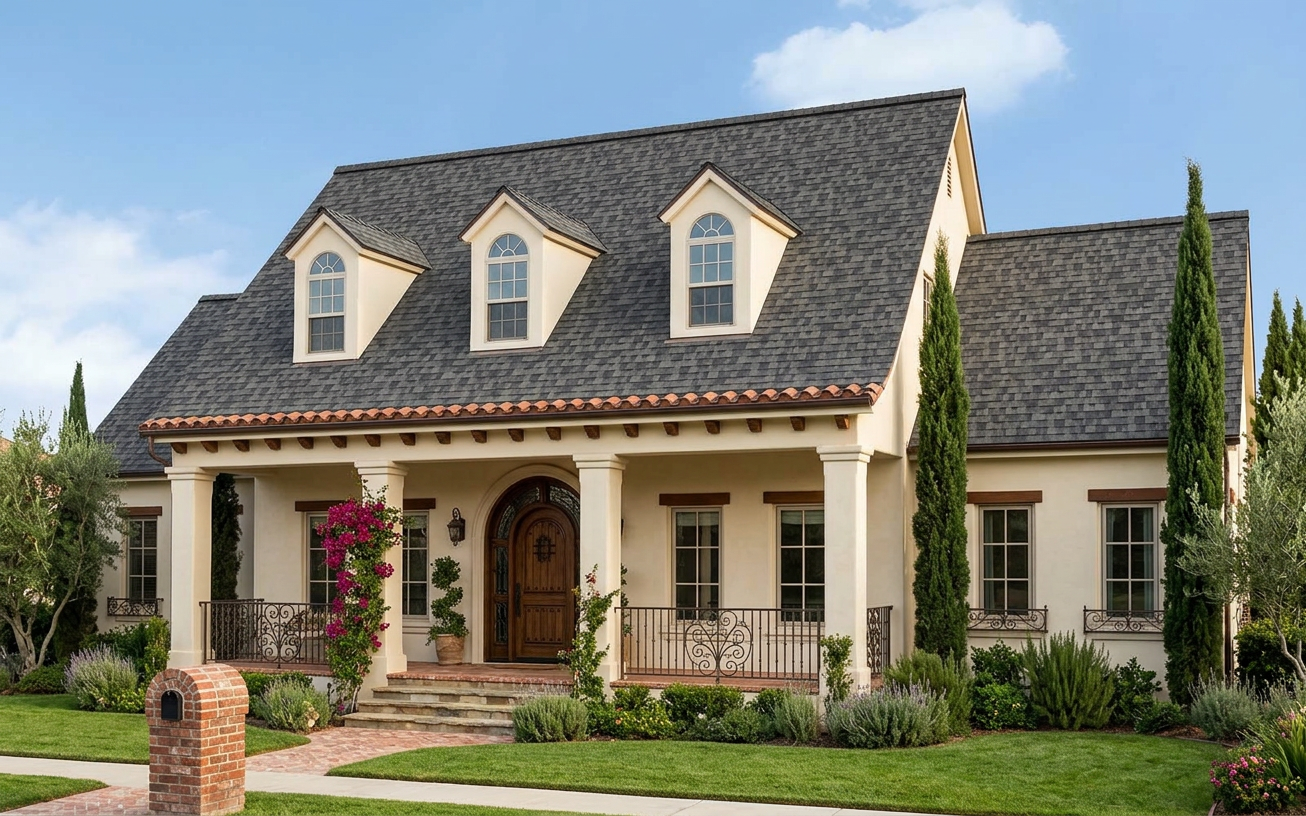
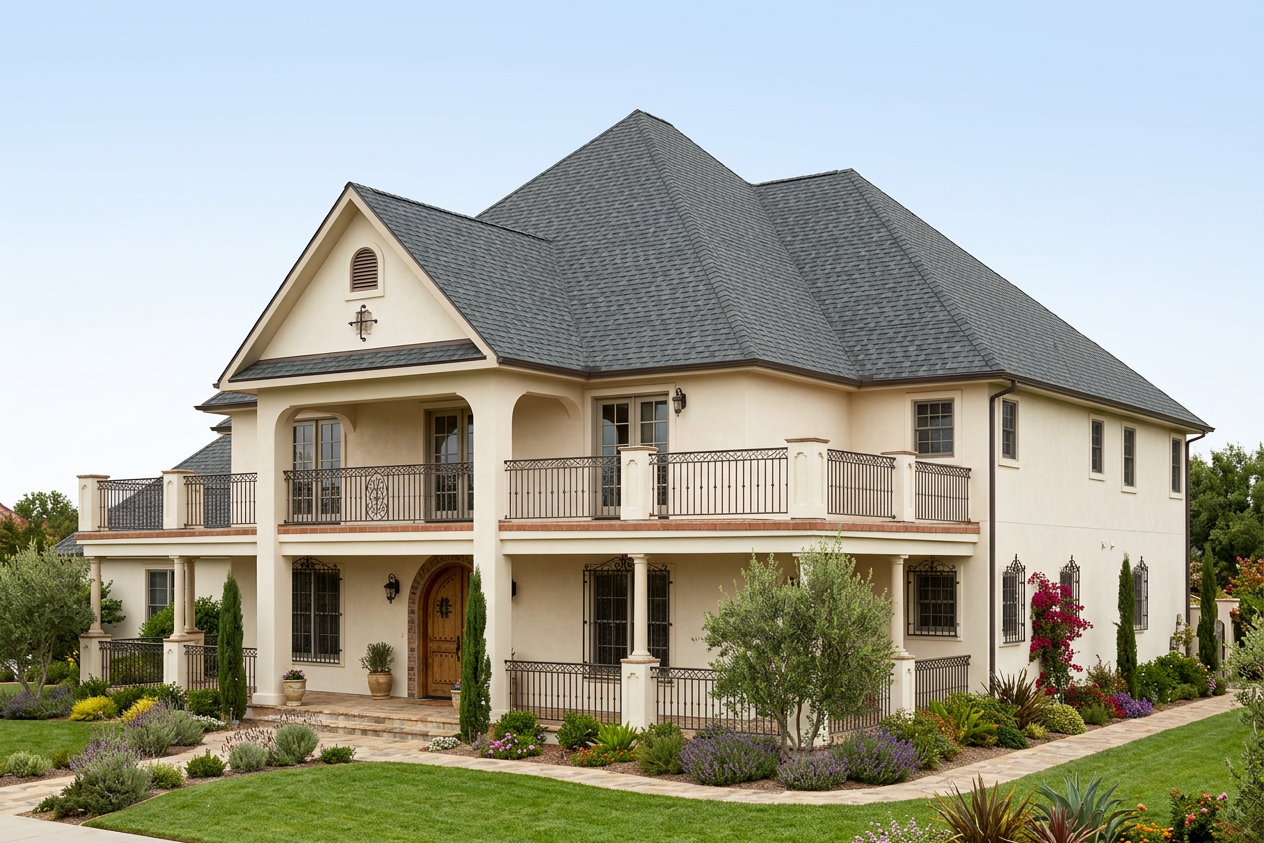
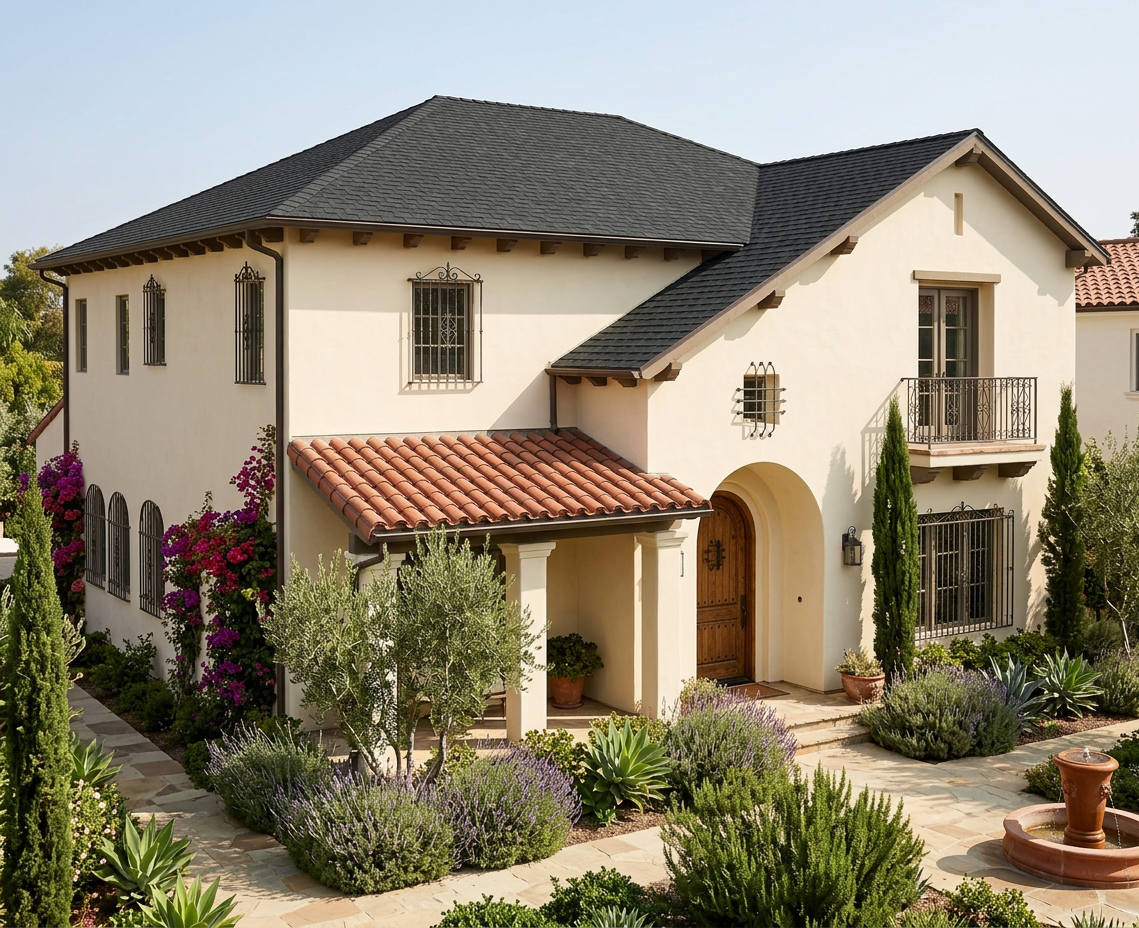
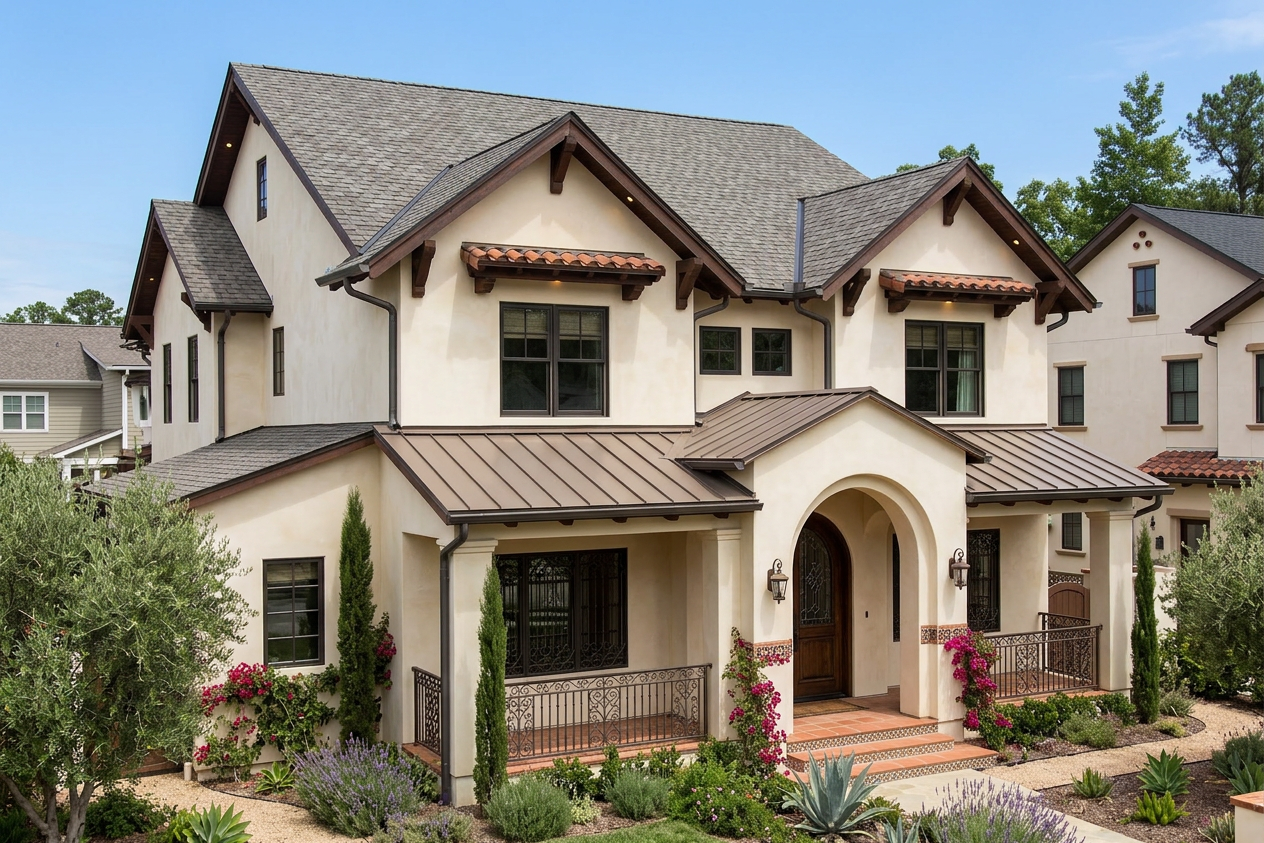
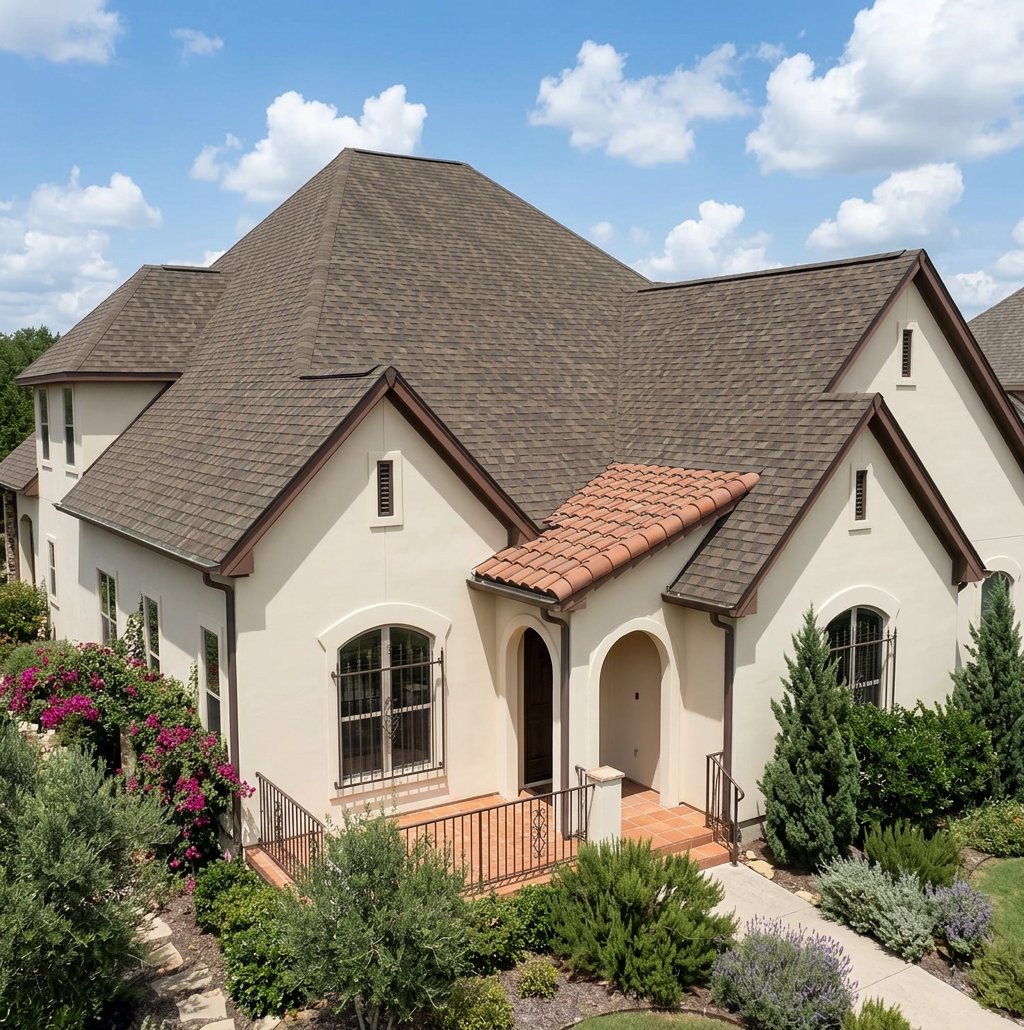
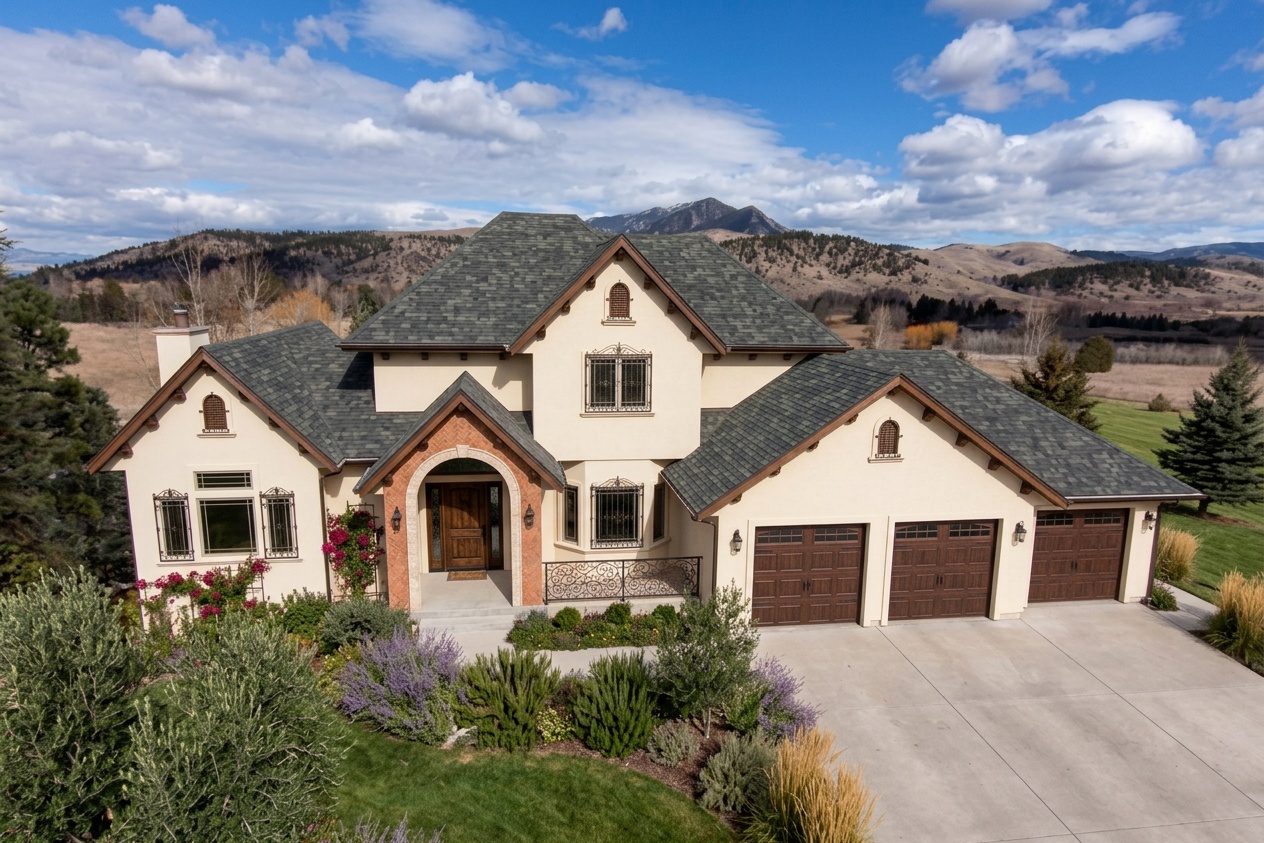
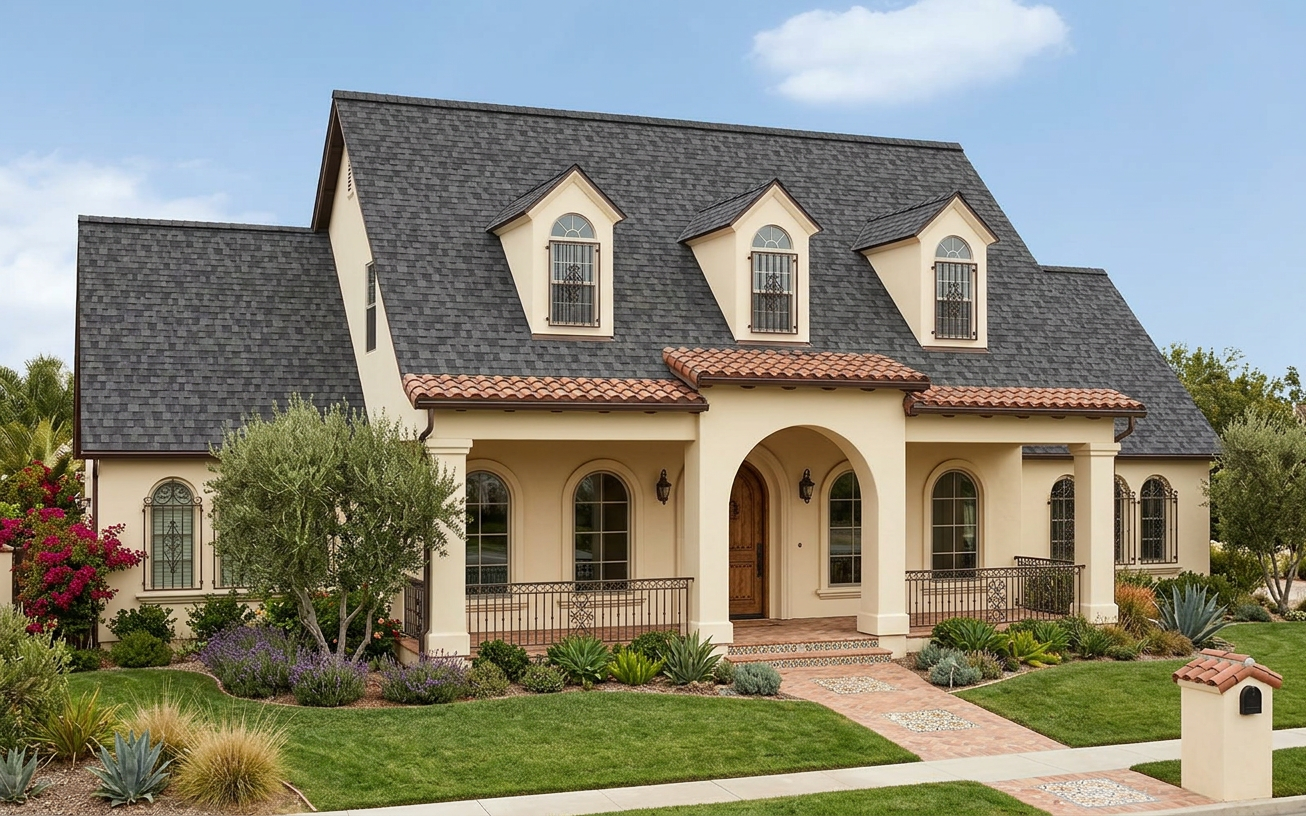
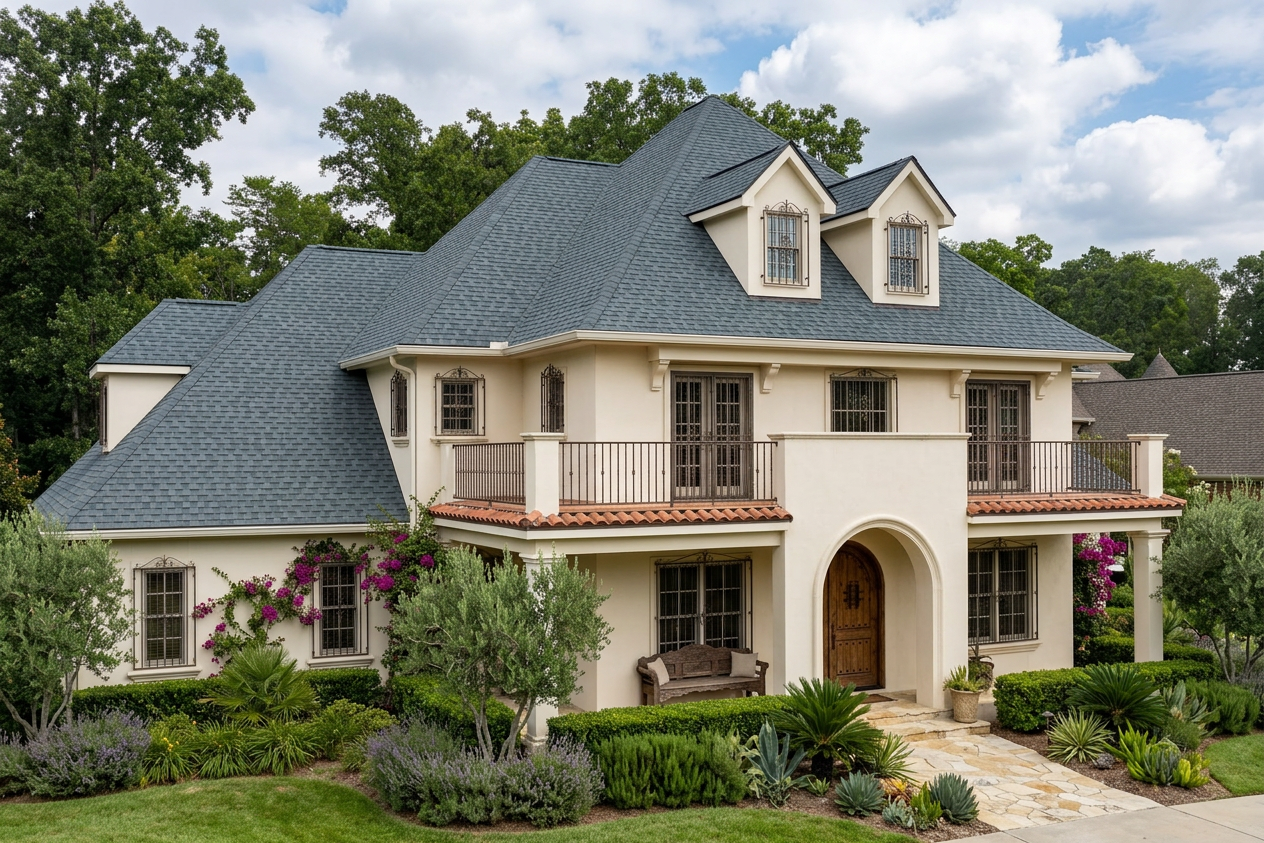
Upload a phone photo of your house and pre-load this exact mediterranean-and-charcoal pairing in the visualizer. Swap to any of the recommended shingles below in one tap. No signup, no email.
Mediterranean's defining roof material is traditionally terracotta barrel tile, not asphalt shingle.
Mediterranean's defining roof material is traditionally terracotta barrel tile, not asphalt shingle. Substituting asphalt for tile is common in Florida new builds for budget and weight reasons, but the substitution changes the silhouette. Pick a shingle color that approximates the tile palette (warm brown, weathered-wood, or a dedicated tile-look SKU like Tamko Lamarite Stone Coated Steel) to preserve the architectural intent.
Charcoal is the safest mid-tone roof for resale.
Charcoal is the single most-installed asphalt color in the architectural category nationally, which means it appeals to the widest pool of resale buyers and translates across most home styles. If you are not strongly committed to a more decisive color (true black, weathered wood), charcoal is the lowest-risk choice.
Install quality matters more than SKU.
All seven recommended SKUs hit Class A fire and 110-150 mph wind ratings. The bigger variable on a mediterranean elevation is install quality: ridge-line straightness, valley flashing, starter strip alignment. Insist on a Master Elite or equivalent certified contractor and a written workmanship warranty separate from the manufacturer's material warranty.
The questions homeowners ask before they commit. Answered without sales spin.
Climate and history. The style was developed in the 1920s Florida land boom by architects (Addison Mizner, Maurice Fatio) who deliberately referenced Spanish and Italian Mediterranean villages because the climates rhymed. Stucco breathes well in humidity, low-pitched roofs handle hurricanes better than steep ones, and the warm palette suits Florida light.
Yes, and most Florida builds today do. Architecturally a real tile roof reads better, but a warm-brown or weathered-wood asphalt shingle on a properly proportioned Mediterranean elevation still feels in-style. Avoid charcoal or true black on Mediterranean -- the cool palette fights the warm stucco.
Charcoal is a half-step warmer and lighter than true black. On mediterranean architecture, charcoal reads as slightly softer and more traditional; true black reads as more graphic and modern. Both are correct -- the choice comes down to how decisive you want the elevation to feel.
Minimally. Modern ceramic-coated granules hold color for 25 plus years. Charcoal tends to drift slightly warmer over the first 5 years -- a barely visible shift -- then stabilizes. Source: NRCA field-aging data.
All renders on this page were generated by fal.ai's nano-banana-2 image-edit model on top of REAL install photos from each manufacturer. The roof color, granule texture, and shingle pattern come directly from the source photo and are preserved during the edit. The facade is restyled to Mediterranean. The result is photorealistic but not identical to any specific real home -- use it for visual comparison, then open the free visualizer to see the same SKU on a photo of your own house.