
Victorian Homes With a Brown Roof: 21 Rendered Examples 2026
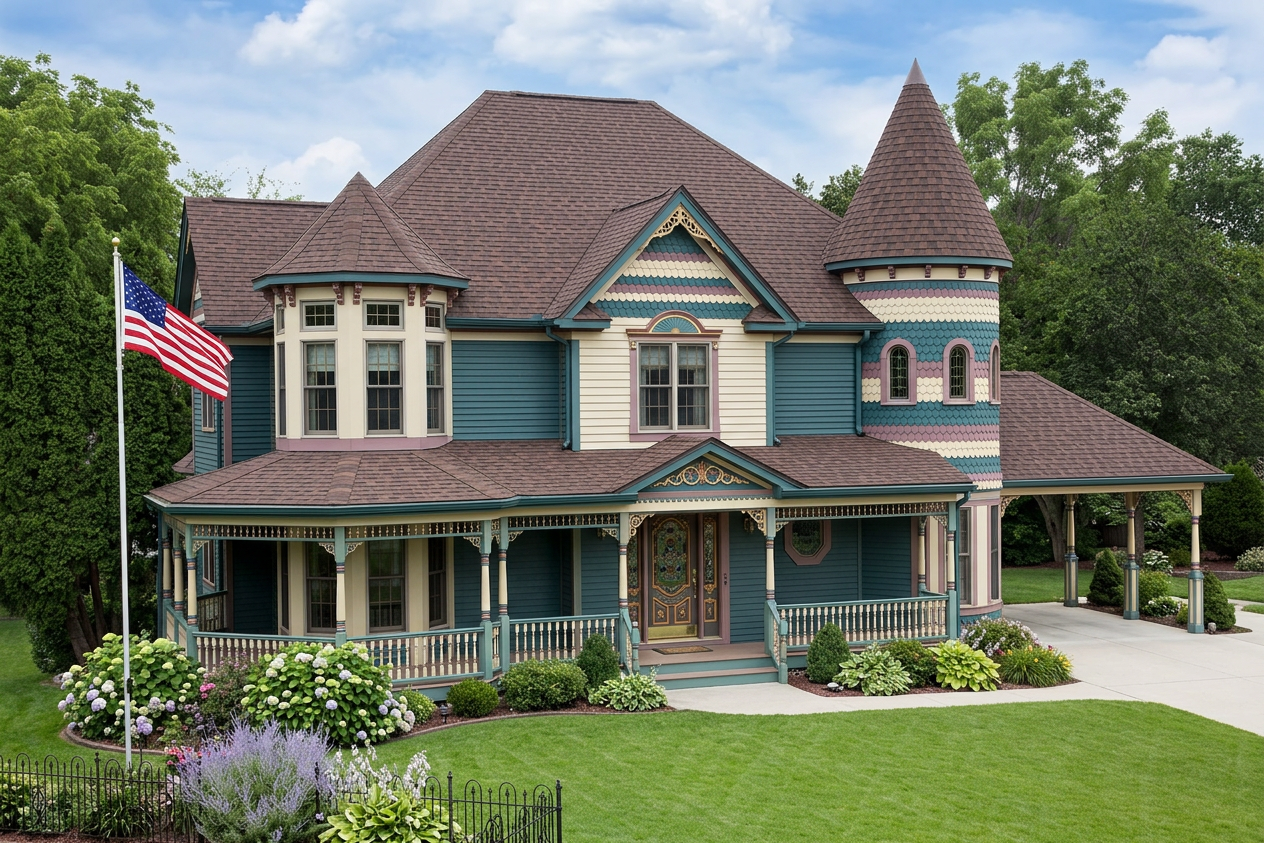
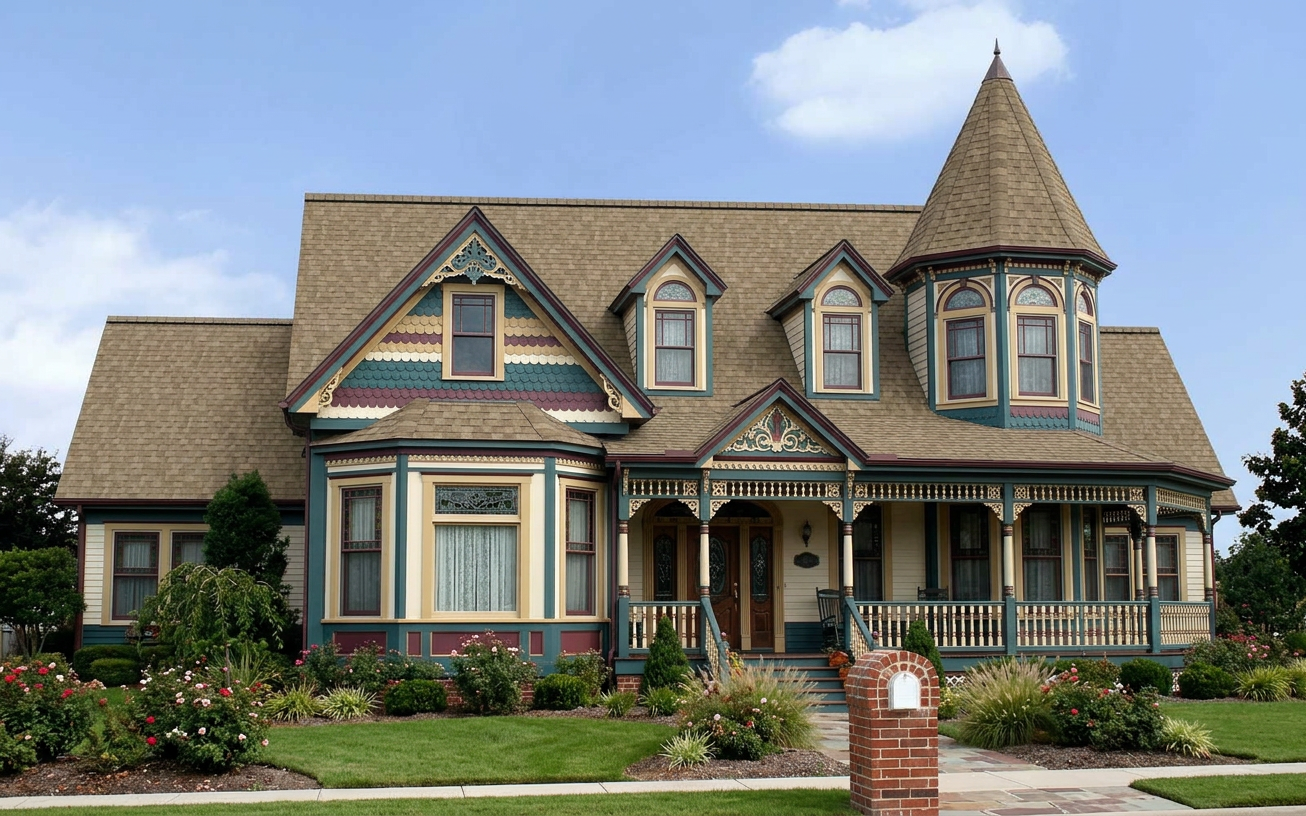
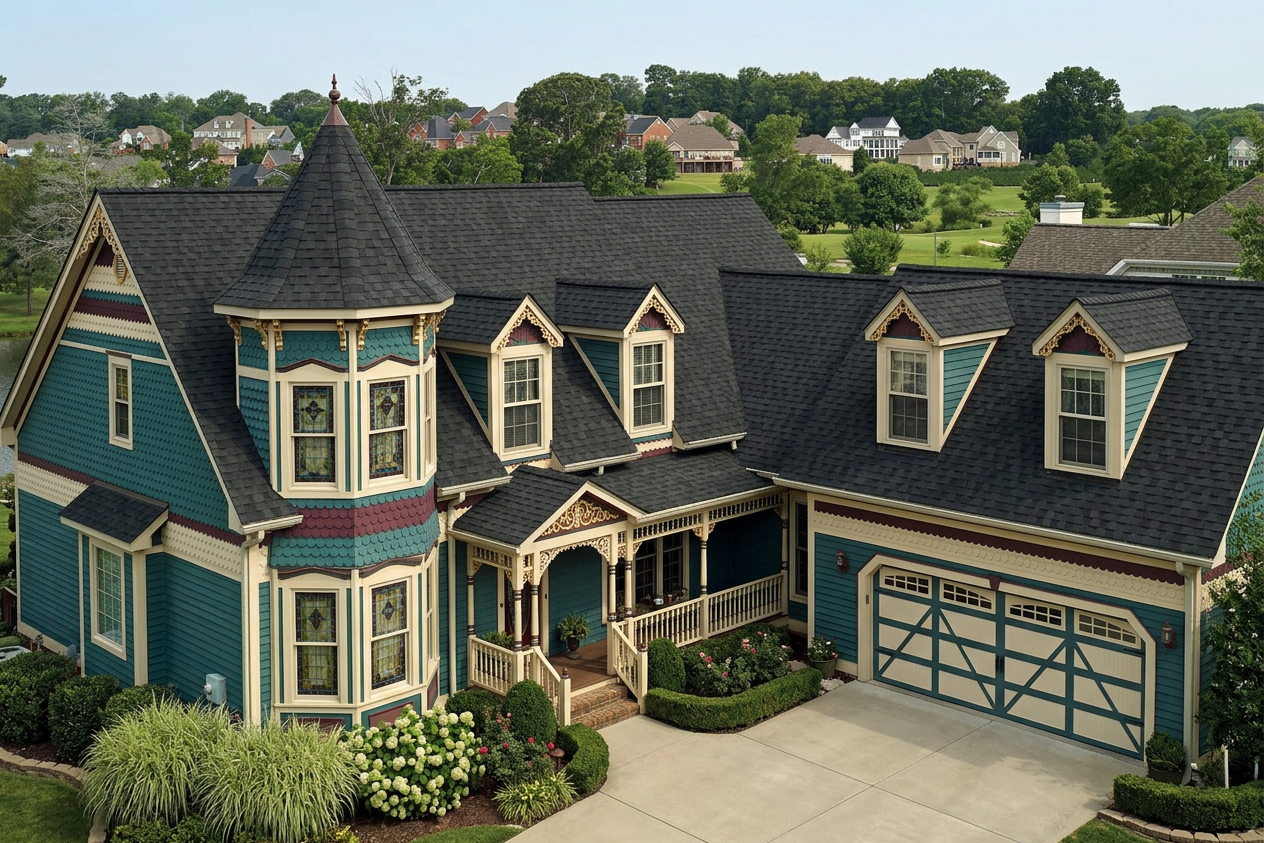
Brown is a period-appropriate choice for Victorian roofs, and modern asphalt shingles honor that history well. The amber and tobacco granule tones complement the brick, stone, and natural wood that Victorian exteriors depend on - warm materials reading together rather than competing.
Gingerbread trim and decorative gable shingles gain a grounding counterpart rather than a contrast, which suits the Victorian instinct to layer richness rather than assert stark difference.
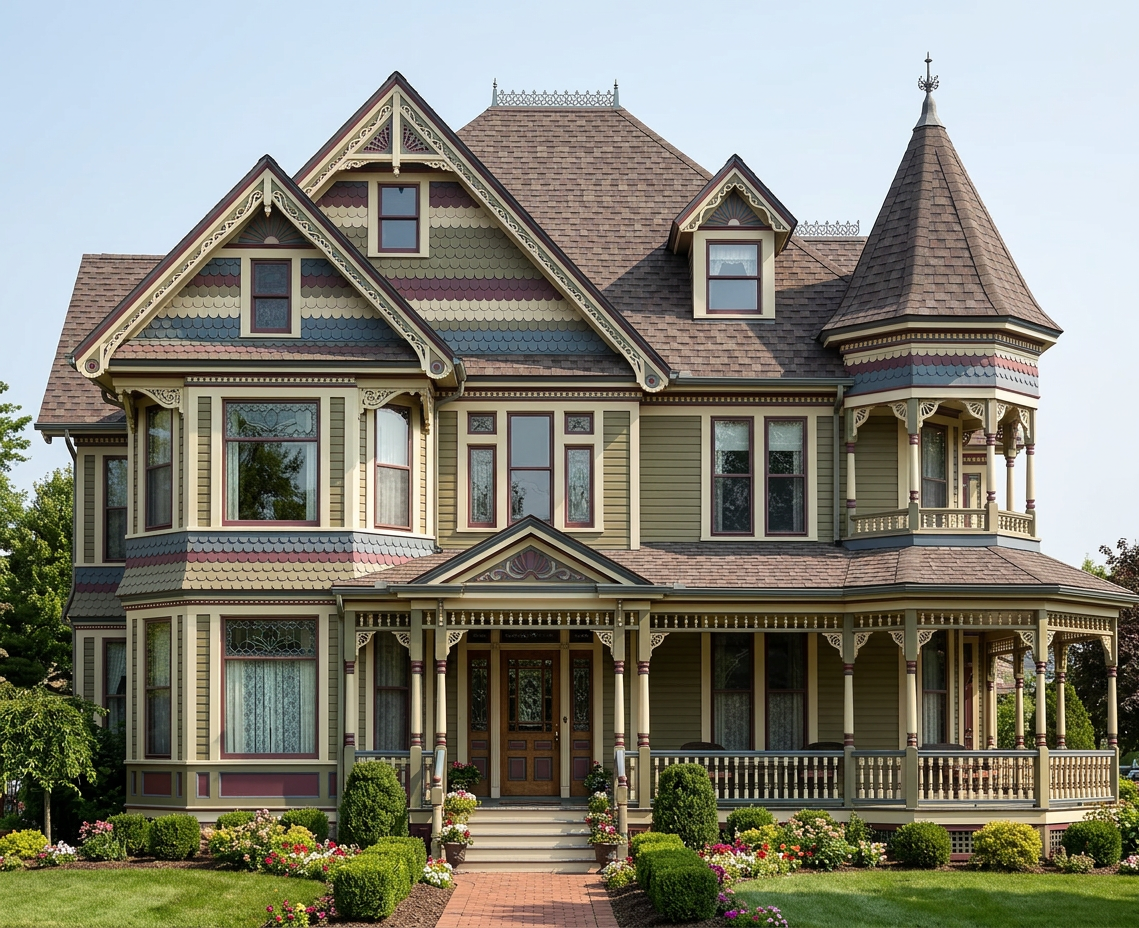
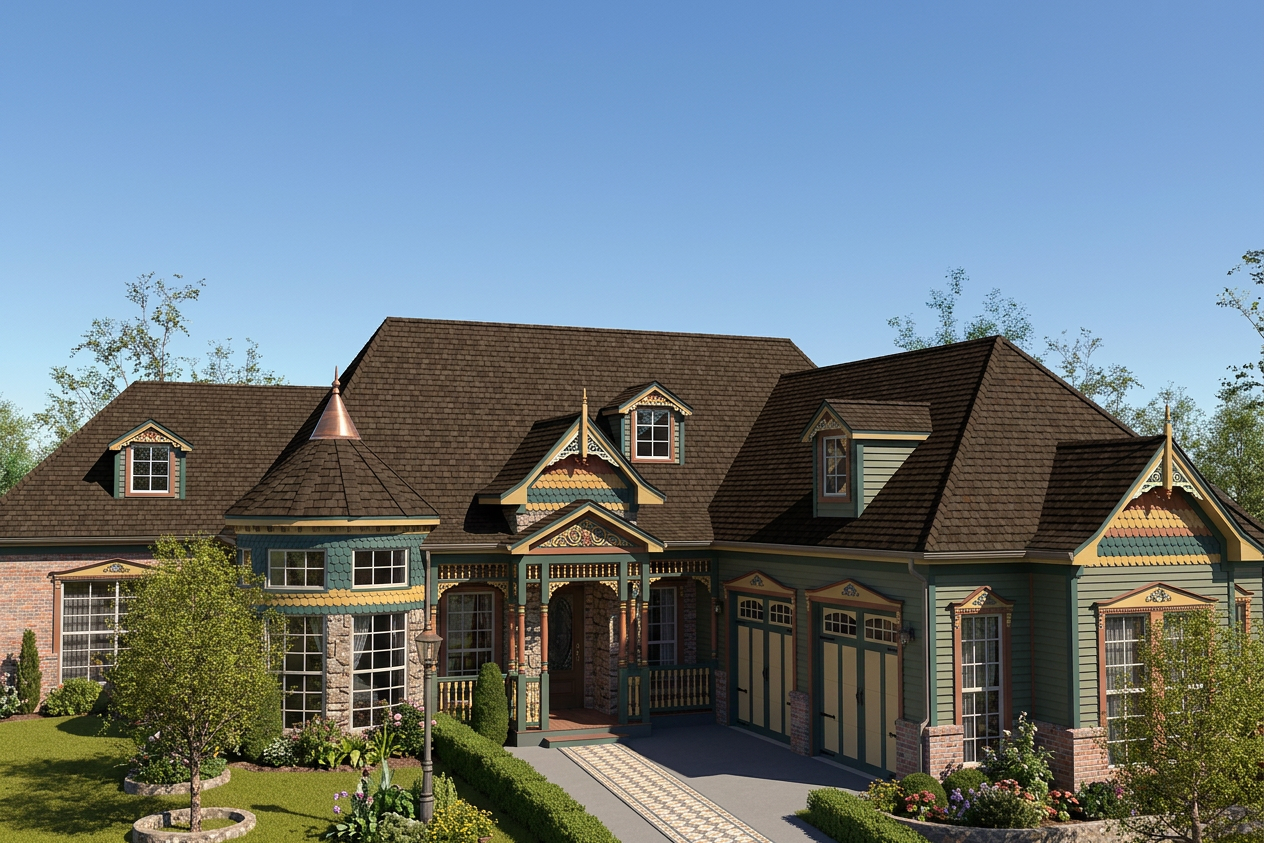
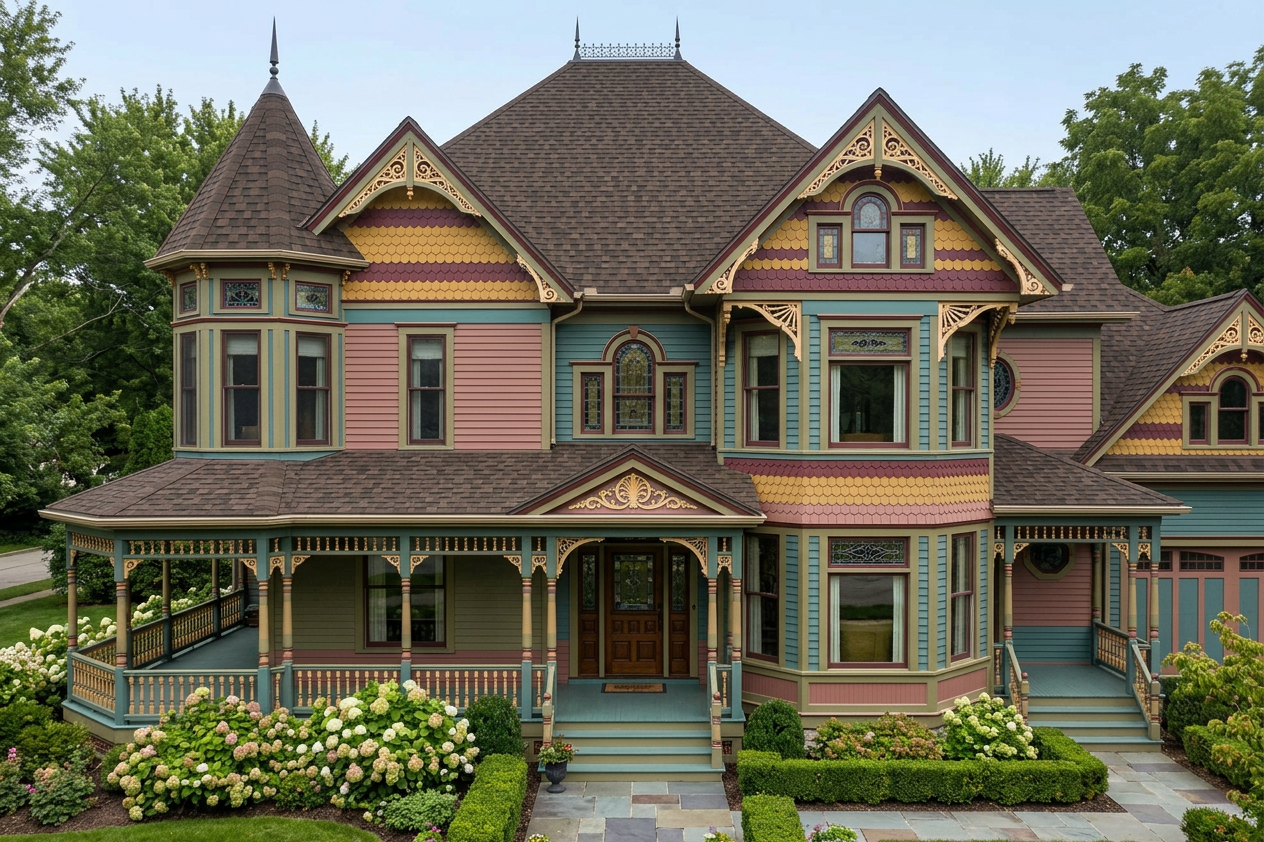
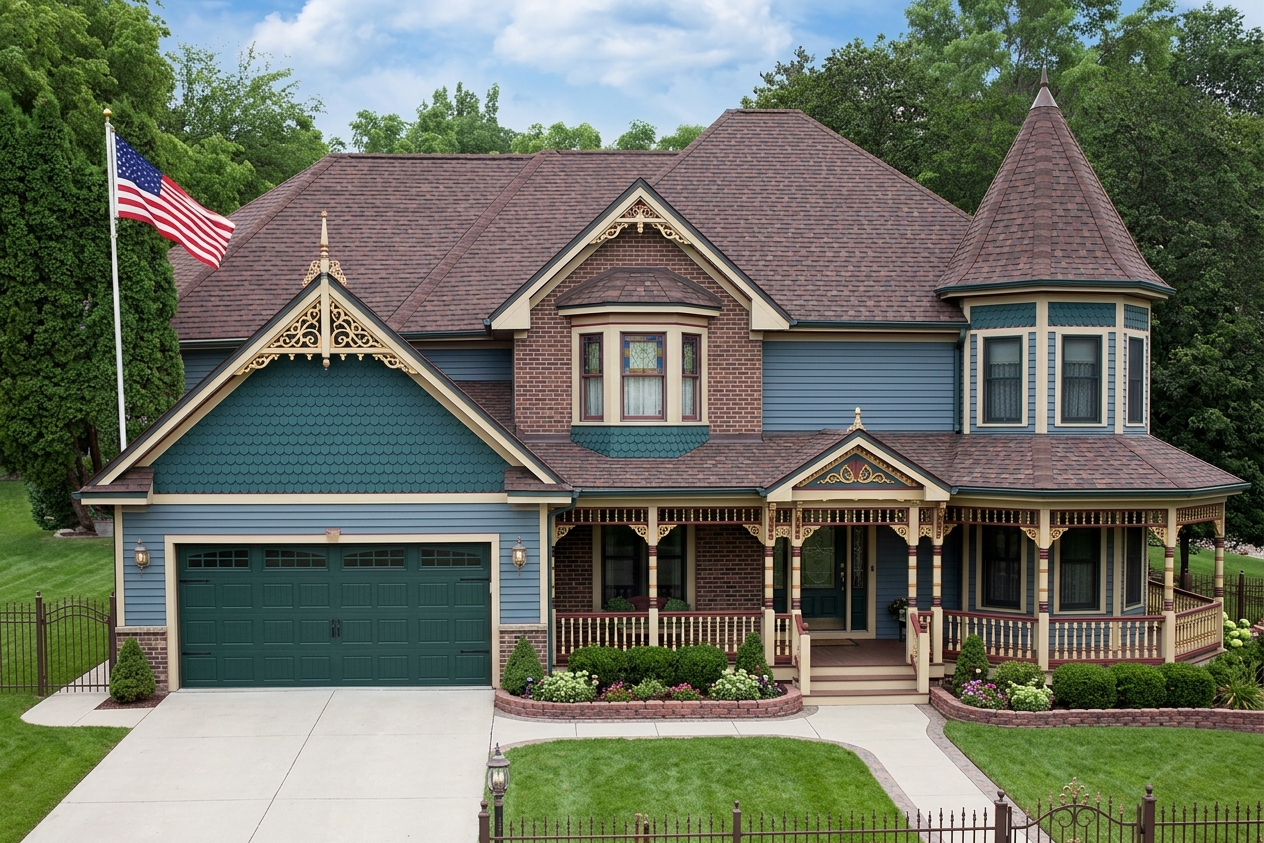
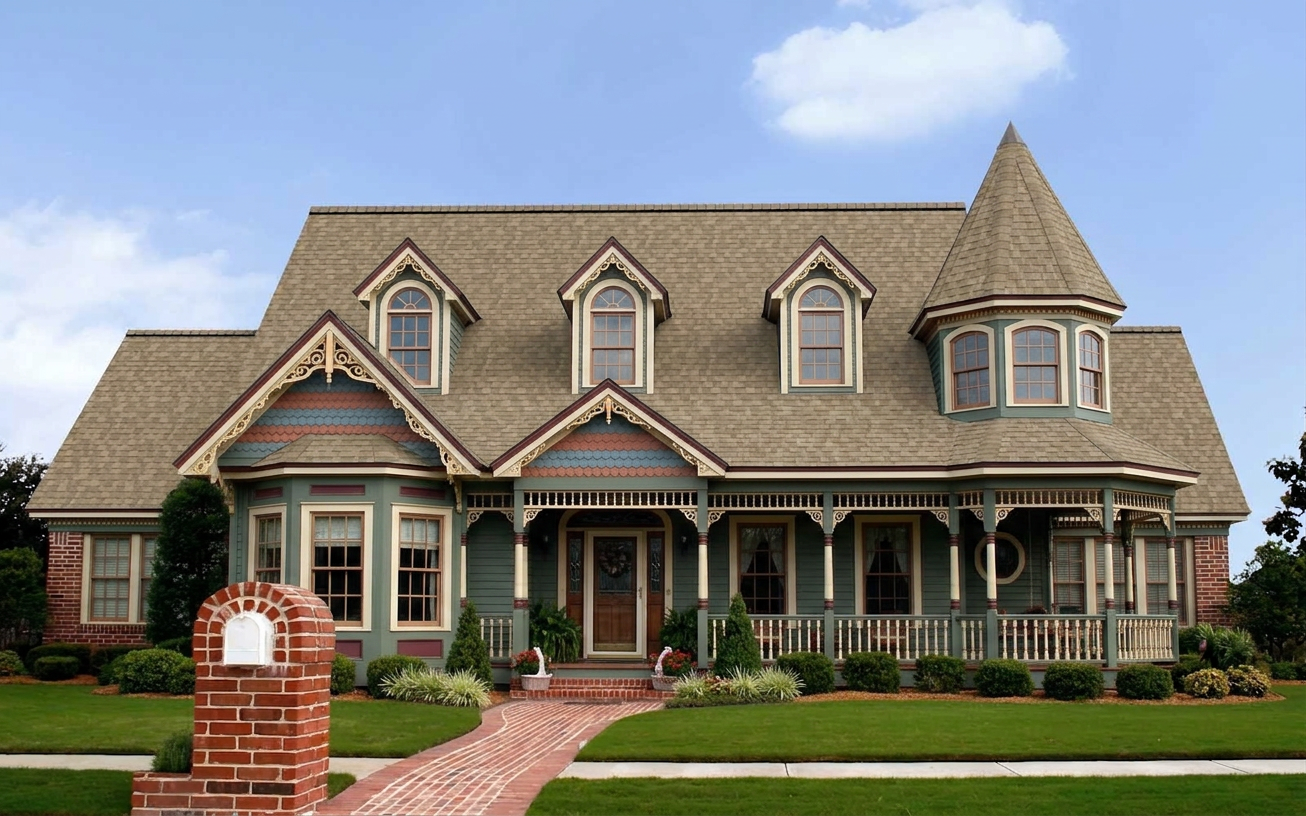
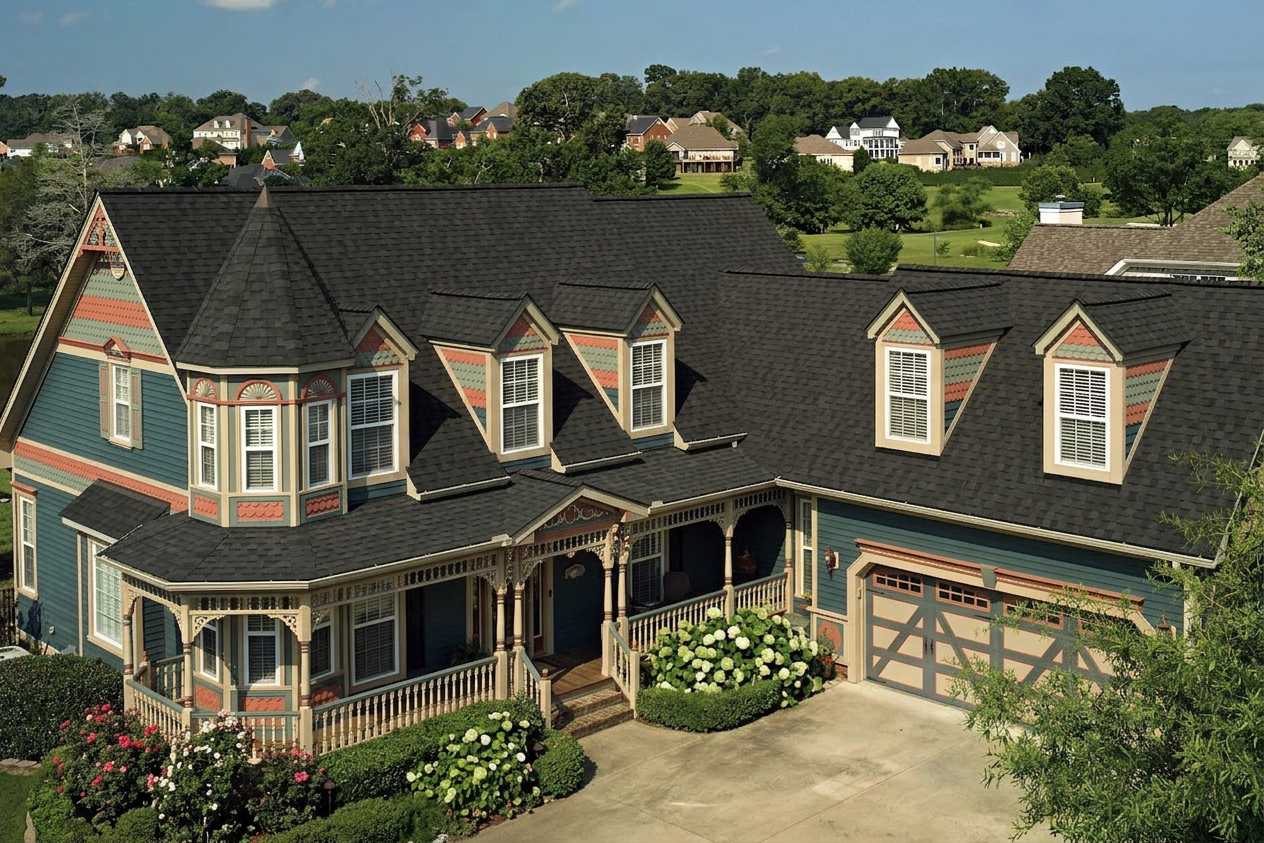
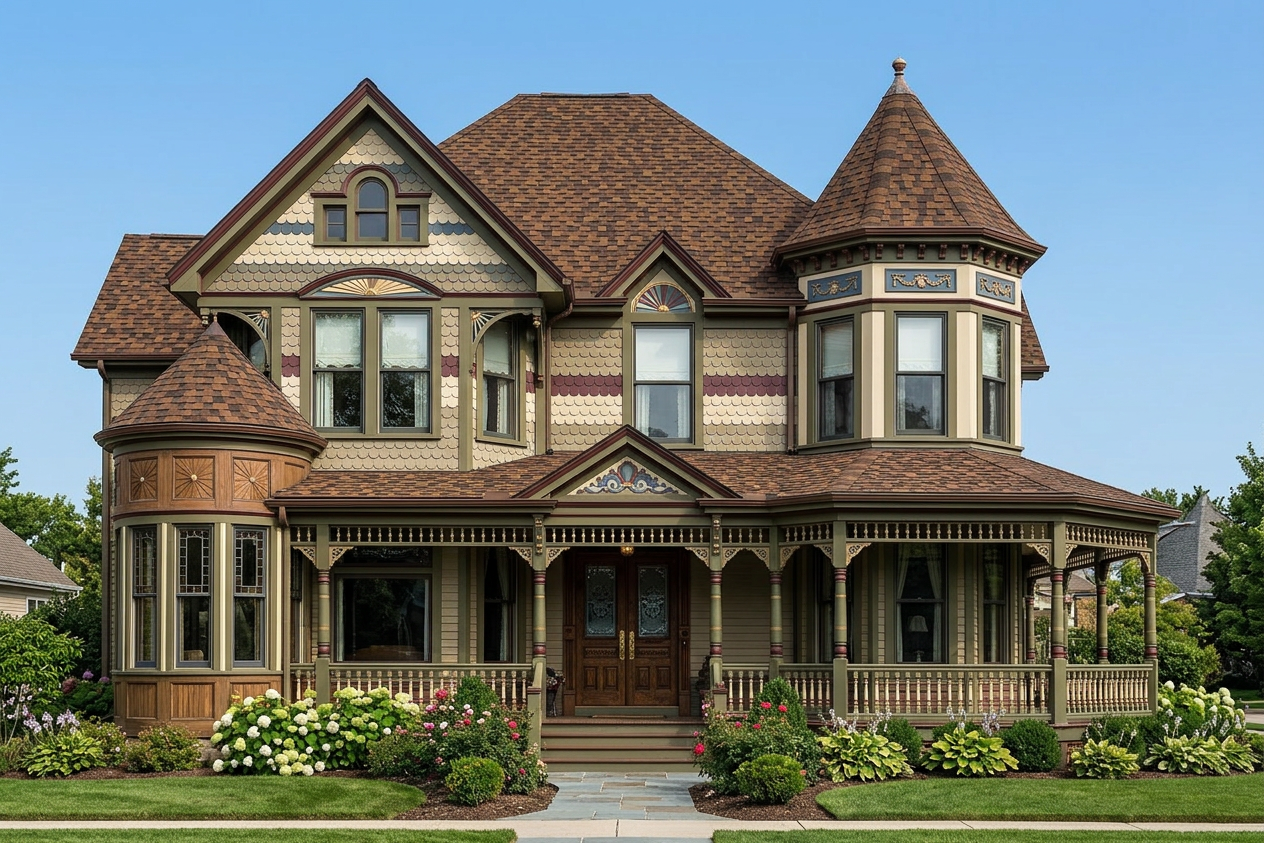
Late-19th-century ornamental style, originally British, broadly American 1860-1900.
Victorian architecture covers a family of late-19th-century styles named for Queen Victoria's reign (1837-1901). In American residential terms, 'Victorian' usually means Queen Anne Revival (1880-1910) or Stick Style: ornate decorative trim, asymmetric facades with bay windows or corner turrets, decorative scallop and fishscale shingles in the gable ends, wraparound porches with turned spindles, and multi-color 'Painted Lady' palettes. The Bay Area Painted Ladies of San Francisco are the canonical example.
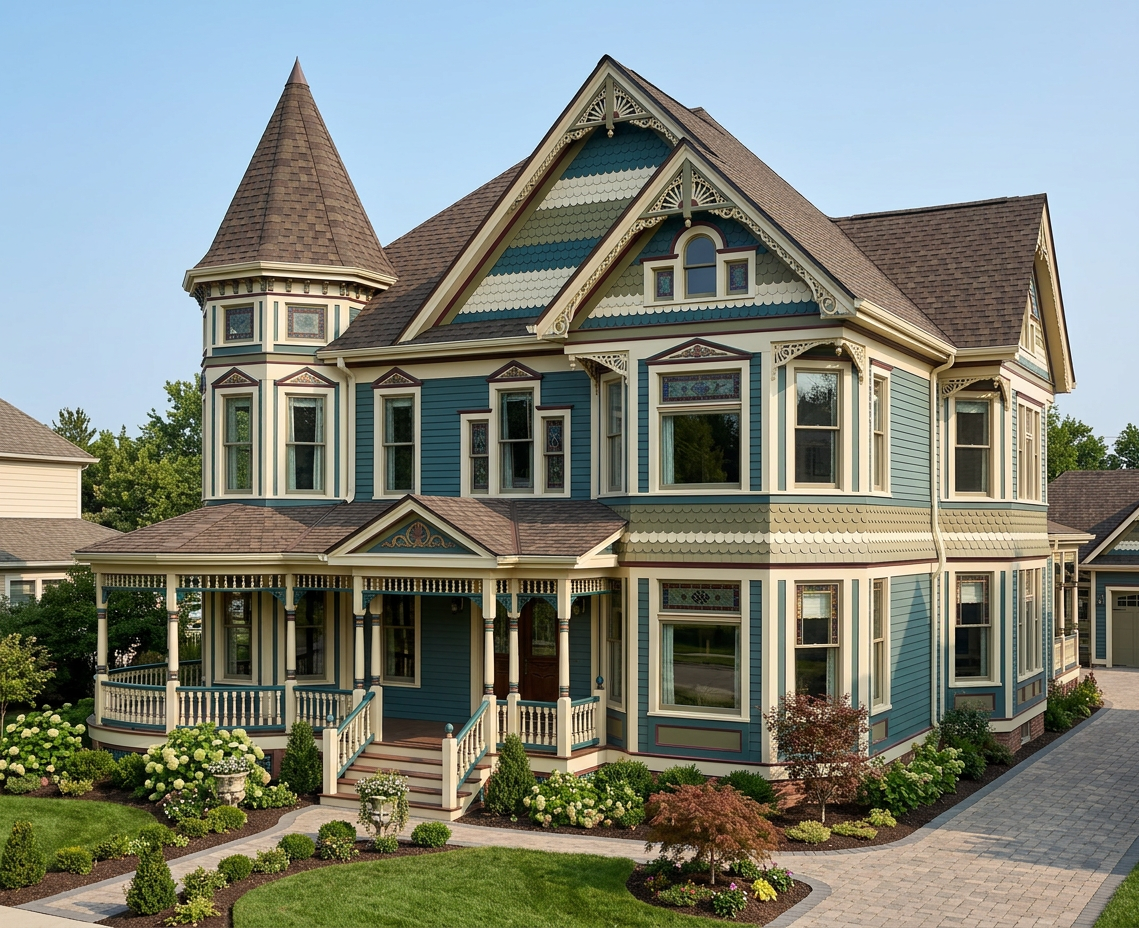
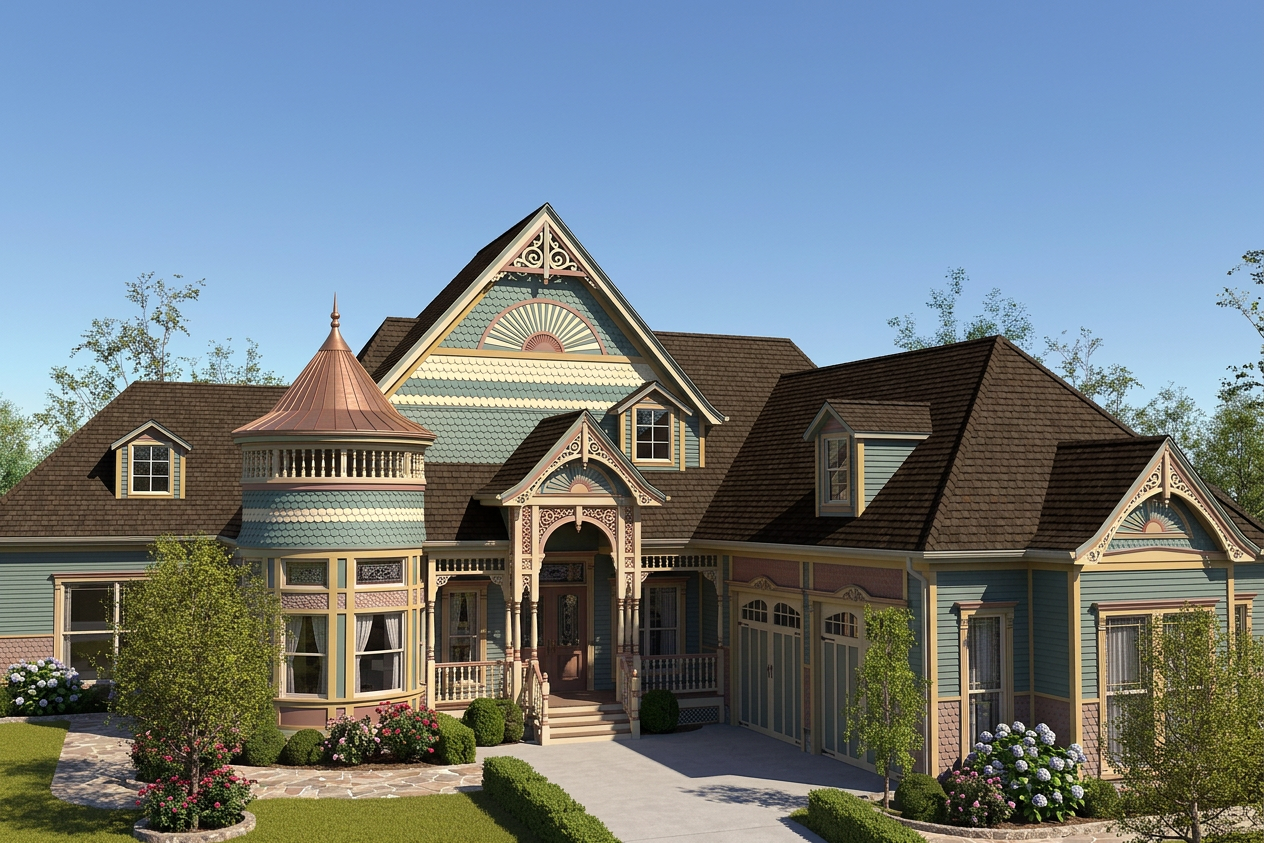
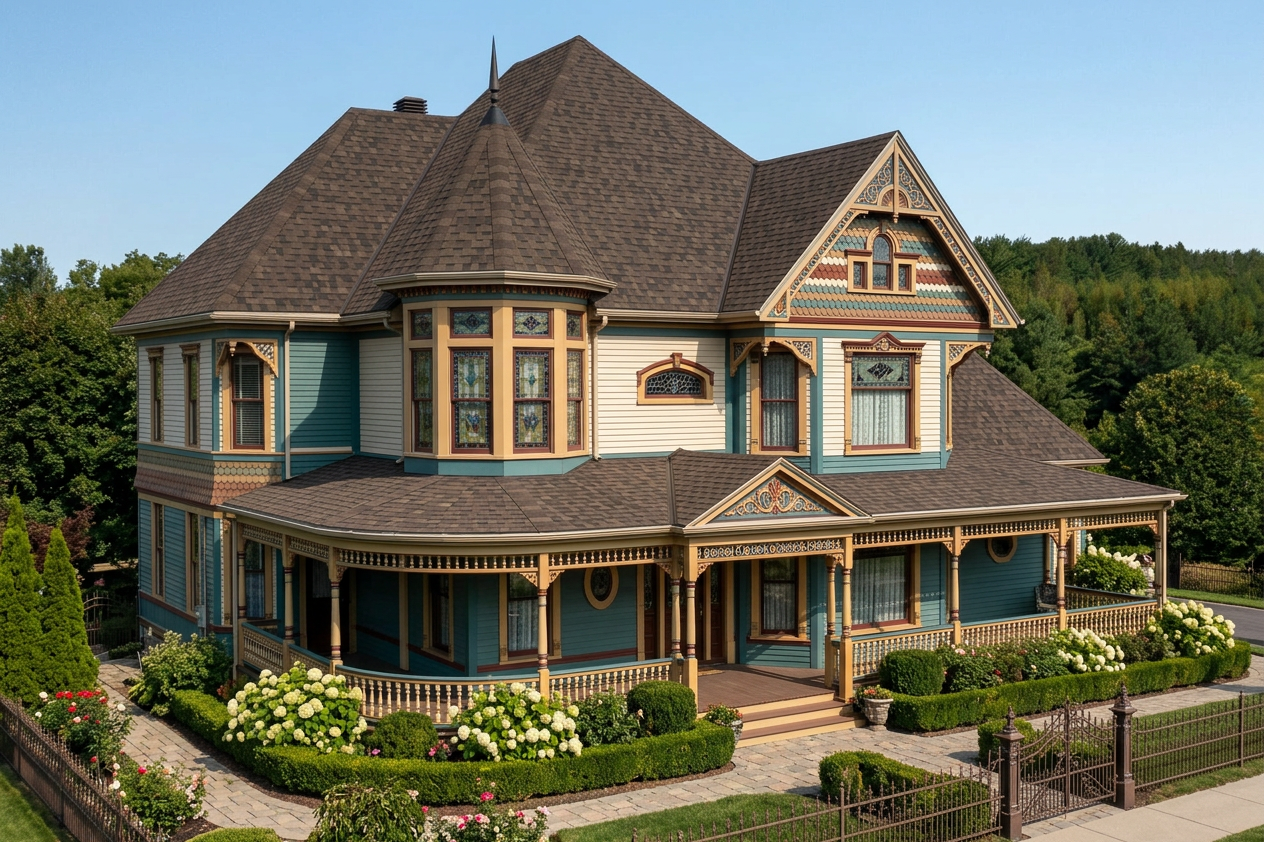
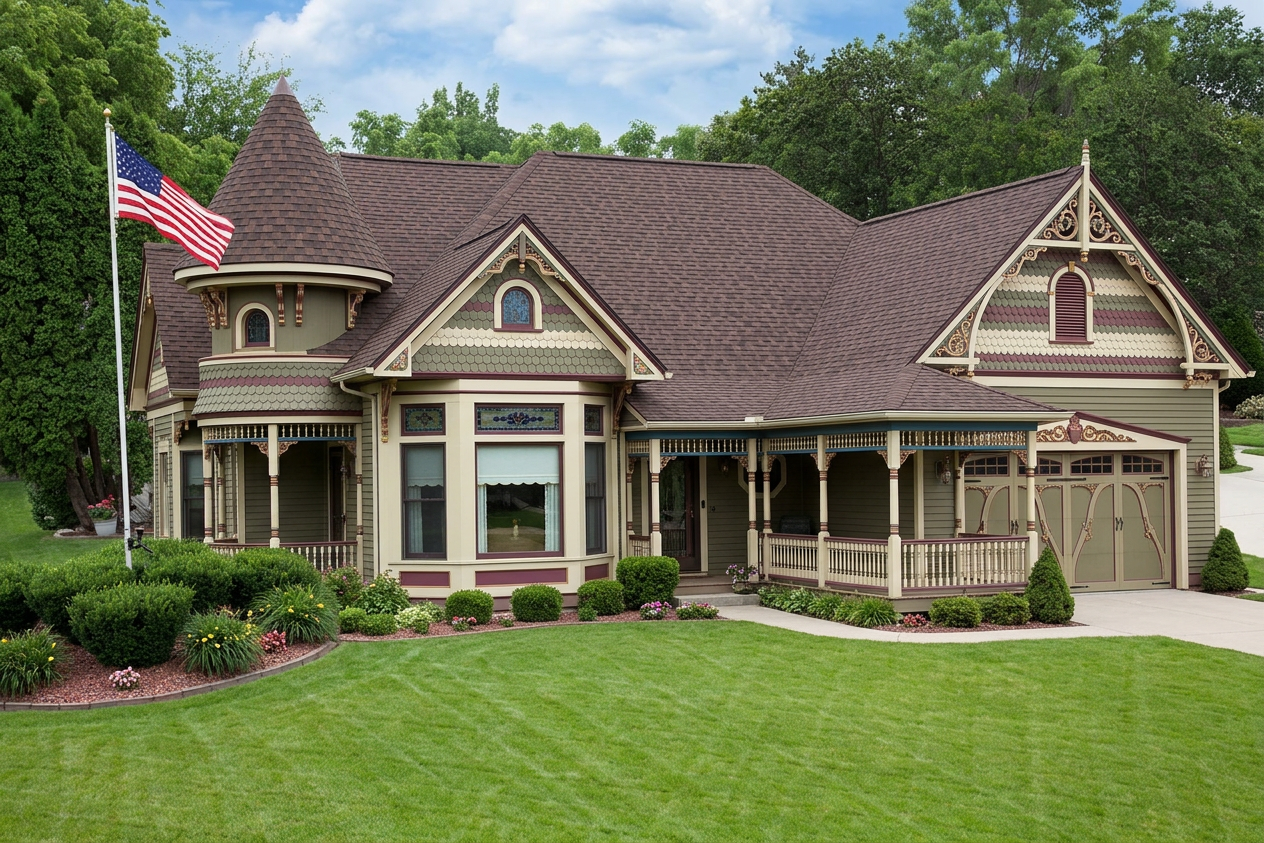
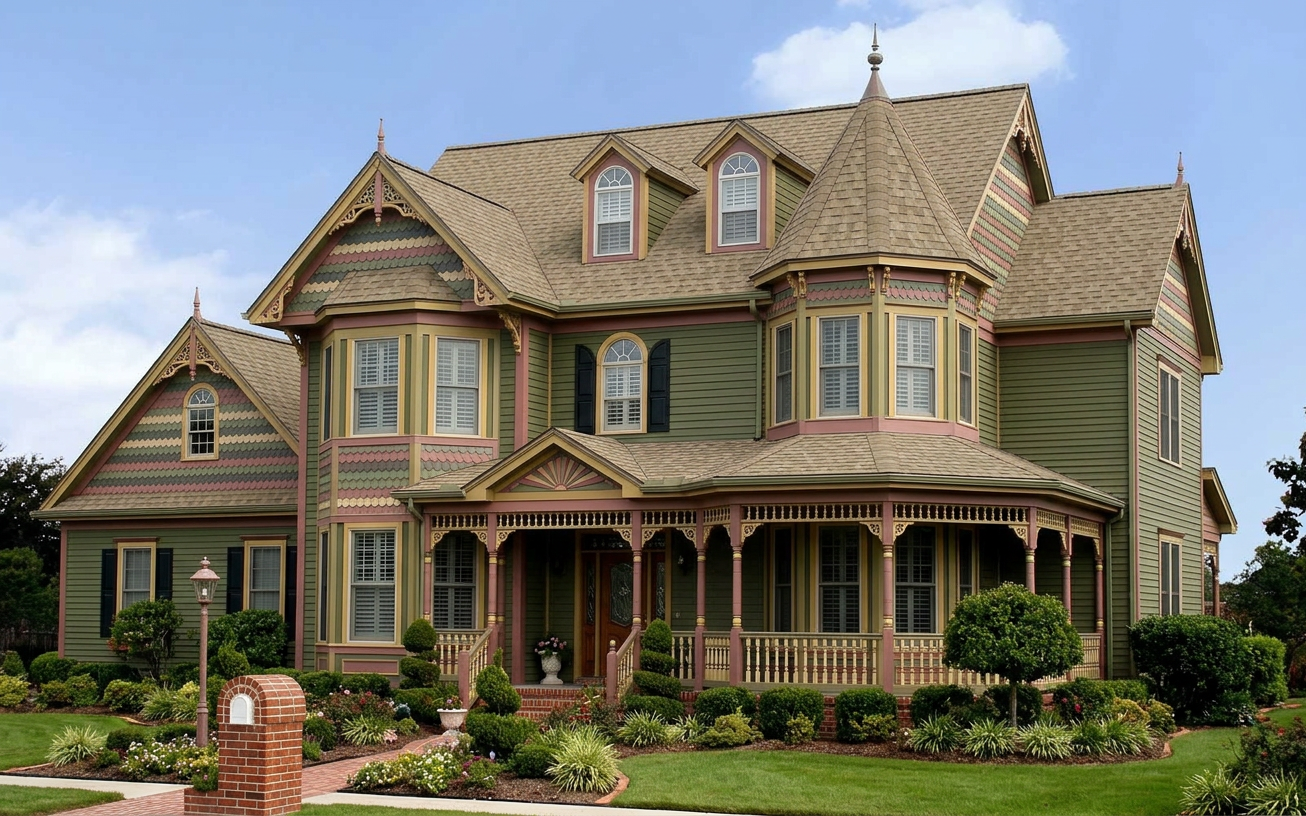
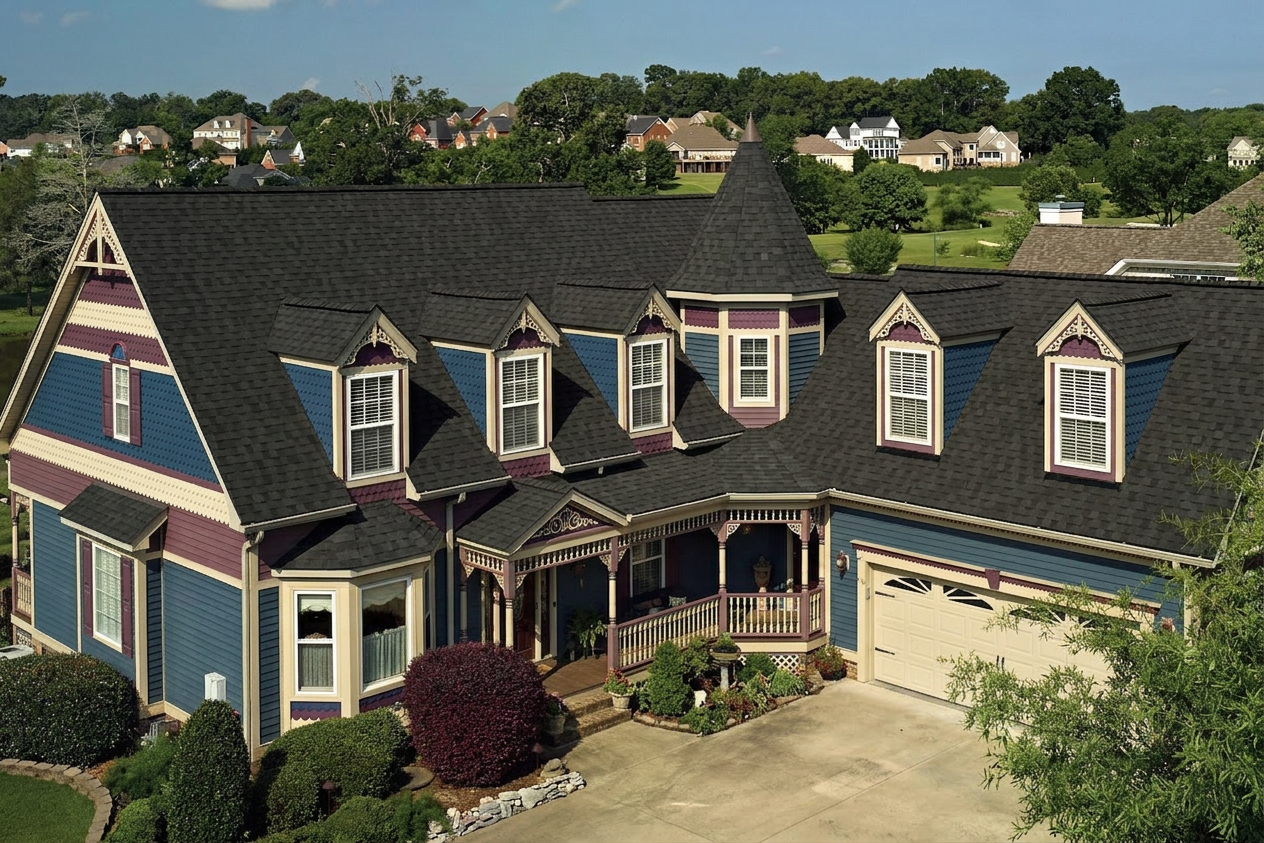
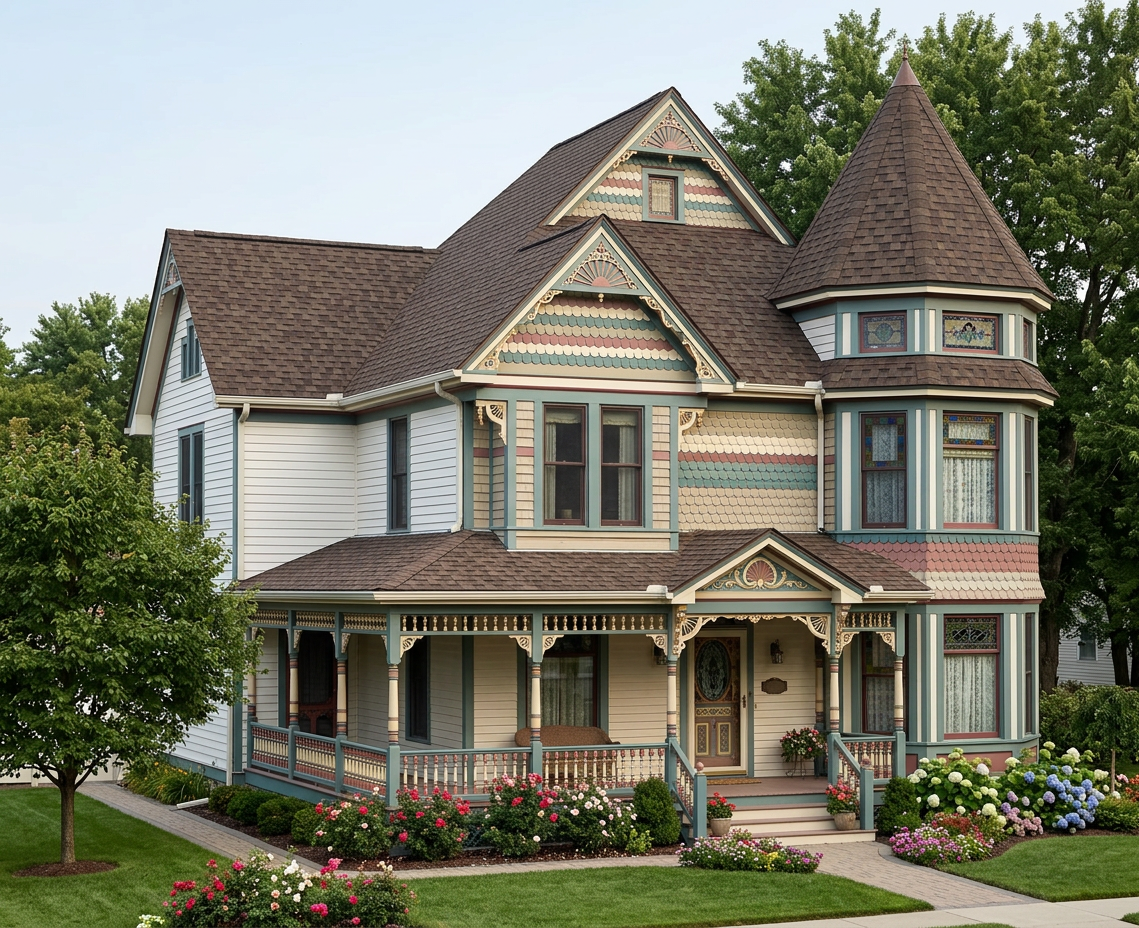
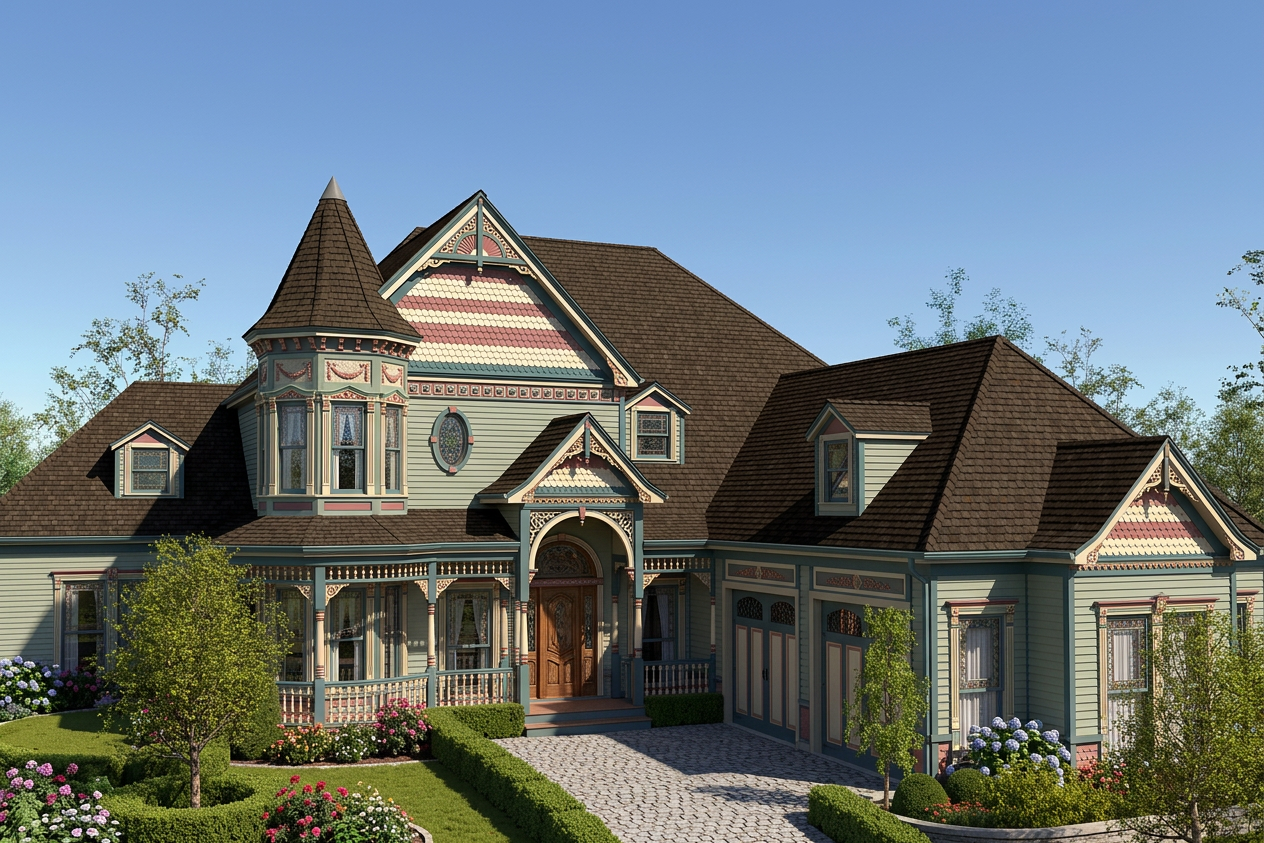
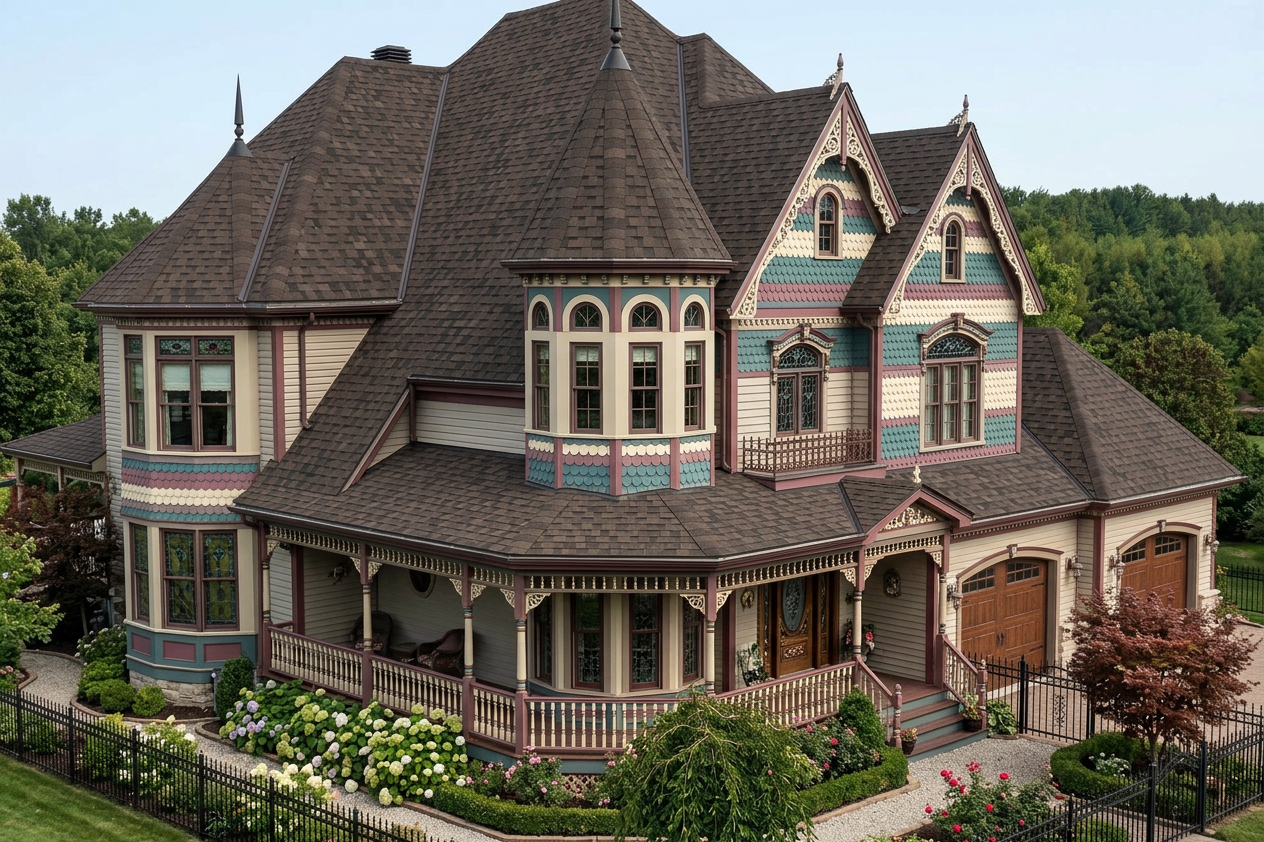
Upload a phone photo of your house and pre-load this exact victorian-and-brown pairing in the visualizer. Swap to any of the recommended shingles below in one tap. No signup, no email.
Victorian rewards specificity.
Victorian rewards specificity. The decorative gingerbread trim is the diagnostic feature -- without it, the same complex roof line and asymmetric facade reads as cluttered rather than 'Painted Lady.' Specify trim color separately from siding color and budget extra paint complexity. A three- or four-color palette is architecturally correct.
Brown reads as architecturally correct on warm-tone elevations.
Brown asphalt sits naturally with red brick, cream stucco, natural stone, and bronze hardware -- the warm-tone material families that traditional and revival styles depend on. On stark cool palettes (white-and-black, white-and-charcoal modern farmhouse) brown can read as dated; on warm palettes it reads as deliberate.
Install quality matters more than SKU.
All seven recommended SKUs hit Class A fire and 110-150 mph wind ratings. The bigger variable on a victorian elevation is install quality: ridge-line straightness, valley flashing, starter strip alignment. Insist on a Master Elite or equivalent certified contractor and a written workmanship warranty separate from the manufacturer's material warranty.
The questions homeowners ask before they commit. Answered without sales spin.
Some, primarily in historic districts (St. Augustine, Key West Conch houses, parts of Tampa's Ybor City). Florida's earliest building boom (1910s-1920s) hit during the Mediterranean Revival era, so true Victorians are less common than further north.
Difficult. Victorian depends on the decorative-trim and gingerbread layers, which are labor-intensive and not part of standard production builder packages. A new-build 'Victorian-inspired' home usually reads as a generic two-story unless the trim budget is meaningful.
On victorian specifically, yes -- the warm tonal family of the roof reinforces the style's traditional palette. Brown asphalt is one of the most architecturally honest choices for revival-era styles in Florida.
Slightly less visibly. Brown drifts slightly warmer and slightly desaturated over 10 to 15 years of Florida UV. The shift is uniform, so the roof never develops the patchy look that aged gray shingles sometimes show. Source: NRCA Asphalt Shingle Manual.
All renders on this page were generated by fal.ai's nano-banana-2 image-edit model on top of REAL install photos from each manufacturer. The roof color, granule texture, and shingle pattern come directly from the source photo and are preserved during the edit. The facade is restyled to Victorian. The result is photorealistic but not identical to any specific real home -- use it for visual comparison, then open the free visualizer to see the same SKU on a photo of your own house.