

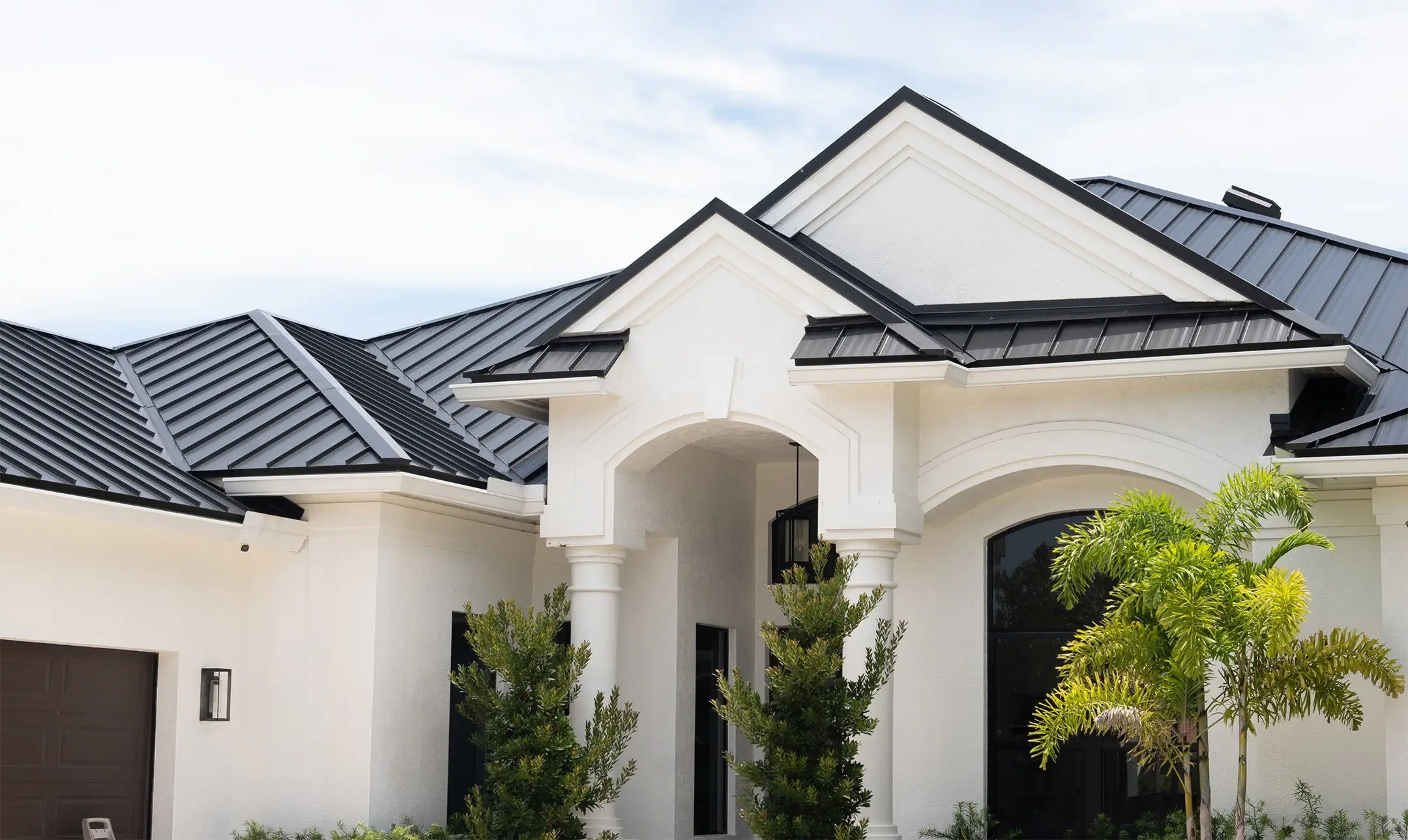
Aerial Roof Report.
Aerial roof report: type any Florida address and get the roof age, permits, storms and flood zone in one report. Free, no signup.
Public records fill in the history, and aerial imagery handles the size: the estimator locates the house by its address, then sizes the roof from overhead and prices it. Both tools run off the same Florida address, free.
How the aerial roof report runs.
Two tools share one address, and you move through them in four steps.
- 01
Type the address
Any Florida address works, and there is nothing to sign up for.
- 02
Read the record
Start with the roof age and whether a permit stands behind it.
- 03
Open the estimator
It pins the roof, measures it from aerial imagery, then shows an installed-cost budget range.
- 04
Request a quote
Send it from the estimator to partner Florida roofers when you want a firm price.
Two sources behind one report.
Records date the roof and give its flood zone and design wind speed. Imagery measures it, and the measurement is what a price needs.
Of the roof ages on record, 58% trace straight to a re-roof permit. The rest are estimates from assessor data and the year built, and the report marks them.
Aerial measurement needs no paperwork at all. A roof with a thin permit trail still gets sized from overhead.
What is in the report.
One report per address, drawn from 7,344,126 roofs on record across all 67 Florida counties.
- Roof age and permits. The permit year where one exists, and the age that follows from it.
- Material and roof score. The covering on file and how the report scores the roof.
- Flood and evacuation zones. FEMA's flood zone for the lot, and the evacuation zone for storm surge, graded A through E.
- Wind and storms. Design wind speed, plus the named hurricanes and tropical systems in the storm history.
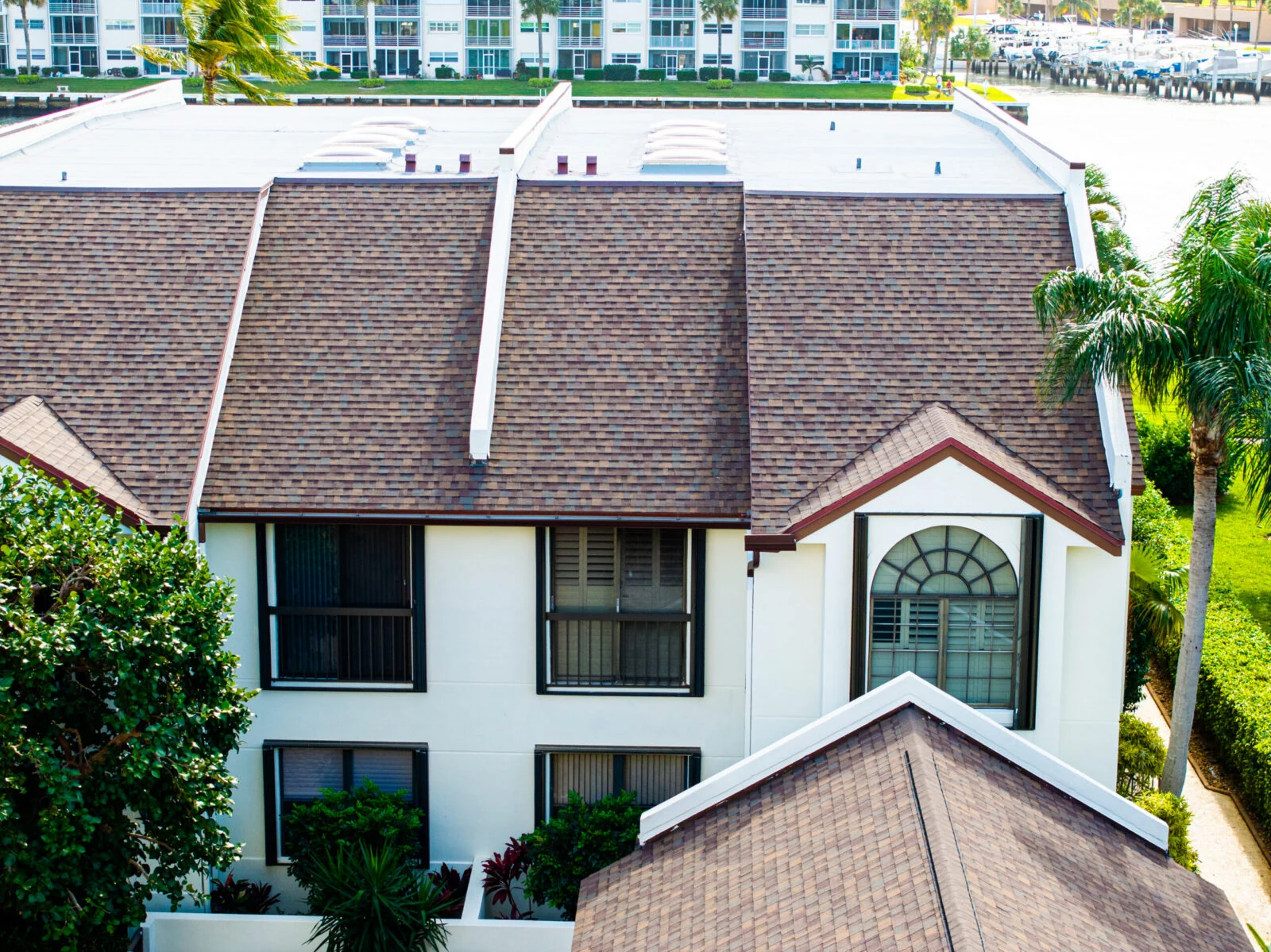
Common questions.
Yes. The roof report and the estimator are both free with no signup, and the estimator does not ask for an email either. Your contact details come into it only when you choose to send a quote request on to partner Florida roofers, and nothing is sent until you do.
The estimator measures the roof from aerial imagery and uses that measurement to produce an installed-cost budget range. It is built for pricing a replacement, and the range takes in materials and labor, removal of the old roof, and the permit fee and inspection. A partner Florida roofer firms up the numbers when you request a quote.
It lists the named hurricanes and tropical systems on record for the address, plus hail that NOAA logged within 5 miles of it. That hail is area history, and hail marks, like any physical damage, need someone on the roof to confirm them; an aerial image and a records check cannot do that part.
No. When your insurer wants a 4-point or a completed wind mitigation form, it needs an inspector's report on the house. The aerial report is the records-and-measurement check you run first, and it tells you whether your roof age puts you near the point where carriers start asking for one.
They come from different maps. The flood zone is FEMA's designation for the site, while the evacuation zone is a storm-surge zone lettered A to E. The report shows both for each address, next to the design wind speed for the house, which lets you read flood and surge exposure together.
Yes. The lookup takes any Florida address, yours or not, with no signup. Running it before an offer shows the roof age and whether a permit backs it, which is the first line a Florida carrier will weigh when you go to insure the house.