

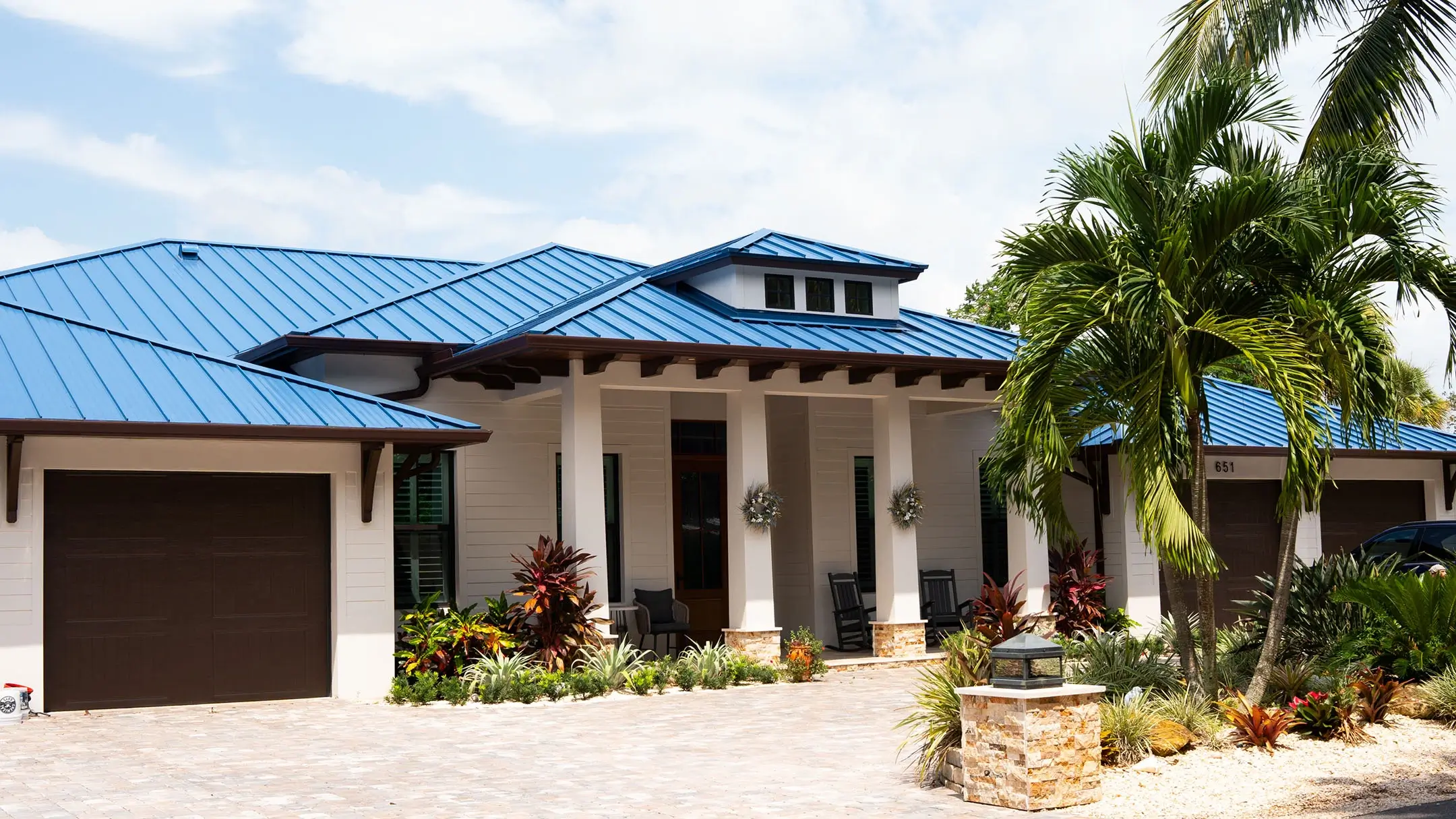
Wind Mitigation Inspection Florida.
Wind mitigation inspection Florida: type your Florida address to see what the records show for your roof. Then pick a date and book the inspection. The lookup is free, with no signup.
Florida insurers apply wind mitigation credits from one document, form OIR-B1-1802, and only a qualified inspector can fill it out. Check what the records say about your roof's age, material and design wind speed, then book the visit.
Book an inspection.
Pick a day that works. We send your request with the free roof report for the address, and a Florida roofer calls you to confirm the time.
- 01Type the address and choose a day.
- 02Leave a name and a phone number.
- 03Expect a call to confirm the visit.
How to book a wind mitigation inspection.
Four steps take you from a street address to a finished form your insurer can use.
- 01
Look up the house
Type your address and note the roof age and material. The age comes from a re-roof permit, or it carries an estimate label.
- 02
Check the 2002 line
Houses built in line with the 2002 Florida Building Code or newer usually qualify for credits. Older houses often get there after modest retrofits.
- 03
Book the inspector
Send the booking request. The partner inspector confirms the price for your house.
- 04
Hand in the form
Credits reach your policy once your insurer holds the completed form.
Roof shape on the form.
One of seven lines the inspector fills in.
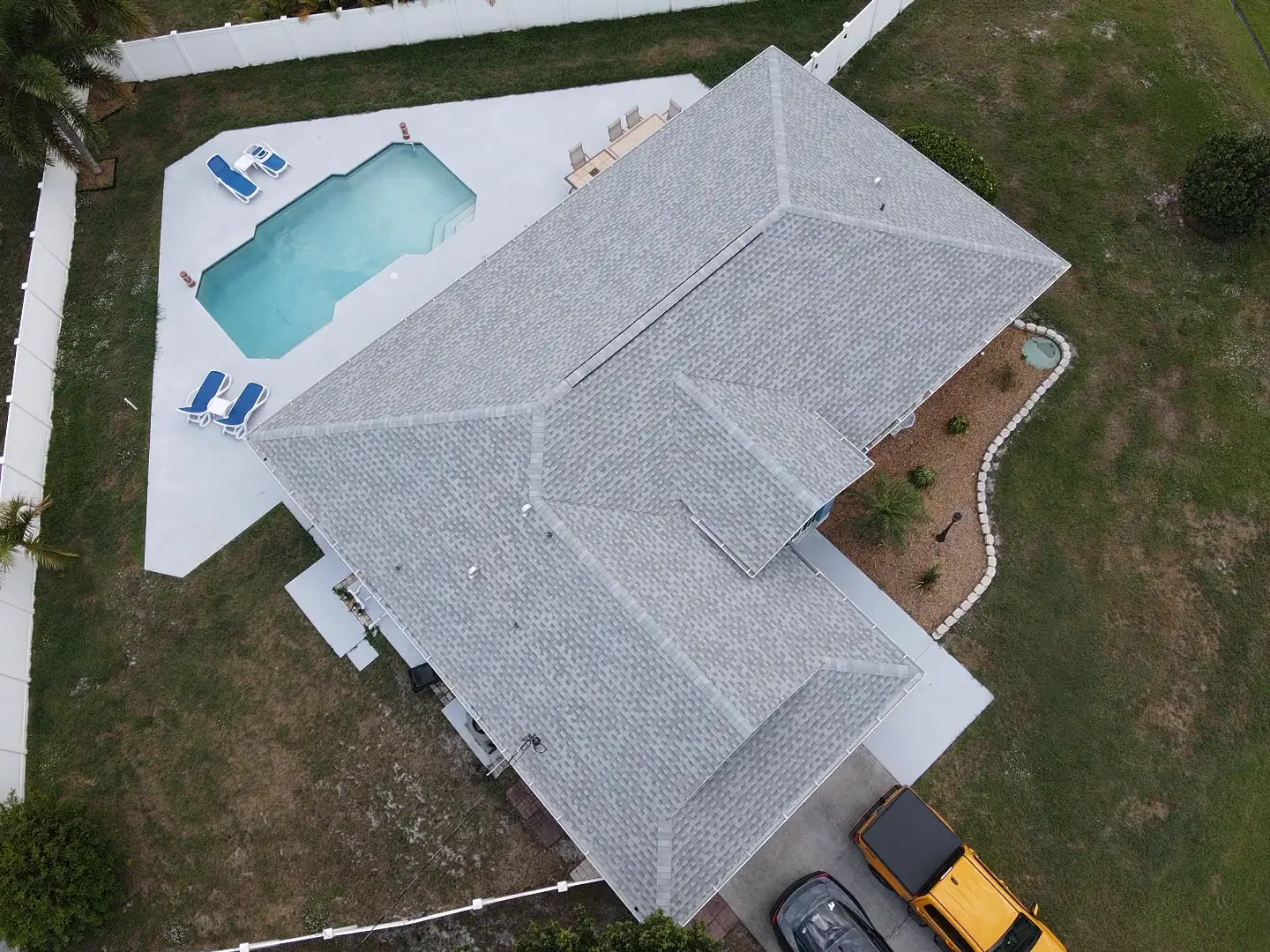
Roof geometry is scored on a line of its own; a hip roof earns a better mark there than a gable.
The remaining six cover secondary water resistance, opening protection, the building code, roof covering, deck attachment and roof-to-wall attachment.
Each line is scored separately. A gable house still goes through every other feature with the inspector.
What the roof report shows before the visit.
The free report lists design wind speed, roof age, material, roof score, storm history, FEMA flood zone and evacuation zone.
Bring those numbers to the inspection. You will know which roof lines on the form are likely to come up.
- Dated by permit. Statewide, 58% of roof ages on record trace to an actual re-roof permit. The rest are estimates, labeled as such.
- Design wind speed. The figure on record for your area. Know it before an inspector scores how the house resists wind.
Common questions.
A qualified inspector has to complete the state form, OIR-B1-1802, for your insurer to apply any credit. The free lookup on this site is a records check, and it cannot stand in for that signed form. Use it to read your roof age and material on record, then book the partner inspector to complete the form at the house.
If your house was built to the 2002 Florida Building Code or anything since, it usually qualifies. Houses built before that code often qualify after modest retrofits to features the form scores, such as the roof covering or opening protection. The inspector records what is on the house today, and your insurer applies credits from that completed form.
They are two different forms. The 4-point covers HVAC, plumbing, wiring and the roof, while the wind mitigation form scores seven features of how the house stands up to wind. Most Florida carriers ask for the 4-point once a roof is past about 15 years, and some homeowners book both visits together.
This page lists no inspection price. When you send a booking request, the partner inspector tells you the price for your house. The records lookup that comes first costs nothing and asks for no signup, and it shows the roof age and material the inspector will want to see.
Roof covering, roof deck attachment and secondary water resistance are all parts of the roof, and a re-roof replaces them. The inspector records whatever is installed on the day of the visit. If you are planning one, request a quote through the estimator; partner Florida roofers receive the request.
Some older Florida homes end up placed with Citizens, or on a policy that leans on wind mitigation, and the finished form then counts with the insurer. Check your roof age on record before the visit. If the county holds no re-roof permit for the address, the insurer will usually date the roof from the year the house went up.