

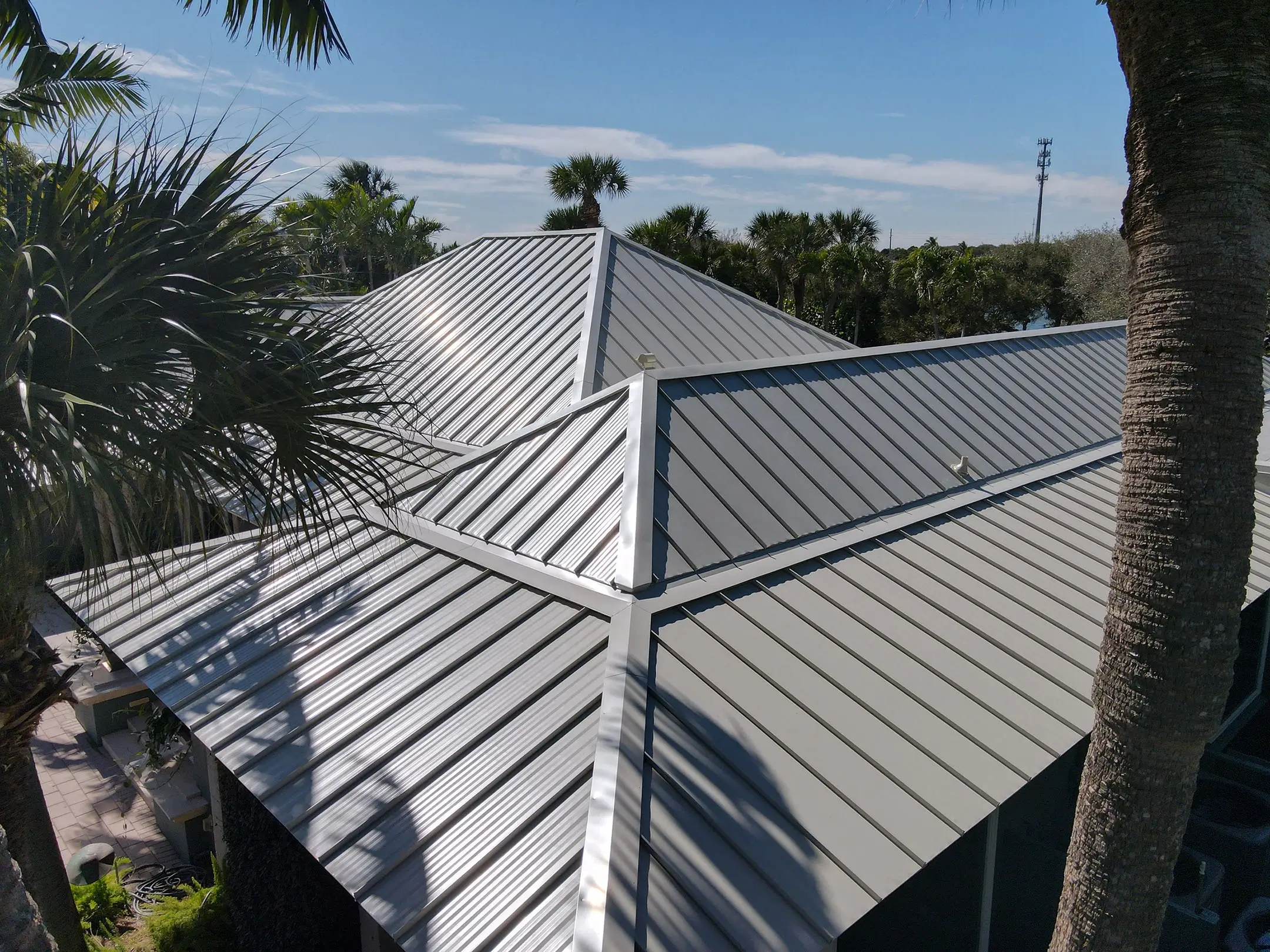
Hail Damage Roof Inspection.
Hail damage roof inspection: type your Florida address to see what the records show for your roof. Then pick a date and book the inspection. The lookup is free, with no signup.
The roof report shows the hail federal NOAA records place within 5 miles of the house, beside the named hurricanes and tropical systems on file. Whether that hail marked your roof is the inspector's question to answer, and you book that visit here.
Records to read before the inspector arrives.
Free for any Florida address, no signup.
The lookup takes a street address and gives you and the inspector the same starting point. Have it open when the inspector calls.
Roof age
The date of the last re-roof permit, or an estimate drawn from the year built and marked as one.
Roof material
The covering on record for the house, which tells the inspector what to expect up top.
Storm history
Hurricanes and tropical systems with names, as recorded for that address.
Wind speed and flood zone
The design wind speed for the location, plus the FEMA flood zone for the lot.
How the roof inspection gets booked.
Book from this page and the partner inspector tells you the price at booking. No fee is listed here.
The inspector looks at the roof itself, in person.
Public records cannot show what a storm did to your shingles; the hail they hold is reports from the surrounding area.
- Price. Agreed with the partner inspector when you book.
- Written findings. Ask when the write-up will reach you, since an insurance claim may lean on it.
Florida claim rules after roof damage.
Dates count from the day of the storm.
If the inspector finds damage, Florida law sets both the filing clock and how much of the roof a repair has to bring up to code.
| New or reopened claim | Report within 1 year of the date of loss |
| Supplemental claim | Within 18 months (SB 2-A) |
| Repairs over 25% in 12 months | The rest of the roof comes up to current code |
| Roof built to the 2007 code or later | Repair covers the damaged part alone, since 2022 |
Common questions.
No, it reads public records, and its hail figures cover reports within 5 miles rather than your roof. The storms it lists are the named hurricanes and tropical systems, shown beside roof age, material, roof score, the flood and evacuation zones and wind speed. Damage has to be seen on the roof itself, by the inspector you book.
This page sets no price. The partner inspector agrees the price with you when you book, and the address lookup that comes first is free with no signup. Running the lookup before the visit lets you hand the inspector your roof age and material on the day.
Florida's 2022 reforms (SB 2-A) took assignment of benefits away for homeowners policies written from January 1, 2023 onward. You file the claim with your insurer yourself, and a roofer or inspector supplies findings to back it. If your policy started before that date, ask your agent what its terms allow.
That turns on your policy. Replacement cost value (RCV) pays what it takes to replace the roof, while actual cash value (ACV) knocks off depreciation for age and wear. Under an ACV policy an older roof pays out less, and the roof age on record feeds that math.
Yes, because Florida carriers look at age before condition or material. A roof without a county re-roof permit tends to be dated as if it were as old as the house. If you replaced yours and the report shows an estimate, dig out the permit or the roofer's paperwork before the visit.
No. A 4-point inspection reports on four systems for underwriting: roof, electrical, plumbing and HVAC. A visit after a storm centers on the roof and what the weather did to it, and its findings support a claim rather than a policy renewal, which means a carrier asking for a 4-point needs that separate report.