

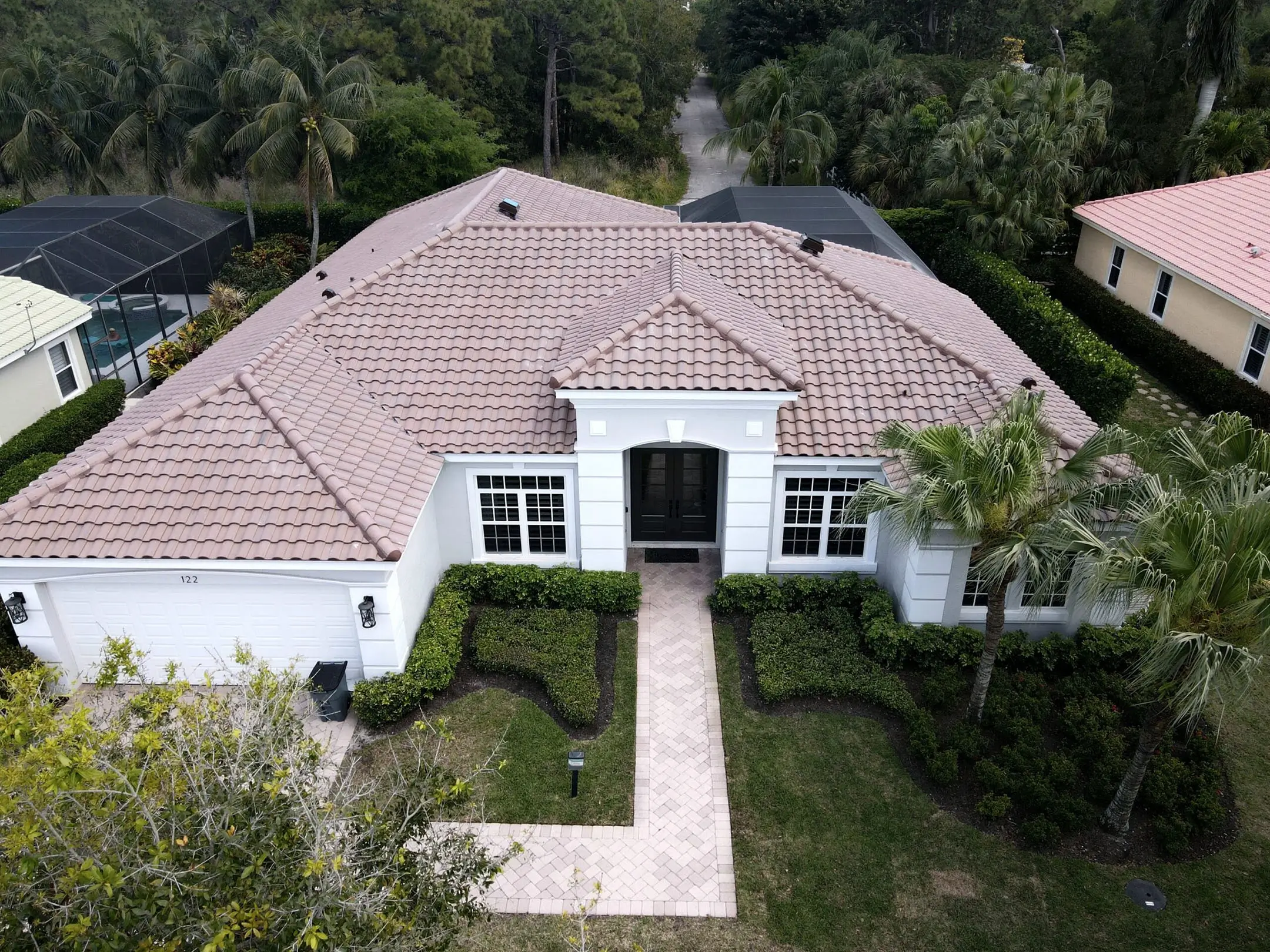
Roof Requirements for Homeowners Insurance in Florida.
Roof requirements for homeowners insurance in Florida: see what Florida insurers check. Type your address to see your roof age and records the way an insurer sees them. Free, no signup.
Florida writes no maximum roof age into law. The requirements come from each carrier, and they begin with the age in your records, then move to the inspections that carrier wants before it covers the house.
Roof requirements Florida carriers set.
Every carrier sets its own appetite, and roof age sits at the top of the list.
Shingle gets a closer look once it reaches the mid-teens. Tile and metal get the same look later, typically in their thirties.
- Inspection past 15 years. Expect a 4-point request before a carrier writes or renews on an older roof.
- Proof of age. A re-roof permit on file dates the roof for the carrier.
- Useful life left. Under SB 2-D, a shingle roof past 15 rated at 5-plus years of life by an authorized inspector generally cannot be refused on age alone.
Steps to check your roof against underwriting.
Read your record the way a carrier would, then fill the gaps it shows.
- 01
Pull the roof report
Type your address for the roof's age, material, roof score and the zones it sits in. Free, no signup.
- 02
Confirm the permit
If the age carries an estimate label after a re-roof, dig up the permit paperwork.
- 03
Line up the inspections
A 4-point for an older roof, and the state wind form if you want credits.
- 04
Replace if the clock has run out
Partner Florida roofers receive replacement quote requests sent from the estimator.
Inspection forms carriers use.
Both are filled out at the house, by an inspector.
Two inspection forms come up again and again when a Florida roof is up for renewal.
4-point inspection
Covers the roof plus the electrical, plumbing and HVAC systems in the house.
Wind mitigation form
OIR-B1-1802 grades seven features, from roof covering and roof shape to opening protection. A hip roof does better than a gable.
Build year
Houses built under the 2002 code edition or later usually earn wind credits; older ones often do after modest retrofits.
Common questions.
No Florida statute sets a roof age limit, and the inspection requirements come from carriers. In practice, a roof older than about 15 years brings a 4-point request from most Florida insurers before coverage is written or renewed. The wind mitigation form is about credits, and those apply only once a qualified inspector completes it.
They run the same course as shingle, only later. Insurers begin scrutinizing shingle in the mid-teens, and with tile and metal that tends to happen in their thirties. Both outlive asphalt shingle, which gives about 15 to 20 years under Florida sun and storms.
Run the free address lookup, which draws on records for 7,344,126 roofs across all 67 Florida counties. It shows the roof's age and material along with its roof score, zones, wind speed and storm record. Statewide, 58% of the ages come from a re-roof permit; the others are estimates, and the report says which is which.
It can. A roof without a replacement permit in county records usually gets the house's own age in a carrier's eyes, and the roof report marks that roof's age as estimated. Track down the permit or the contractor's paperwork and hand it to your agent before the renewal comes around.
Citizens may be where an older home lands, or a policy that hinges on wind mitigation credits. A new roof is the other path: asphalt shingle in Florida costs $351 to $594 a square installed, and the estimator uses aerial imagery to size your roof and give a range for the whole job.